
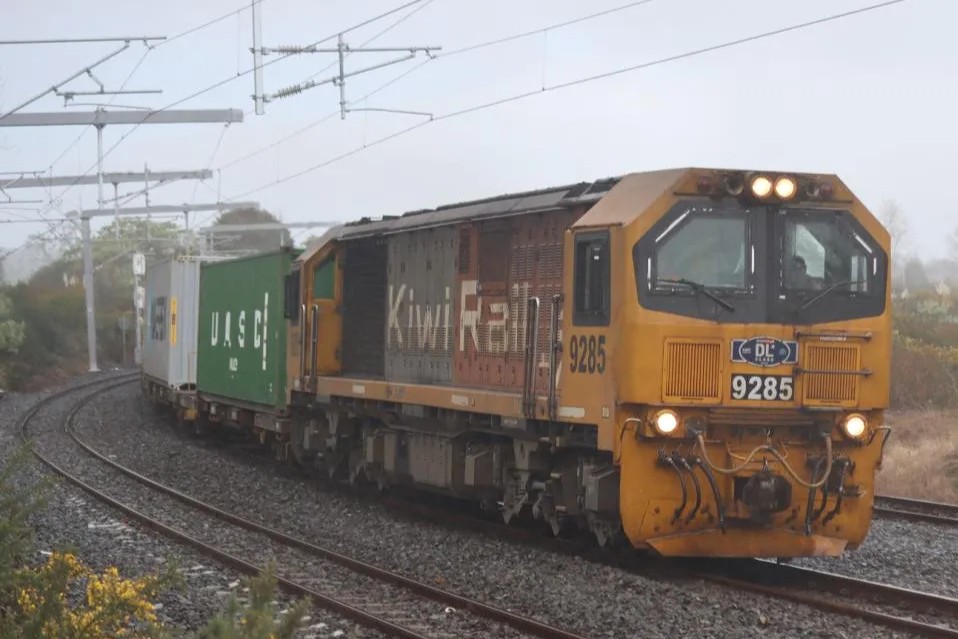
A freight train passed two stop signals and entered a section of track without authority near Kereone on 2 August 2024, without hitting a hi-rail truck that had permission to be there.
The hi-rail vehicle had authority to be on the track ahead of the train. It was safe so long as the train stopped when signalled. But the train passed two stop signals, entered the HRV’s section of track, and stopped only after Train Control radio-called the locomotive engineer.
The Transport Accident Investigation Commission’s final report on the incident, released today, says the locomotive engineer expected the track to be clear, was using a personal mobile phone, missed critical radio calls about track protection, and misread signals as ‘proceed’ instead of ‘caution to stop’ and ‘stop’. no one was injured and there was no damage.
Louise Cook, TAIC’s chief investigator of accidents, says the Commission’s inquiry into the signal passed at danger (SPAD) incident revealed that this was not an isolated failure.
“The Commission is concerned about a nationwide safety issue with SPAD incidents. The system is not providing a reliable safety backstop.”
“Rail safety in New Zealand depends on people following rules and procedures, making and receiving radio calls, and correctly interpreting signals. It’s okay to depend on administrative controls like this if you can guarantee everyone will perform perfectly all the time.
“But we all know nobody’s perfect. When imperfections add up in our rail network, too often there’s nothing automatic to stop the train.
“This was a preventable chain of events – signals misread, calls missed, rules not followed. The first mistake mattered, and the next and the next, and the system had no automatic backstop.”
“Had an engineering control been in place, it’s likely the train would have stopped before the first signal, and it’s virtually certain that had European Train Control System been fitted and operational, the train would have stopped before the next signal, well before entering the HRV’s section of track.”
The report points to a nationwide problem, with SPADs increasing in both freight and passenger services. KiwiRail’s benchmark is 1.0 SPAD per million kilometres travelled. The records show the rate has risen from 1.2 per million in 2020 to 3.2 per million in 2025.
In 2024 and 2025 there were four serious SPAD incidents involving passenger trains, with risk of head-on collision, side-on collision with merging rail traffic, or collision with a motor vehicle at a protected level crossing.
The Commission is calling for stronger action by KiwiRail, the New Zealand Transport Agency, and the Ministry of Transport to address the decline in safety performance, including nationwide rollout of engineering controls to backstop variability in human performance.
KiwiRail has begun work to reduce SPAD risk, including signal alert tools and changes to operating practices. TAIC recommends expanding this work across the network.
TAIC recommends that the New Zealand Transport Agency ensure KiwiRail’s high SPAD rate is being well managed and controlled. NZTA considers its current oversight sufficient. The Ministry of Transport does not – and expects it to be strengthened.