
The Transport Accident Investigation Commission (TAIC) is calling on KiwiRail to improve its safety culture at Port Otago, its training for shunt staff, and its remote-control equipment.
The call comes in a final report by the Commission, published 23 April 2023.
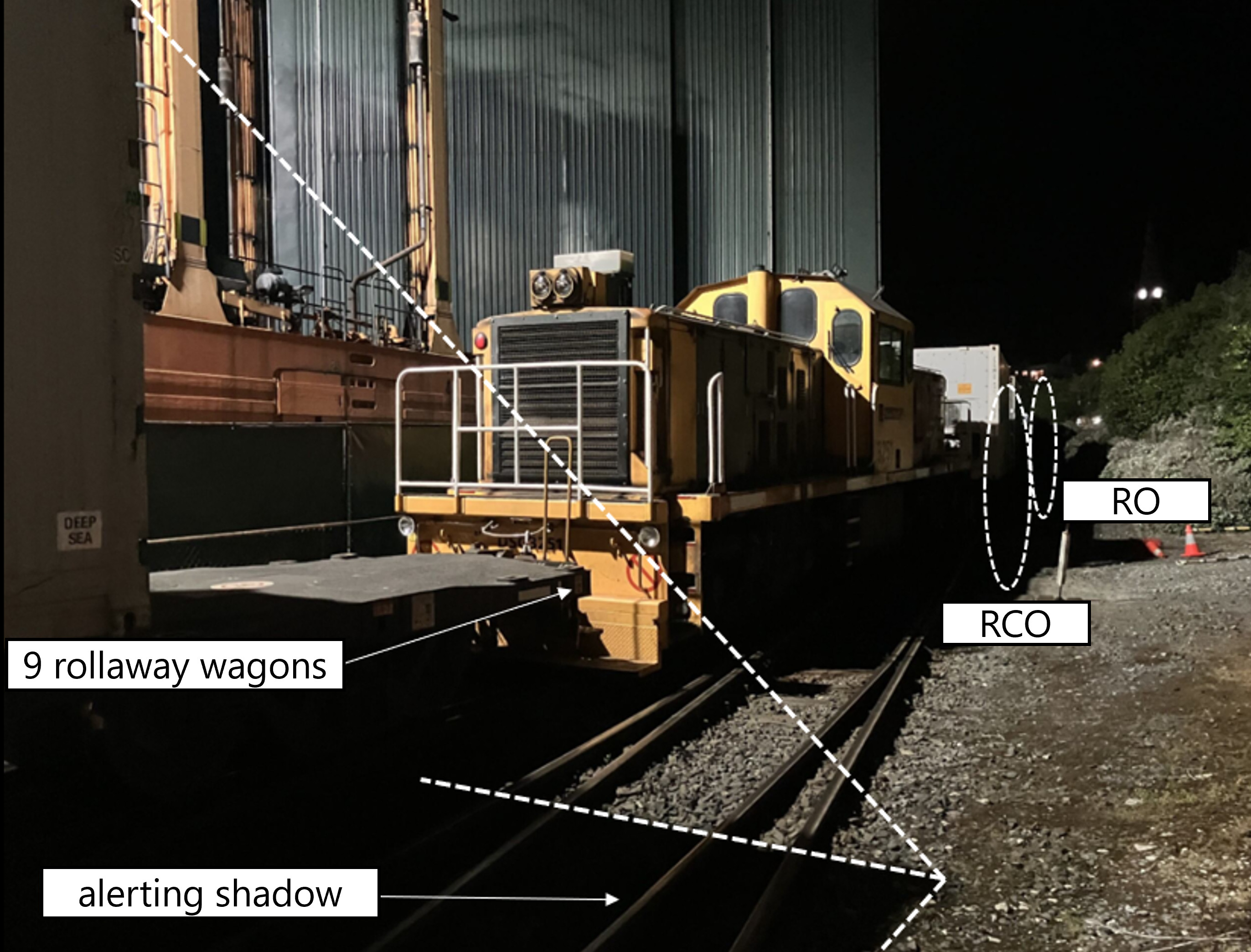
At about 1.25am on 23 January 2025, a remote-control operator and a rail operator were moving 25 wagons for freight transfer in the Port Otago rail storage facility, located in Port Chalmers. They parked nine wagons in the marshalling yard on a slight gradient then moved the locomotive to collect the remaining wagons. While they were between the locomotive and the second set, coupling the loco and the first wagon, the nine wagons rolled back down the gradient toward the locomotive. One crew member spotted a moving shadow, realised it was the moving wagons, yelled and they both got clear seconds before the wagons struck the locomotive, pushing it backwards and uncoupling it from the wagons already attached.
No one was injured, but the locomotive and wagons sustained moderate damage.
The Commission found the wagons were not secured correctly, the crew did not clearly confirm the securing task was complete, and training did not give staff enough understanding of the air-brake system, equalisation timing, or the risk of trapping air in the system. The Commission also found signs that rule violations and unsafe practice had become normalised in the Port Otago shunting area, and that incidents were not being reported reliably.
TAIC’s Chief Investigator of Accidents, Louise Cook, said the accident showed how quickly a job can turn from routine to dangerous.
“This event was low-speed, but not low-risk. A 472-tonne rake of wagons moving at only a walking pace carries enough force to cause serious injury or death. Hazards are greatest when people are close to or between vehicles, making them vulnerable to being taken by surprise, as occurred here, where quiet, slow-moving wagons were only detected at the last minute due to the shadow they cast.”
“Communication discipline matters in all safety-critical work. The crew had moved from the task of securing wagons in one location to the task of coupling wagons in another location without ensuring the first task was fully closed out.
“A task transition like this is a common point of risk management weakness when workers’ attention tends to ‘chase’ the new task, failing to necessarily linger on the one just left behind,” Ms Cook said.
“In higher-risk work, any change in task should trigger a deliberate safety reset, so crews reassess the risk and apply the right controls before moving on.”
“Depth of training matters because procedure compliance is more robust when workers understand the ‘why’ as well as the ‘do’ -- the mechanism behind the rule, not just the sequence they must follow,” said Ms Cook.
“The point about local operating culture matters because it can make unsafe actions feel ordinary. Once that happens, non-compliance stops looking like an exception and starts looking like “the way we do things around here”.”
TAIC has recommended that KiwiRail address the poor safety culture at Port Otago, improve shunt staff training, and review the design of its remote-control packs so the emergency stop button can alert train control even when the locomotive is already stationary.