A bridge pier on KiwiRail's Main South Line collapsed after floodwater scoured away its support. TAIC found shortcomings in bridge inspection, asset management and severe-weather response systems. The report highlights the need for infrastructure owners to identify asset-specific risks and establish clear controls before severe weather threatens operations.
Executive summary Tuhinga whakarāpopoto
What happened
- On 10, 11 and 12 April 2024, heavy rainfall on the foothills of the Southern Alps, South Island, resulted in elevated river flows within the Rangitata River. The river flow peaked at the Rangitata rail bridge at about 0800 on 12 April 2024.
- At approximately 1030 on 12 April 2024, Pier 8 of Bridge 57 on the Main South Line collapsed into the water. No rail vehicles were on the bridge at the time. There were no fatalities or injuries, but the pier collapse caused significant structural damage to the bridge.
- The line remained open for scheduled rail traffic after the collapse occurred, putting those services at risk of derailment and harm.
- A member of the public reported the damage to KiwiRail at 1128 on 12 April 2024, who subsequently closed the line.
Why it happened
- The braided river characteristics of the Rangitata River, combined with elevated water flow, caused significant scour around the piles supporting Pier 8 of Bridge 57. The scour removed critical riverbed material that had provided foundational support.
- The concrete piles beneath Pier 8 were no longer able to sustain the vertical load of the bridge structure. This led to the pier sinking vertically and rotating approximately 45° (degrees), eventually collapsing toward the eastern flow of the river.
- KiwiRail had been monitoring the severe weather that created this high-river-flow event. The bridge was inspected by track personnel at 0853 on 12 April 2024 and deemed to be safe for operation. The line was open when this collapse occurred.
- KiwiRail was aware of the scour risk at Bridge 57 but was not proactively monitoring or managing the risk. There was no requirement within their quality management system to impose operational restrictions for bridges during severe weather events to manage the risk to operations.
What we can learn
- As the frequency of severe weather events increases, precise asset-specific risk management is critical to ensure the rail network can operate safely. It is fundamental that all hazards are identified, and appropriate controls are in place to limit their impact and for the safety of all who are operating vehicles on the network.
- Quality-management systems are reliant on audit systems to check they are being implemented as designed.
- Asset-management systems for infrastructure within a rail network are complex and require a high level of technical input to maintain their integrity. It is critical that all risks to the infrastructure are included in the asset-management system so the impact of the risk on operations can be mitigated.
Who may benefit
- Rail personnel, transport operators, infrastructure maintainers and anyone involved in planning and responding to the impacts of weather events on transport networks may benefit from the findings.
Factual information Pārongo pono
Background
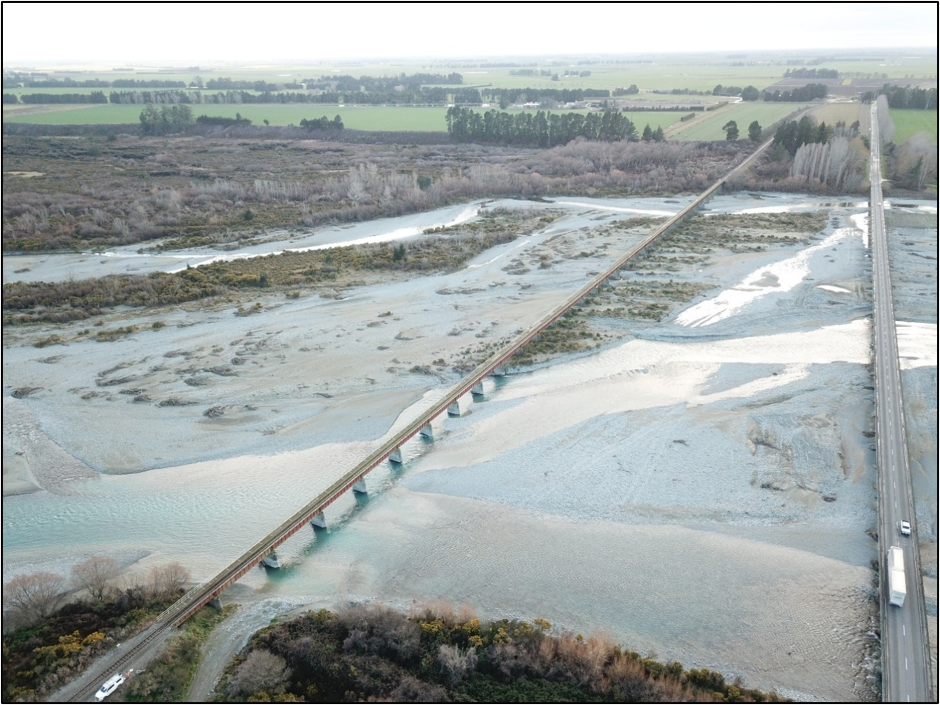
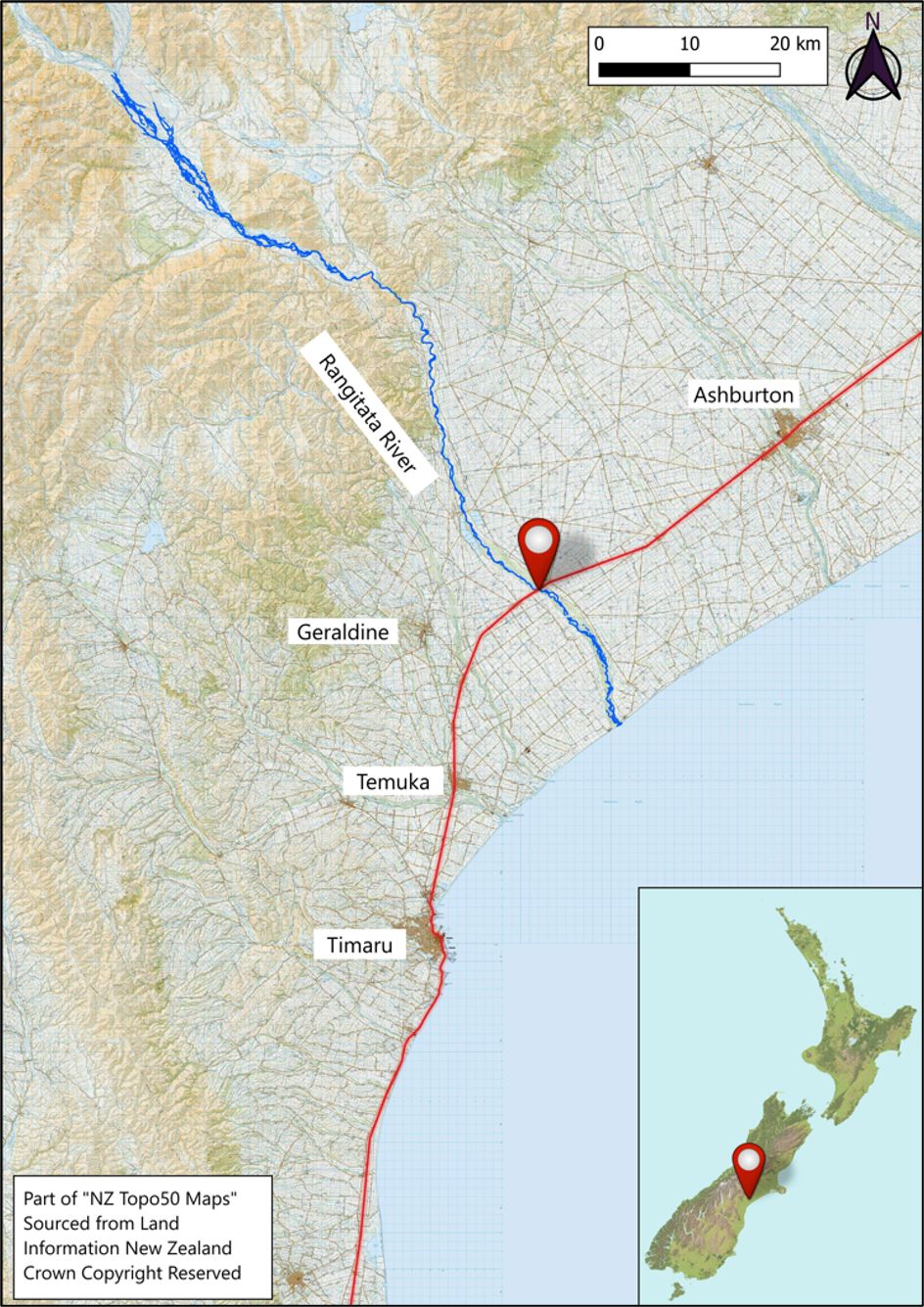
- The Rangitata River (the river) is one of the braided rivers of the Canterbury Plains. It flows southeast for approximately 120 km from the Southern Alps to the Pacific Ocean.
- A distinctive feature of the river is its braided channel morphology. Braided rivers are characterised by having multiple interweaving channels separated by temporary sediment islands.
- Braided rivers are more unstable (the river channel is not consistently in the same location) than single-channel rivers, making it more difficult to design structures in and around them. This is because of their higher rates of sediment transport, deposition and erosion.
- A large proportion of the Rangitata catchment area lies on the eastern sections of the Southern Alps, approximately 90 km from the location of Rail Bridge 57 MSL (Bridge 57).
- Bridge 57 is located across the river from 127.204 km to 127.814 km on the Main South Line (MSL).
Narrative
- On 10, 11 and 12 April 2024, the tributary areas (the land area that drains water into a river and its tributaries. It's also known as a drainage basin or catchment area) of the river were experiencing heavy rainfall (greater than 100mm of rainfall over a 24-hour period, or a period of rainfall of 10-50mm/hr as classified by Earth Sciences New Zealand).
- From 7 April 2024 to 11 April 2024, KiwiRail Holdings Limited (KiwiRail) received regular notifications from both Meteorological Solutions Limited (MetSolutions is contracted to KiwiRail to provide general weather updates and alerts when severe weather is predicted) (MetSolutions) and MetService alerting them to weather conditions that were forecast to create high flow within the river.
- The weather update that was issued by MetSolutions at 0916 (times used in this report are New Zealand Standard Time (UTC +12 hours) and are expressed in 24-hour mode) on 11 April 2024 stated that a flood surge in the river was expected to reach the Rangitata rail bridge on the morning of 12 April 2024. This surge could be a flow with a return period (the return period is the average time between occurrences of an event of a given magnitude or greater. It is commonly used in hydrology and engineering to describe the likelihood of events occurring. A return period of two years would indicate that statistically a flow event should occur once every two years) of two years.
- Conference calls involving members of the Infrastructure and Train Control groups were held by KiwiRail on 9, 10 and 11 April 2024 to discuss the implications of the weather event for the network and the required actions to mitigate the risk that the weather event posed.
- During the conference call on 11 April 2024, it was noted that flow within the river was due to peak at midnight on 12 April 2024. The advisory status for the event was set as amber. KiwiRail’s system for classifying advisory status levels during severe weather events is explained from paragraph 2.28 below.
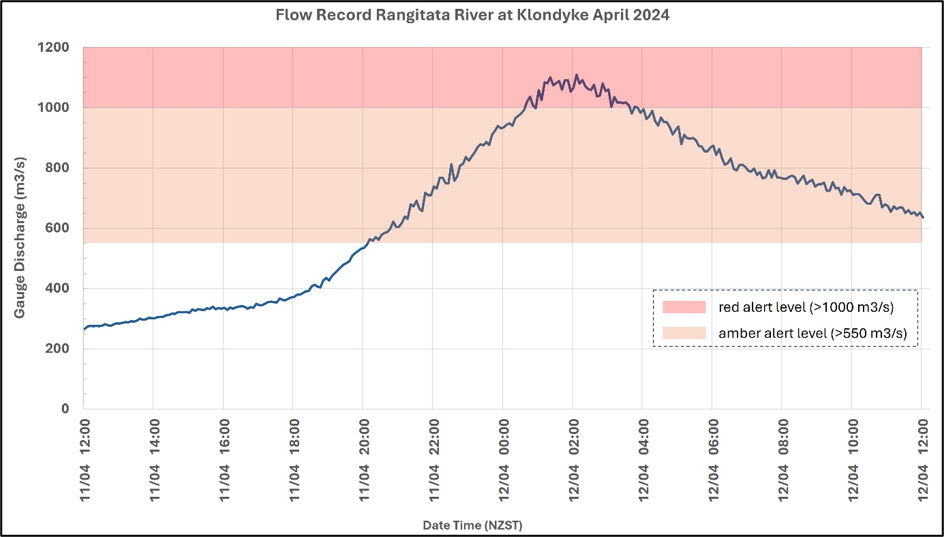
- Because of the heavy rainfall, a flow event with a return period of 0.89 years in the river occurred from 11 April 2024 through to 12 April 2024. The flow peaked between 0200 and 0220 on 12 April 2024 at 1100 cubic metres per second (m3/s) (cubic metres per second (m3/s) is the unit typically used to measure the flow of a river. The flow is used for alert functions as it is representative of a river’s height and speed) (see Figure 3).
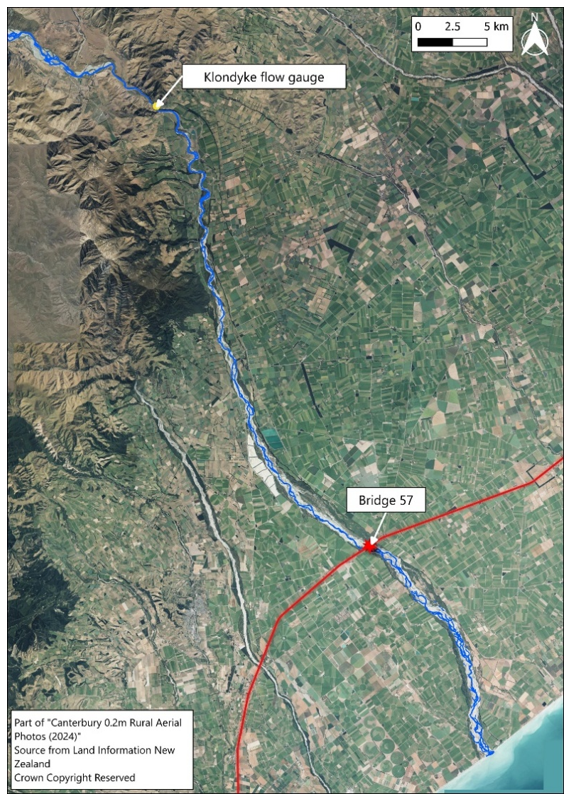
- The flow gauge for the river is located at Klondyke, approximately six hours (the duration for the peak flow at Klondyke to reach Bridge 57 depends on the flow rate of the river. Six hours is based on a flow rate of 1000 m3/s) upstream from Bridge 57 (see Figure 4). This meant that the peak flow rate that occurred between 0200 and 0220 would be experienced at Bridge 57 at approximately 0800.
- At about 0610 on 12 April 2024, northbound KiwiRail freight Train 926 crossed Bridge 57. The locomotive engineer (LE) made no contact with train control (KiwiRail’s national train control centre, responsible for track authorisations and the safe movement of rail traffic throughout New Zealand) to report concerns with the bridge.
- At about 0830, KiwiRail’s Lower South Island Infrastructure Production Manager (Production Manager) requested an inspection of Bridge 57 be carried out by a track ganger (a track ganger’s primary role is working on track maintenance, repair and renewal work. Their area of expertise is on the track infrastructure, as opposed to the structural or civil assets of the railway) because of the high flow in the river.
- KiwiRail was aware that the flow in the river overnight had exceeded the red-alert level according to its severe weather response standards. The train controller (a person qualified to authorise rail movements and track access. Train controllers operate in a train control centre) received hourly notifications from Environment Canterbury (ECan) from 0000 to 0500, and members of the infrastructure group were aware of and actively checking the flow levels using ECan’s publicly available data.
- At about 0830, KiwiRail freight Train 930 traversed Bridge 57. The LE made no contact with train control to report concerns with the bridge.
- At 0853, a track ganger started the requested inspection along Bridge 57. This inspection consisted of a track run across the bridge in a hi-rail vehicle (a vehicle fitted with retractable rail wheels that can travel on both road and rail) and taking photographs of the river level to provide to the Production Manager. The inspection did not specifically look at the bridge piers or accumulated debris. The track ganger completed the inspection by 0941.
- After the inspection, the track ganger reported to the Production Manager that the line was safe to remain open.
- At 1037, KiwiRail received a further weather update from MetSolutions. This update included information that the river had peaked at the location of the bridge.
- At some point after the inspection was completed at 0941, Pier 8 of Bridge 57 was washed out by the river flow, which caused a partial collapse of the bridge (see Figure 5).
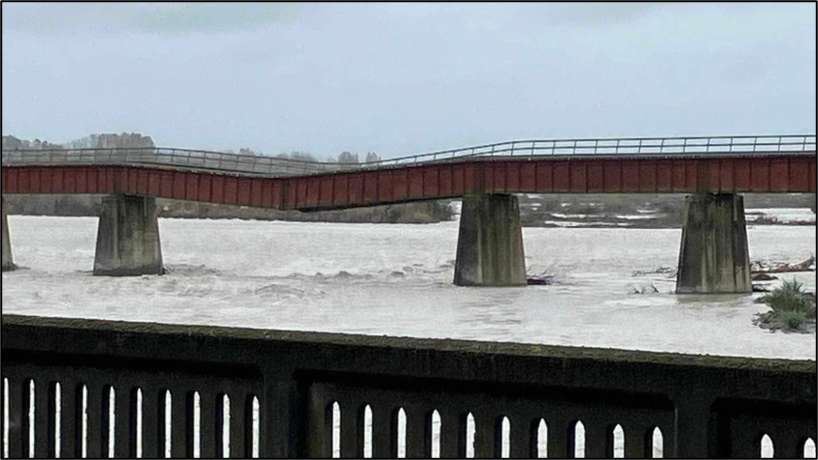
- At 1128, a member of the public contacted train control to alert KiwiRail to the partial collapse of the bridge. The track was immediately closed and an emergency inspection was then carried out to confirm the collapse.
- There were no people or rail vehicles on Bridge 57 at the time of the collapse.
- The next scheduled train to cross the bridge was a southbound freight train expected at about 1445.
Organisational information
- KiwiRail is a New Zealand state-owned enterprise. It operates trains and rail vehicles, controls rail movements on the national rail network and maintains the railway infrastructure as the rail access provider.
- KiwiRail manages approximately 1600 bridges across the rail network, including Bridge 57. The KiwiRail Infrastructure Group was responsible for the maintenance and management of these bridges.
- Within the Infrastructure Group, the Lower South Island (LSI) region was responsible for the inspection and maintenance of the bridges within their section of the network.
- The KiwiRail Engineering Department provided technical assistance to each region and was responsible for the technical governance of the bridges. They also audited and reviewed compliance of the work completed by the LSI region.
KiwiRail’s severe weather management
- KiwiRail’s risk-management approach to planning, preparing and coordinating activities ahead of severe weather is defined by Standard 14-SHE-008-COM Severe Weather Events Management (14-STD-008-COM was first issued on 3 September 2024, which was after Bridge 57’s failure. The approach followed in response to the weather event at the time of the collapse of the bridge followed this process as the standard was in draft form at the time).
- The severe weather event process flow is broken into five stages:
- Stage 1: Notification/Alert
- Stage 2: Preliminary assessment
- Stage 3: Conference call
- Stage 4: Trigger Action Response Plan (TARP) actions
- Stage 5: Monitoring
- Stage 6: De-escalation and close out.
- MetSolutions provided KiwiRail with weather forecasts three times a week. When escalating weather conditions are identified, the updates are provided daily or twice daily, depending on the severity of the events.
- In addition to the weather forecasting system, the KiwiRail train controller received live notifications from ECan alerting it to high river flows within the river.
-
Determination of the severity of events is based on the weather risk matrix (see Figure 6) and the river flow risk matrix (see Figure 7).
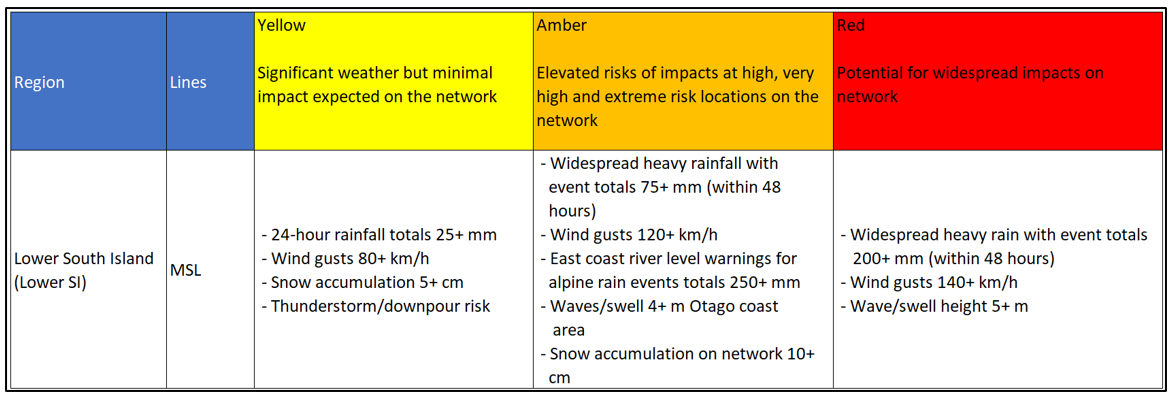
Figure 6: Weather risk matrix for Lower South Island (Credit: KiwiRail) 
Figure 7: River-flow risk matrix for Rangitata River(Credit: KiwiRail) - If deemed necessary, KiwiRail holds conference calls to establish the required response to weather events. A conference call template is available to facilitate risk-based triaging and decision-making.
- The Trigger Action Response Plan (TARP) also includes suggested actions for yellow, amber and red-alert levels. The actions are ‘Go – but Stay Alert’, ‘Go BUT (take actions)’ and ‘NO GO (cease operations)’ for the yellow, amber and red alerts respectively.
- The weather risk matrix did not include asset-specific mitigation measures for each warning level. The process of ensuring the network remained safe to operate was managed by the Production Manager and Asset Engineer for the region.
KiwiRail asset management and maintenance regime
- KiwiRail’s Safety Case (a comprehensive document that outlines the safety risks associated with a system or installation and explains how these risks are managed. Further details on the contents of a safety case are contained in the Railways Act 2005, section 30 Contents of safety case) documents the arrangements it has in place to manage the rail activities (as defined in the Railways Act 2005, section 4(2)) to which the Railways Act 2005 applies. A component of the safety case is the Network Engineering Principles and Standards.
- The Network Engineering Principles and Standards ensure that the infrastructure assets, such as the track, formation, bridges and the signalling system, are fit for purpose. Compliance with these Principles and Standards is key to ensuring the safety of these assets.
- The quality management system (QMS) that KiwiRail uses to ensure compliance with its Principles and Standards puts the relevant documents into a hierarchy (see Figure 8).
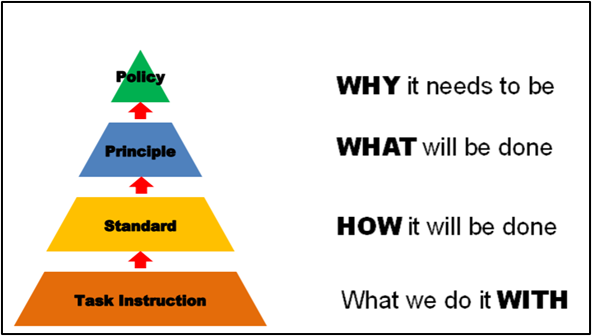
- KiwiRail’s Structures Engineering Principle (B-PR-GE-3011) sets out the guiding principles for the design, construction and management of structures assets.
Structures Health Index (SHI)
- KiwiRail used its Structures Health Index (SHI) Standard (B-ST-AS-3112) to calculate a number that was then used to form a broad view of an asset’s health. This number was used to make decisions on risk mitigation across the network, with a view to manage risk at a network level.
- The asset’s health was determined by the following parameters:
- condition
- strength
- fatigue
- foundation
- scour
- seismic
- vehicle strike
- knowledge gap.
- A score was assigned to each of the above parameters, which then provided an index that could be used to compare bridges across the network and the risk level relative to one another. The index ranged from 0 to 100, with 0 representing a very poor performance level and 100 a good performance level.
- The index rating for Bridge 57 was 78, signifying a satisfactory level of performance. This rating indicated that the structure aligned broadly with anticipated future operating parameters, and that the application of load or speed restrictions would be required infrequently.
Structures inspections
- KiwiRail’s structures inspection regime was defined by the following standards:
- General inspections: B-ST-AS-3106
- Detailed inspections: B-ST-AS-3114 (B-ST-AS-3106 and B-ST-AS-3114 were amalgamated into a single standard B-ST-GE-3040 in February 2024)
- Engineering inspections: B-ST-AS-3110 (B-ST-AS-3110 was effective from July 2017 and withdrawn from use in February 2024)
General and detailed inspections
- General inspections are completed annually and detailed inspections are completed once every six years. The main purpose of both of these inspections is to identify defective components, deteriorating materials and serviceability issues on bridges. The specific procedure to be followed during the inspection was described in KiwiRail’s W200: Structures Inspection Manual.
- General and detailed inspections are undertaken by the Structures Inspector for the region, with the results of the inspection being signed off by the Inspectorate Engineer for the region.
- The general and detailed inspections had been completed at the required intervals for Bridge 57.
Engineering inspections
- Engineering inspections are completed at the discretion of the Structures Professional Head (Professional Head is a job title within KiwiRail’s infrastructure team. They are responsible for guiding the technical direction of their structures discipline) Their purpose was to apply practical and theoretical engineering knowledge to ensure the bridge remained safe for use.
- Engineering inspections were completed by Structures Engineering staff. The standard specifies that, before the inspection takes place, the Engineer should be familiar with all elements of the bridge, including flood histories, scour calculations and ratings.
Auditing
- KiwiRail uses internal quality audits to ensure that its QMS is operating as intended. These audits inform management and alert them to areas that need improvement.
- The audit schedule for each discipline is determined by that discipline’s Professional Head, based on a risk assessment. The audit requirements for the structures discipline were defined by B-ST-IN-3111 Structures Audit (B-ST-IN-3111 was withdrawn from use in February 2024. The audit requirements were included in B-ST-GE-3040, published in February 2024).
- The Structures Audit standard specified that the structures inspectors and inspectorate engineers should be audited four times each year to ensure the detailed inspection process was being completed according to the standards.
- KiwiRail provided limited evidence of audits completed in the previous six years, contrary to its QMS. This is discussed further in the analysis section of this report.
Bridge 57 Main South Line
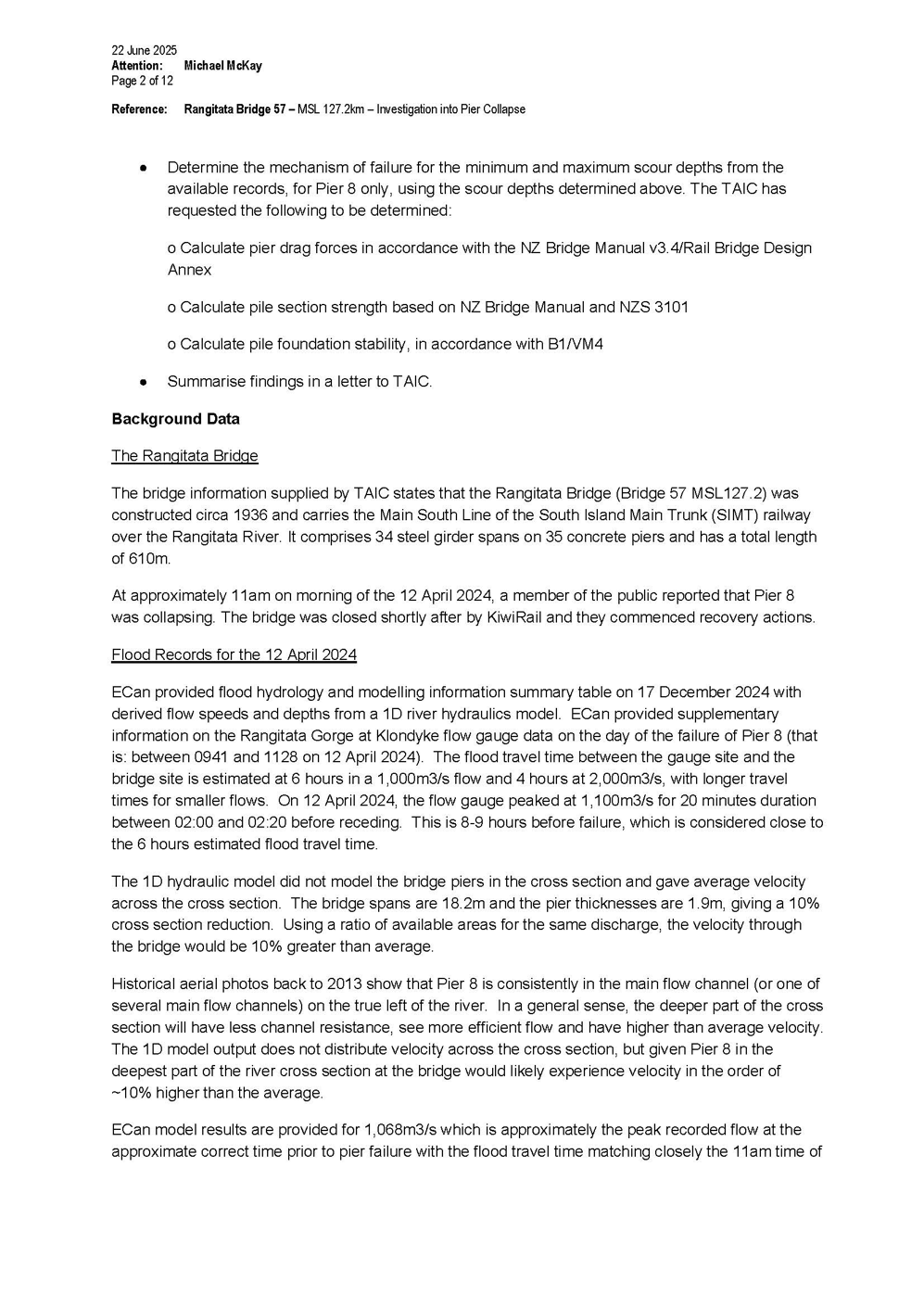
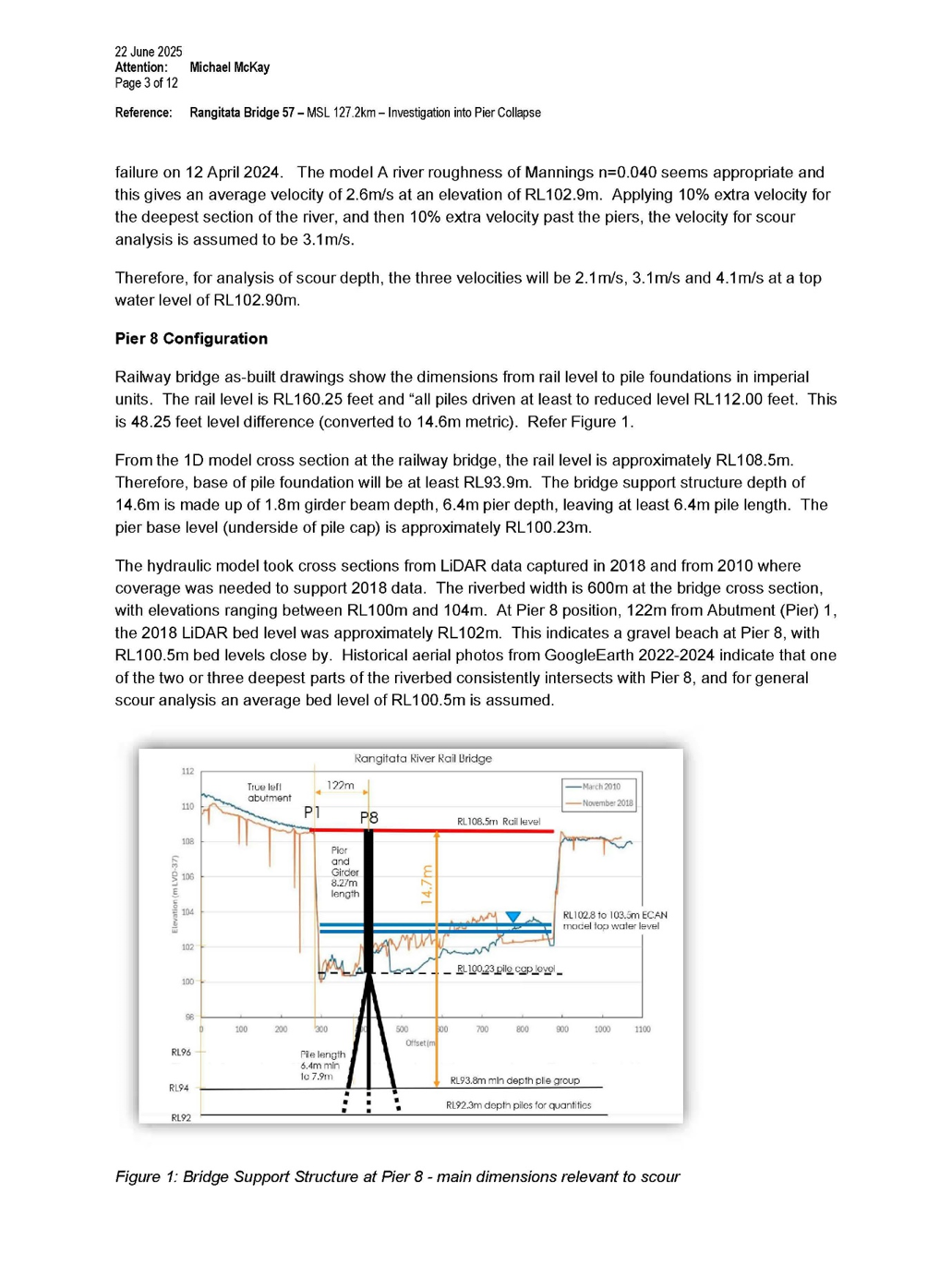
- Bridge 57 is 610 m long, comprised of 34 steel spans that sit on 2 concrete abutments and 33 concrete piers. The piers are spaced at 18.3 m from centre to centre and are 6.4 m high. The piles underneath the piers extend 7.6 m below the base of the pier (see Figure 9).
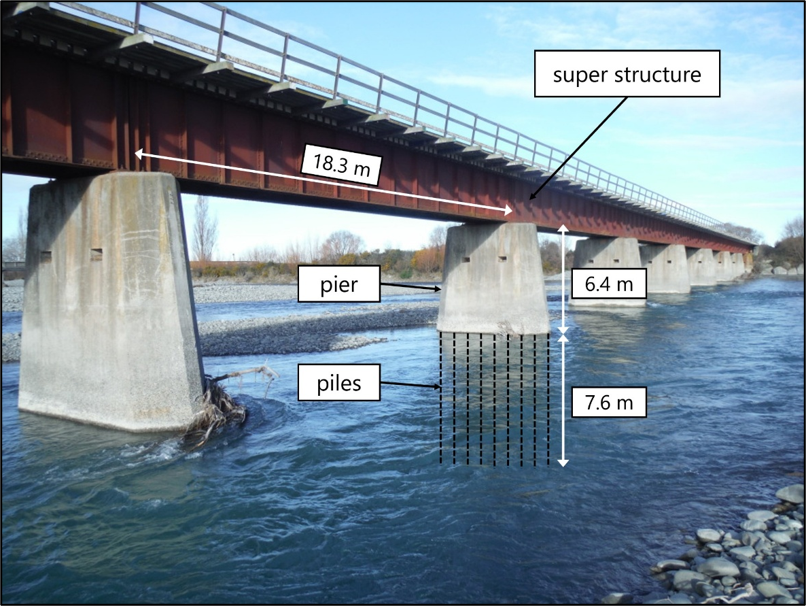
- Bridge 57 was constructed in 1936. KiwiRail was able to provide limited evidence confirming the height of the piers and depth of the piles that form part of Bridge 57. The Commission has therefore determined the pile depth based on the available evidence, which was the design documentation for the bridge.
- KiwiRail records from 1983 refer to some ‘as built’ measurements, which indicate that the assumed depths shown in Figure 9 are a reasonable, conservative assumption for the depth of the piles and height of the pier.
Meteorological information
- MetService forecast heavy rainfall for the headwaters of the Canterbury lakes and rivers south of Arthur’s Pass from 9 April 2024 to the evening of 11 April 2024. A total of 400–600 mm of rain was forecast with peak rates of 20–30 mm/h predicted.
- The Rangitata River’s catchment area is primarily within this region and MetSolutions predicted that this rainfall would create a flow event in the river with a two-year return period.
- The peak flow in the river as a result of this rainfall was recorded as 1100 m3/s at the Klondyke flow gauge.
Tests and research
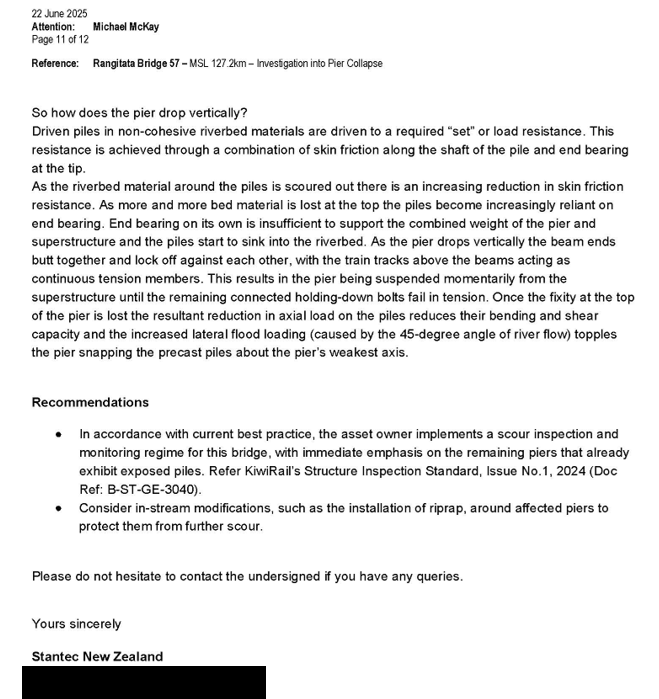
- The Commission engaged Stantec New Zealand Limited (Stantec) to provide civil and structural engineering services to assist with the investigation of the pier stability.
- ECan provided flood hydrology and modelling information to the Commission.
Previous occurrences
- The following reports are relevant to this inquiry as the Commission found similarities relating to the response to severe weather events on the rail network.
RO-2023-102 Freight Train 360 derailment, Te Puke, 29 January 2023
- On 27 and 28 January 2023, the Bay of Plenty region experienced heavy rainfall. On 28 January, the crew of a KiwiRail freight train observed and reported to train control a high water level at rail Bridge 85 on the East Coast Main Trunk Line, north of Te Puke.
- On receipt of this information, train control arranged for a track inspection to be conducted to assess the risks. The track inspection occurred at an incorrect location, resulting in clearance being given for trains to resume normal operations.
- At about 0430 on 29 January 2023, a KiwiRail freight train encountered substantial floodwater across the track north of Te Puke, not far from rail Bridge 85. The floodwaters had washed out the track formation, which led to the majority of the wagons uncoupling and derailing.
- Following an investigation into this accident, the Commission recommended that KiwiRail review its adverse weather response system and processes to ensure they are effective in maintaining a safe rail network.
- KiwiRail responded to the recommendation by developing and publishing a Severe Weather Event Standard.
RO-2021-106 Derailment of Train 220, south of Hunterville, 13 December 2021
- On 13 December 2021, an adverse weather event with heavy rainfall resulted in streams and waterways being overwhelmed in the Hunterville area along the North Island Main Trunk line. An investigation by the Commission found that floodwater had undermined the track formation, resulting in the derailment of a freight train.
- The Commission found that there were no severe-weather-warning or flood-monitoring measures in place in the accident area.
- KiwiRail undertook safety action following the accident, including completing a hydrology assessment and flood modelling, planning the replacement of existing culverts with pipes, and planning the installation of a flood-monitoring system.
RO-2021-104 Passenger Train 6205 derailment, Kāpiti, 17 August 2021
- On 17 August 2021, a Wellington-based passenger train was operating a scheduled service from Waikanae to Wellington. The area had experienced moderate rainfall in the hills adjacent to the rail corridor, overwhelming the waterways and drainage systems.
- The train rounded a right-hand curve next to the hillside and the driver sighted a landslide covering both main lines in front of the train. The driver applied the emergency brake before the train hit the slip debris, derailed and lost all power. There were no injuries to crew or passengers.
- Following an investigation into this accident, the Commission recommended that KiwiRail review the trigger settings of its rainfall-monitoring equipment and weather risk matrix to ensure they can identify and respond to rainfall that occurs within a short time period.
- KiwiRail accepted and implemented this recommendation through the implementation of its Severe Weather TARP.
RO-2002-101 Train 929 embankment washout, near Rangitata, 4 January 2002
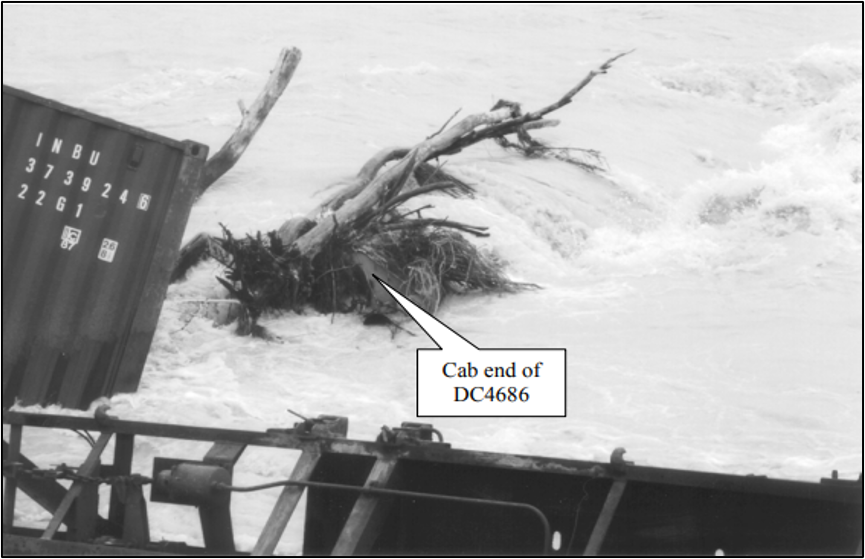
On 4 January 2002, Train 929 ran into a track subsidence beside the Rangitata River on the Main South Line, resulting in two locomotives and five wagons derailing and going into the river (see Figure 10).
- The Commission found that there was:
- a lack of an early warning for river-flow levels
- a lack of a defined process for implementing special track inspections during inclement weather
- no specified time between a special track inspection and arrival of a train.
- The Commission made the following recommendations in relation to the incident:
- establish an early warning system that is linked to the existing river-flow gauges
- conduct inspections immediately ahead of all trains during and immediately following defined river flows.
- Tranz Rail (KiwiRail’s predecessor) took safety action following the accident, but some of the identified issues are still present in this investigation report.
Analysis Tātaritanga
Introduction
- On 12 April 2024, Pier 8 of Bridge 57 collapsed after a high-river-flow event. The line remained open for scheduled rail traffic after the collapse occurred, putting those services at risk of derailment and harm.
- The line was closed after a member of the public called KiwiRail to inform them of the collapse. There were no people or rail vehicles on the bridge at the time of the collapse, but the pier collapse caused significant structural damage to the bridge.
- The following section analyses the circumstances surrounding the event to identify those factors that increased the likelihood of the event occurring or increased the potential severity of its outcome. It also examines the safety issues that have the potential to adversely affect future operations.
Structural analysis of Pier 8
Scour depth
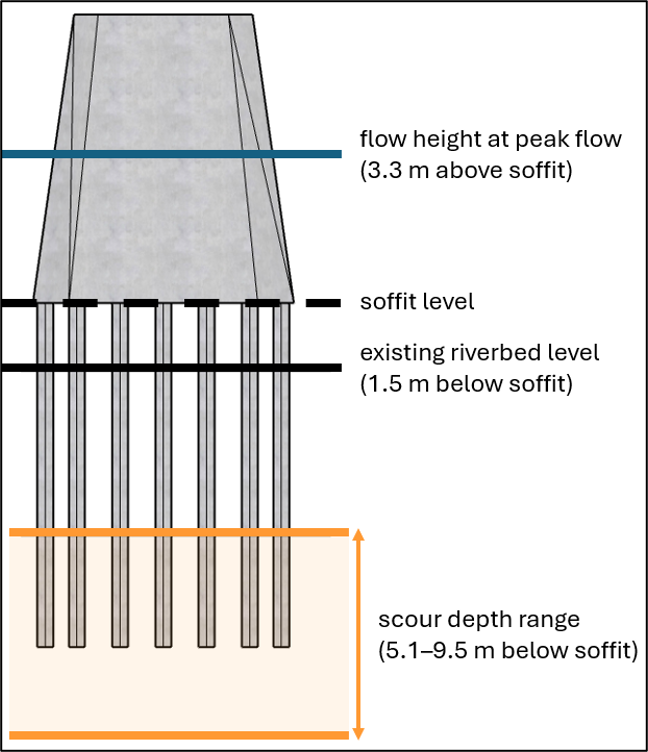
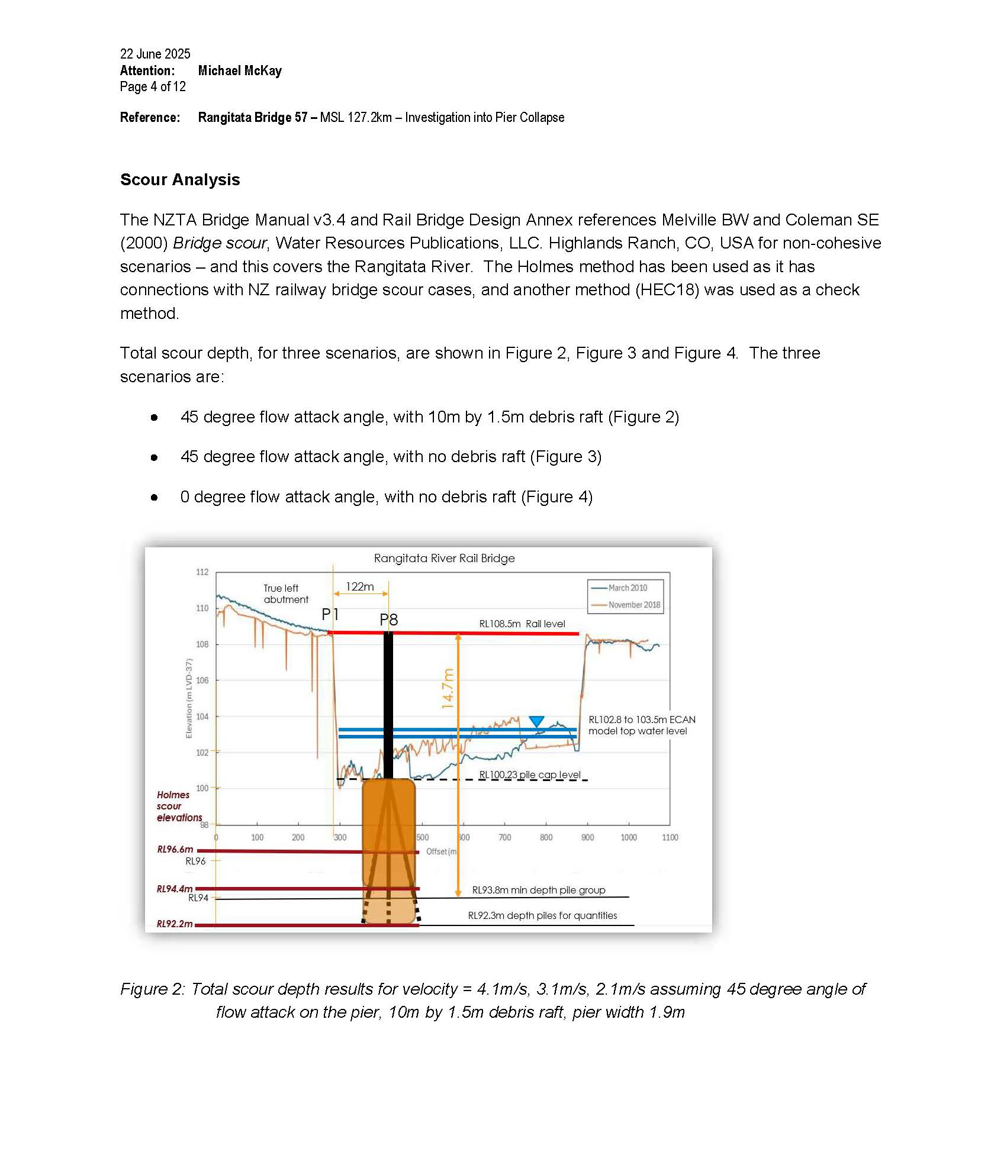
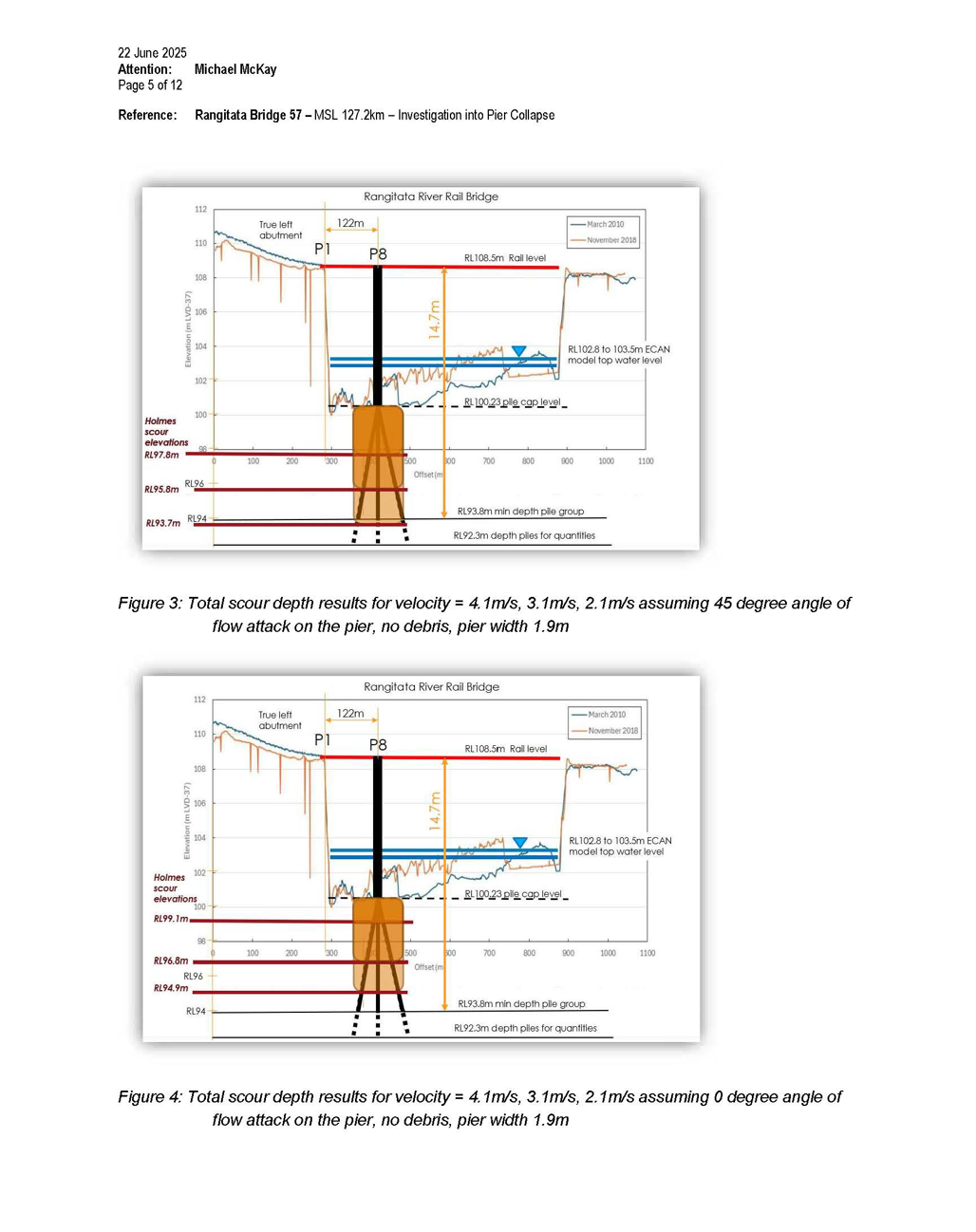
- Scour depth is the vertical distance below a reference surface that will be eroded and removed by the action of flowing water. This phenomenon, known as scour, is particularly relevant around hydraulic structures such as bridge piers.
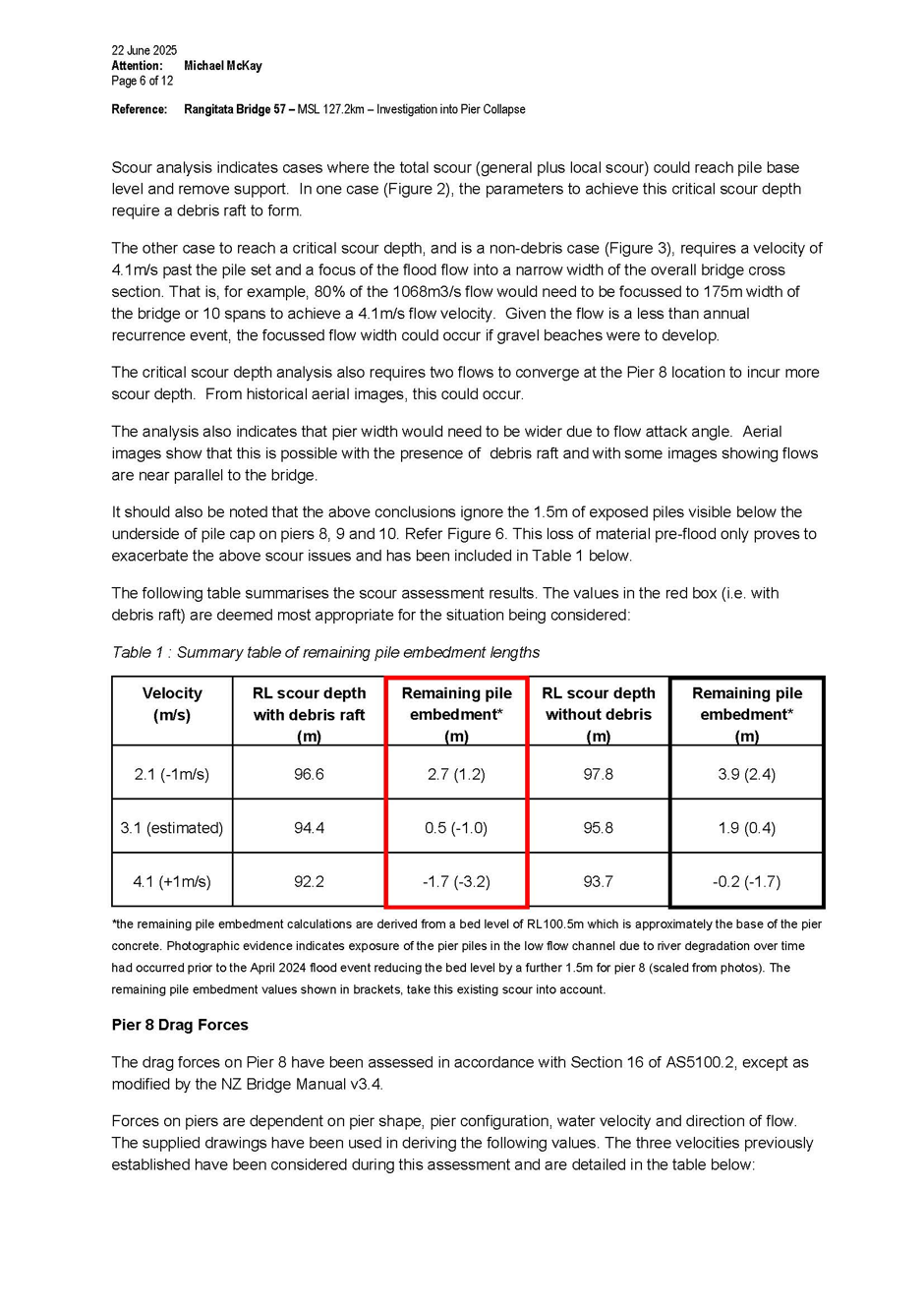
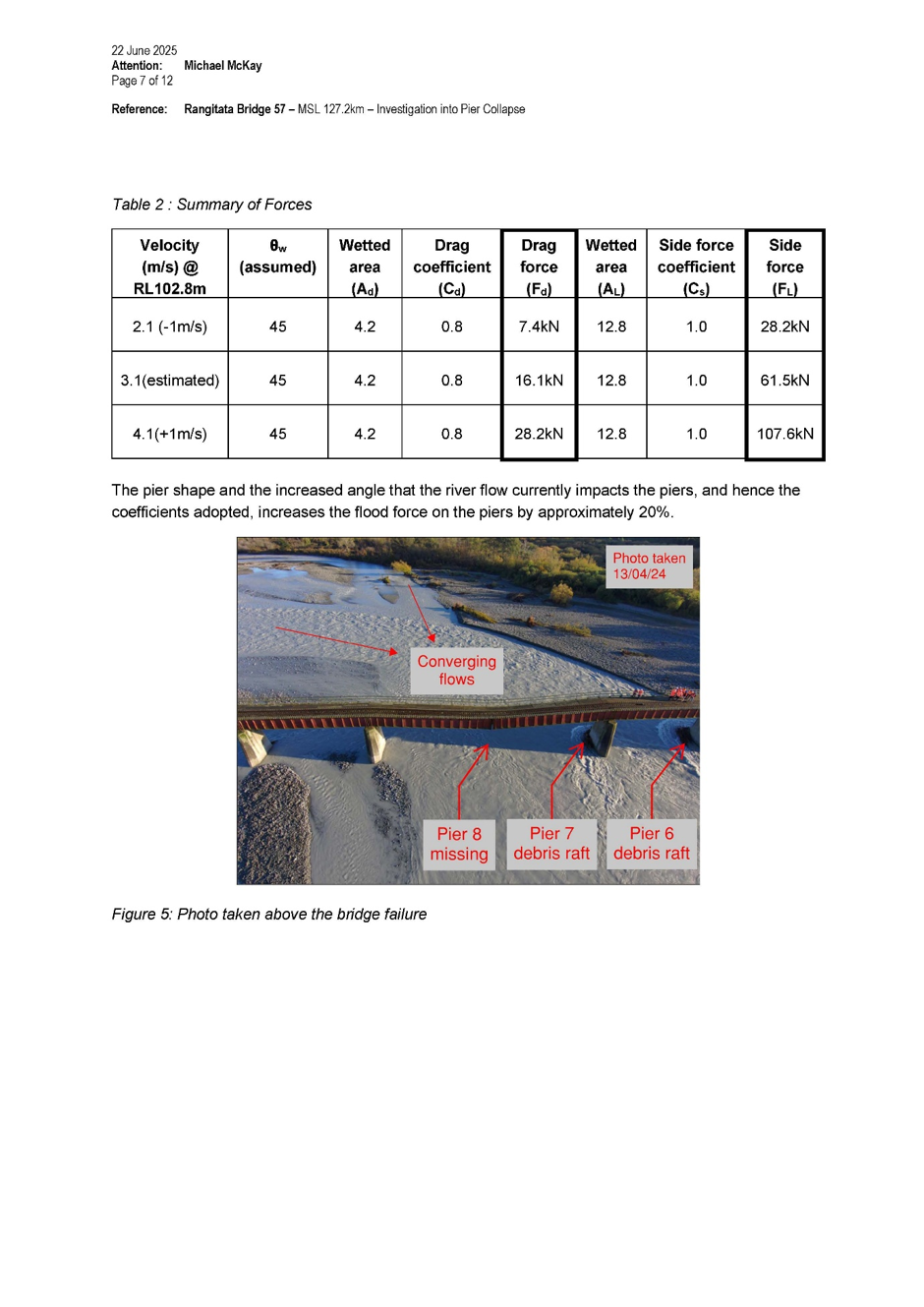
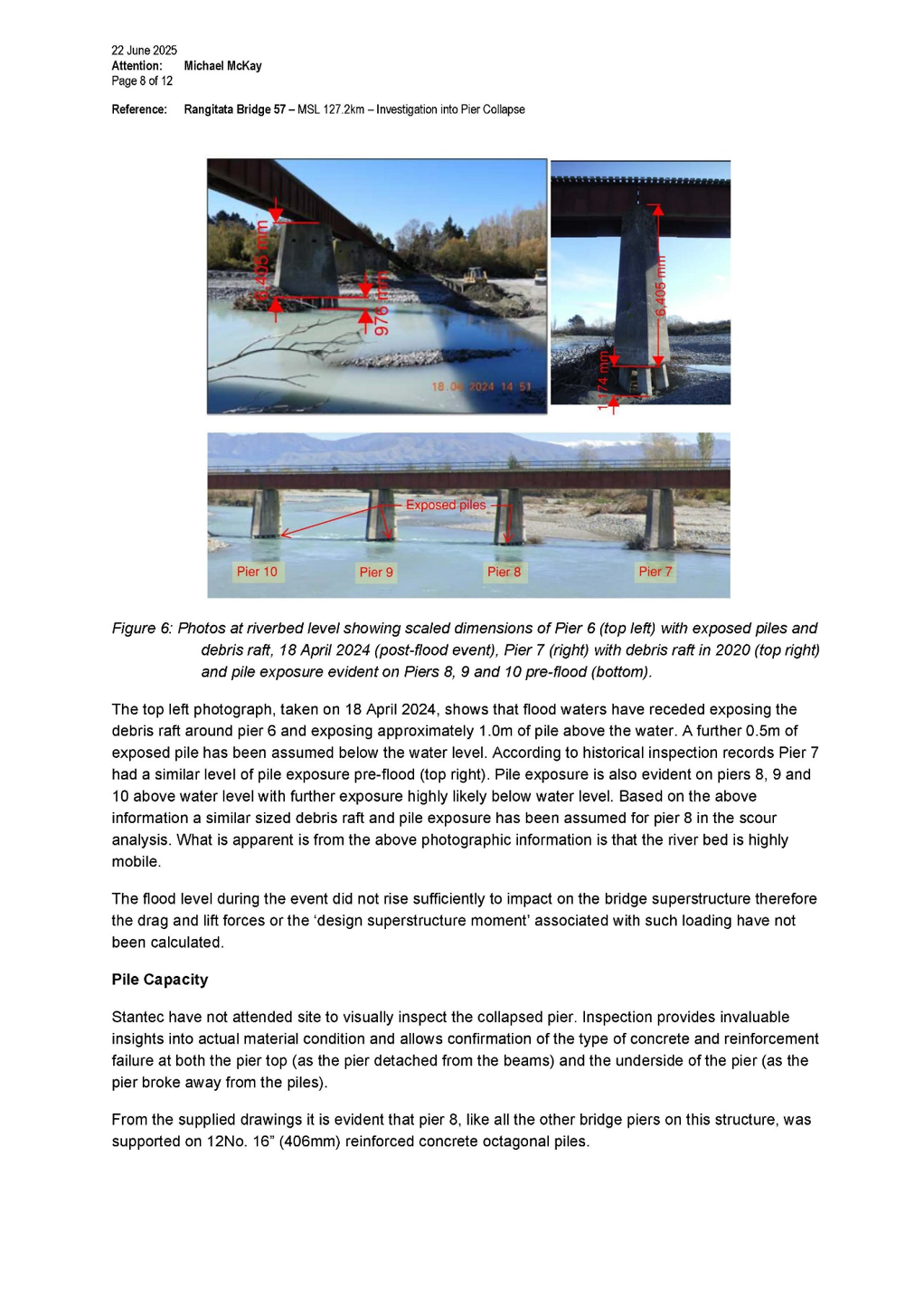
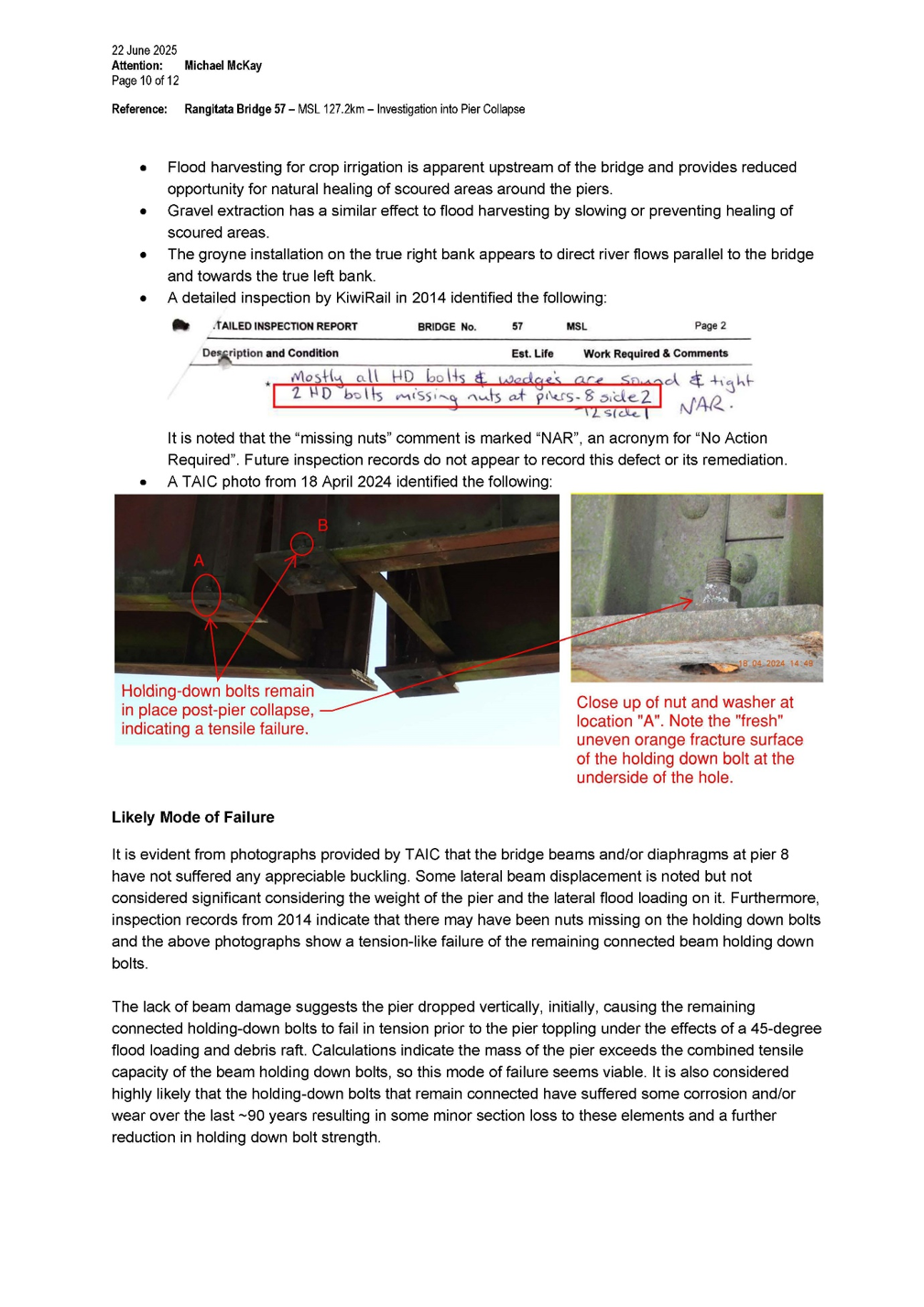
- The scour depths relating to Bridge 57 have been determined through the tests and research that have been completed and are detailed in Appendix 1.
- The theoretical scour depth and flow height on the day of the event for Pier 8 are represented graphically in Figure 11. Because of the uncertainty around the precise velocity of the water flow around Pier 8 on the day of the event, a range of probable scour depths is represented.
- The reference point of the soffit of the pier (bottom of the pier section) has been selected to represent the depths and heights.
Mechanism of failure
- The precise mechanism of failure for Pier 8 is difficult to determine, because of the inherent complexity of the structural elements of Pier 8 and because many details of the bridge and the river on the day of the collapse are not known with certainty and rely on modelling and assumptions to determine. Some of these factors are:
- flow rate and flow speed at Bridge 57
- depth of the piles of Bridge 57.
- Based on the evidence available, the Commission has come to the following conclusions on the mechanism of failure of the bridge pier and surrounding spans.
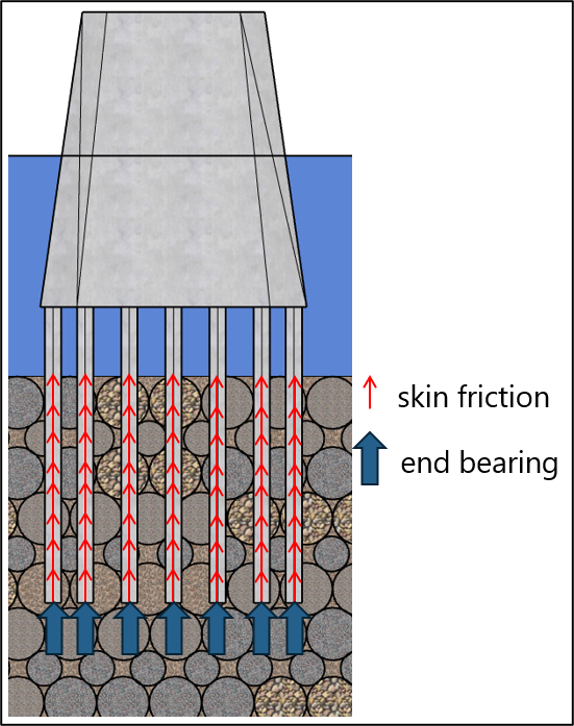
- The failure of Pier 8 was very likely caused by the loss of vertical support from the piles due to the scouring of the riverbed material around the piles. The riverbed material around the piles provides the vertical support through a combination of skin friction and end bearing (see Figure 12).
-
The mechanism of failure was very likely as follows:
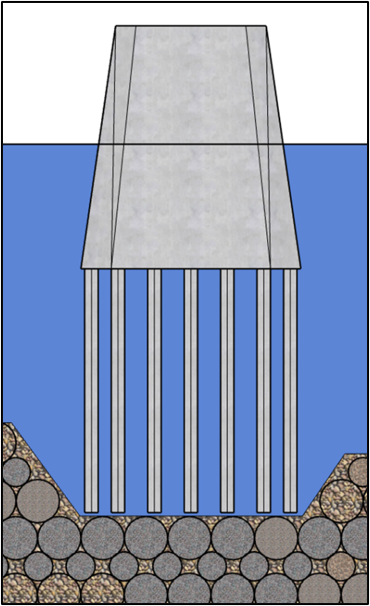
(i) sufficient bed material would have been scoured away such that the piles were unable to support the vertical load of the bridge, causing the pier to begin to sink into the riverbed (see Figure 13).
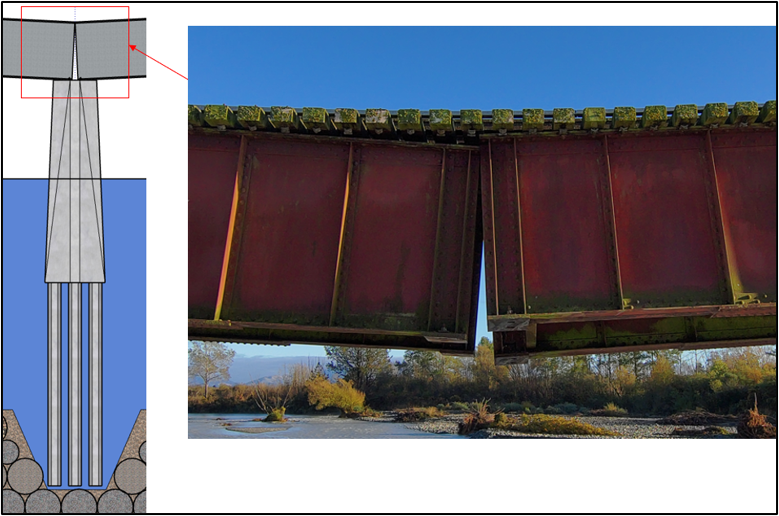
(ii) As the pier dropped vertically, the beam ends butted together and began to support their own weight. This resulted in the pier being momentarily suspended from the beams, before the holding down bolts failed under tension (see Figure 14).
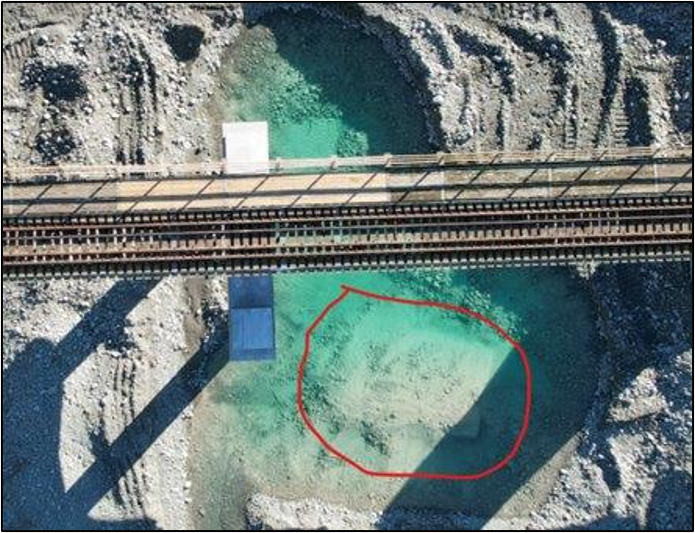
(iii) Once the connection between the top of the pier and the beams was lost, the pier toppled into the river and settled on the eastern side of the bridge in a downstream river flow (see Figure 15).
Structures inspections
Safety issue 1: KiwiRail’s inspections of Bridge 57 were not in accordance with its standards, missing an opportunity to identify and respond to the risk that the flood event presented to the bridge.
- The inspection process is a key aspect in the management of rail structures. Inspections ensure the condition of the structure stays within the intended safety and performance limits and is compatible with operating parameters.
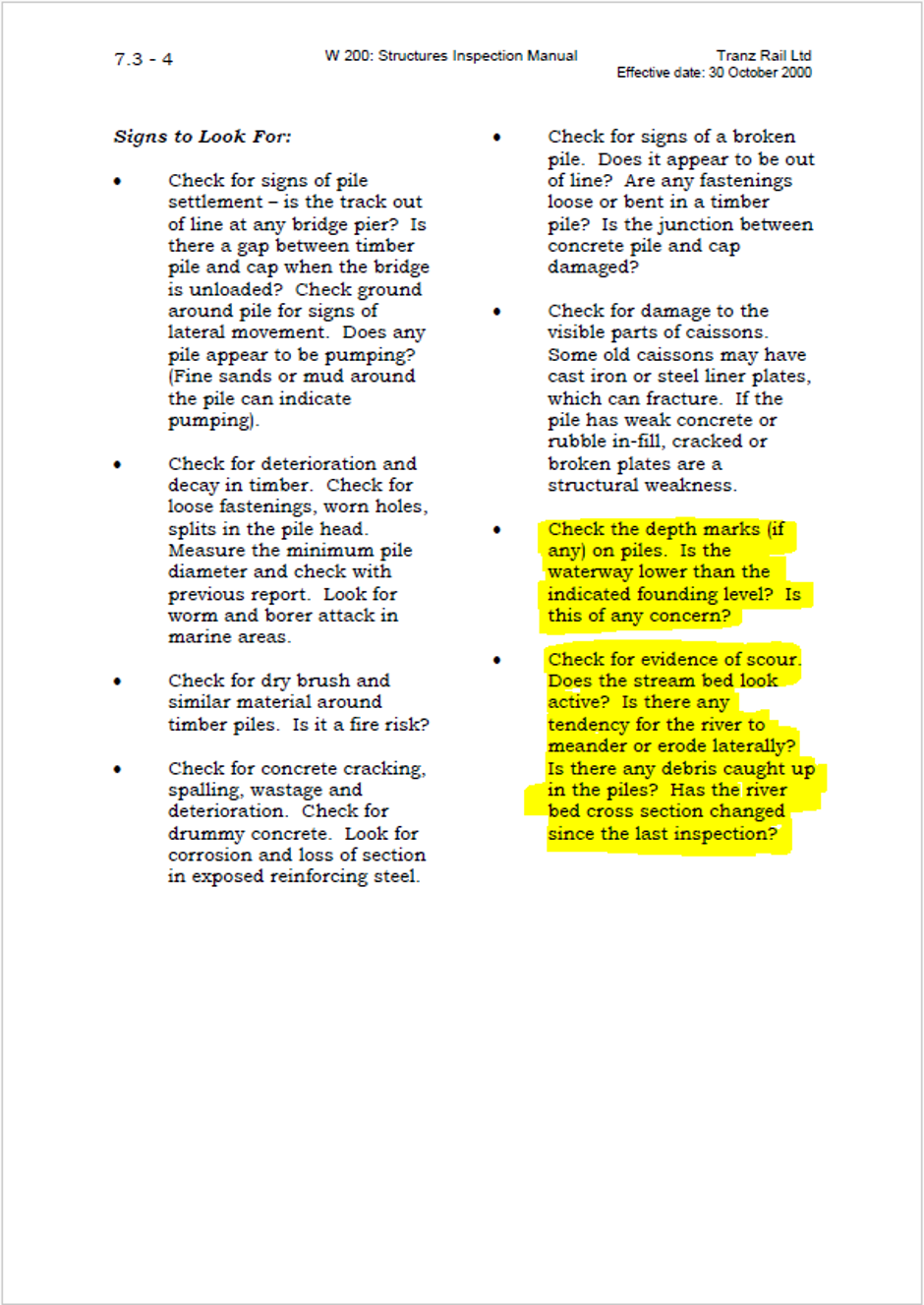
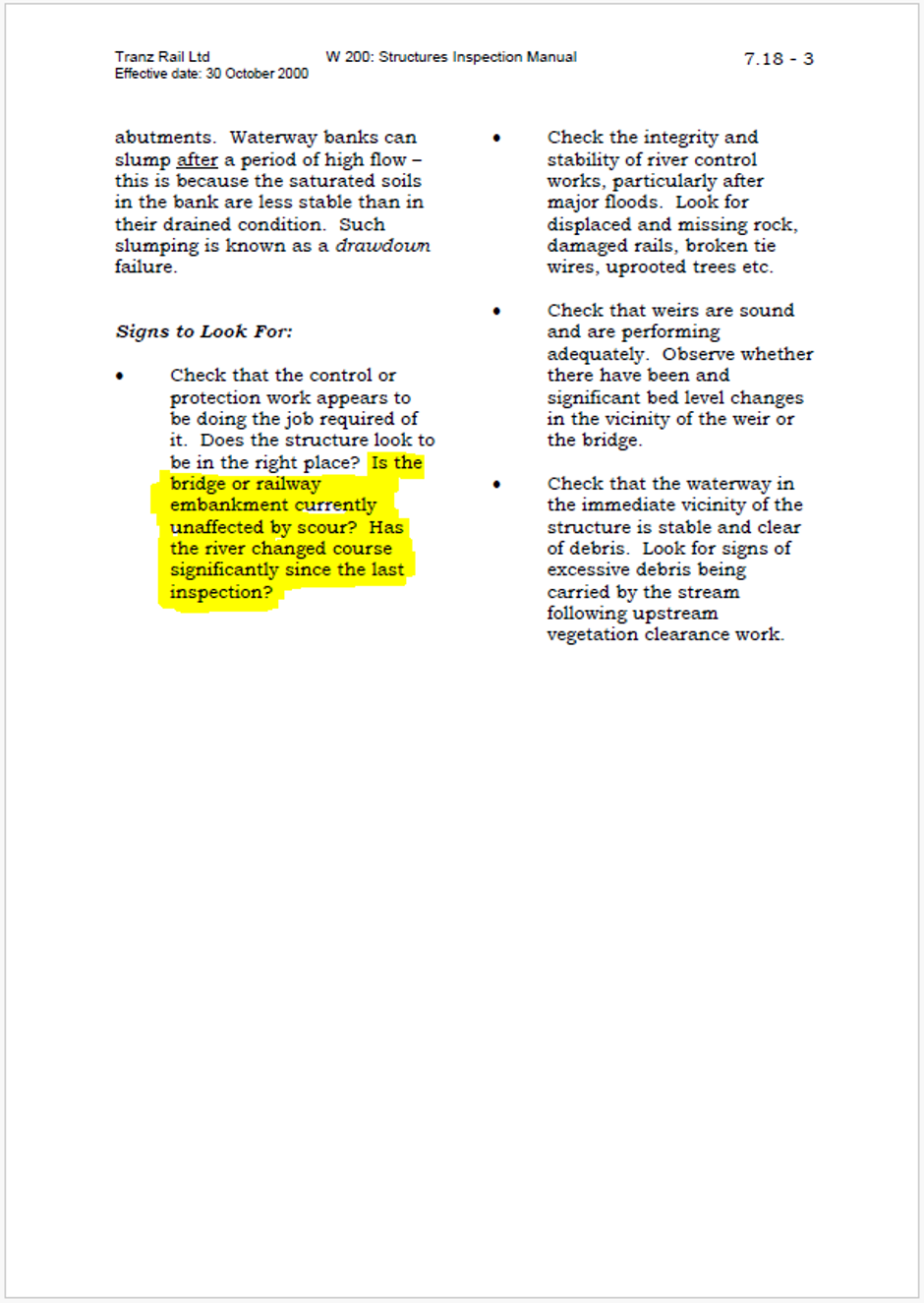
- The KiwiRail Structures Inspection Manual makes multiple references to the importance of monitoring the changes in the riverbed cross sections from one inspection to the next, as it can be an indication of scour risk at the bridge. Sections of the Structures Inspection Manual that specify this are shown in Appendix 3.
- Commission investigators reviewed the past nine detailed inspection reports for Bridge 57 to determine whether the river profile had been monitored as required in the procedure set out in the Structures Inspection Manual.
- The recording of the riverbed profile was found to be inconsistent, with some inspections including profiles that showed the riverbed depth. However, others were limited to comments indicating where the river was flowing at the time of the inspection.
- Commission investigators reviewed the most recent detailed inspection reports on a further nine bridges across the network that had been identified by KiwiRail as having a high scour risk in a desktop study. The recording of the riverbed profile in these reports was also inconsistent, with only some of the reports making note of the riverbed profile.
- The riverbed profile is a key indicator of the scour risk that any given bridge may have. The lower the riverbed level, the less pile embedment that is available to support the bridge structure and any trains that traverse it. By monitoring how the riverbed changes over time, the risk of scour failure can be closely managed to ensure that it stays within acceptable limits.
- The purpose of engineering inspections was to apply practical and theoretical engineering knowledge to identify features that may prevent a bridge from being safe for use. They are supplementary to the general and detailed inspections, with the aim of studying the adequacy of a bridge as a whole by assessing technical aspects such as scour depths.
- KiwiRail could not provide evidence of any engineering inspections of Bridge 57 despite the scour risk having been previously identified.
- KiwiRail could provide evidence of only one engineering inspection (as defined in
B-ST-AS-3110) being completed across the entire rail network over the period the standard was in place (July 2016 to February 2024). - Had an engineering inspection of Bridge 57 been completed, it is likely the risk of the scour failure would have been better understood. An engineering inspection could have provided an opportunity to identify the level of river flow that would create an unacceptable scour risk at Bridge 57. This would have allowed KiwiRail to make informed risk-based decisions when operating on the infrastructure.
- An effective audit system provides an opportunity for an organisation to identify inconsistencies between how work is being completed in the field on a day-to-day basis and how it is specified to be completed as part of a quality management system.
- KiwiRail had not been completing a formalised and documented audit process in accordance with its quality management system. This meant an opportunity was missed to drive continuous improvement and identify areas where the structural inspection regime could have been improved. Had the audit system been implemented as specified in the QMS, it is likely that the inconsistent riverbed monitoring would have been identified and improved upon.
Risk-based asset management
Safety issue 2: KiwiRail’s asset management plan for Bridge 57 did not include a plan to mitigate the identified scour risk. This increased the risk of a structural failure.
- Another key component of KiwiRail’s Safety Case is asset management.
- KiwiRail’s Strategic Asset Management Plan documents how its asset management objectives are to be achieved. It states the importance of having a thorough understanding of an asset’s performance and condition, and how this affects risk to the operation on the network.
- KiwiRail’s SHI Standard was effective at ranking the risk for each bridge on the network, relative to other bridges on the network. The standard, however, did not prescribe mitigation methods that should be used for a given risk level.
- KiwiRail gained a high-level understanding of the scour risk across the network in 2013 through a desktop scour-risk assessment. This assessment determined which bridges across the network needed further attention because of scour risk. However, it did not provide a ‘thorough understanding of an asset’s performance and condition and how this impacts risk for the operation on the network’ as required in KiwiRail’s Strategic Asset Management Plan, nor did it provide an impetus for the known scour risk at Bridge 57 to be studied further.
- Some overseas jurisdictions have a dedicated standard that specifies how scour risk should be managed, such as the United Kingdom’s CS 469 – Management of scour and other hydraulic actions at highway structures (National Highways, 2024). This standard provided procedures to determine the level of risk associated with scour and other hydraulic actions on structures in severe weather events. It also contained advice on mitigation actions that could reduce risk.
- KiwiRail did not rely on such a dedicated standard. Instead, decisions to impose operational restrictions were left to individuals, which did not provide the level of rigour that a well-functioning asset management system requires and increased the risk of structural failures.
Adverse weather procedures
Safety issue 3: KiwiRail’s planned response to adverse weather events did not take into account asset-specific risks, increasing the likelihood of inadequate mitigation measures being implemented.
- Weather-alert systems and robust procedures to respond to alerts are critical parts of operating a safe rail network. Well-known procedures and timely communications are crucial when a weather event is forming, while it is occurring, and after it passes. These enable potential safety risks to the rail network to be monitored and responded to.
- KiwiRail had been informed of the weather conditions within the Rangitata River catchment, and its severe-weather management system was effective in providing that information to key members of the business. Train control and Infrastructure departments were aware that the flow in the river had exceeded the red-alert level in the early hours of 12 April 2024.
- A red-alert level indicated potential for widespread impacts on the network and the suggested action within KiwiRail’s procedures was to cease operations.
- Despite knowledge that the river flow had reached the red-alert level, the line remained open. Two freight trains passed over Bridge 57 before the bridge was inspected and deemed safe to remain open.
- The flow at the bridge was very likely above the red-alert level during the passage of two freight trains and an inspection. This presented a significant and unmitigated risk to the locomotive engineers and the track ganger carrying out the inspection.
- The loss of Pier 8 of Bridge 57 compromised the structural integrity of the bridge, leaving it with unsupported spans.
- If the line had remained open after Pier 8 had collapsed and a train had traversed the bridge, it is virtually certain that a loss of vertical support and derailment of the train would have occurred over the compromised spans.
- KiwiRail would not have been aware of the collapse without the member of the public contacting them.
- The consequences of this would have been catastrophic and would very likely have resulted in serious injury to the train crew, and significant damage to the locomotive and leading wagons of the train. Additionally, there would very likely have been significant environmental damage to the river and further structural damage to the bridge.
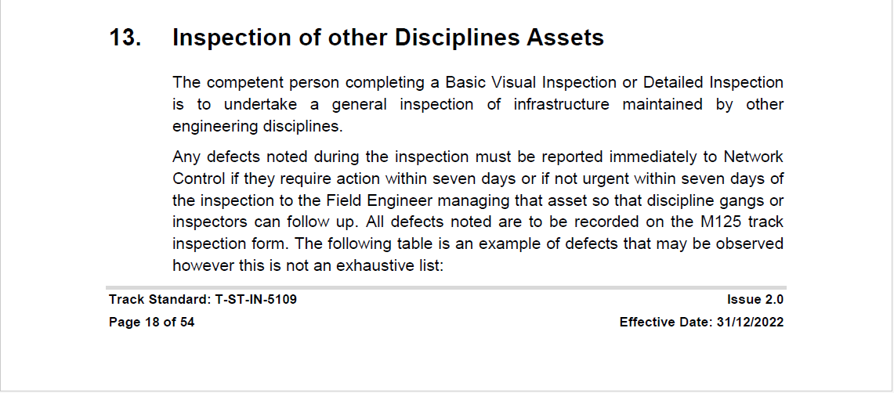
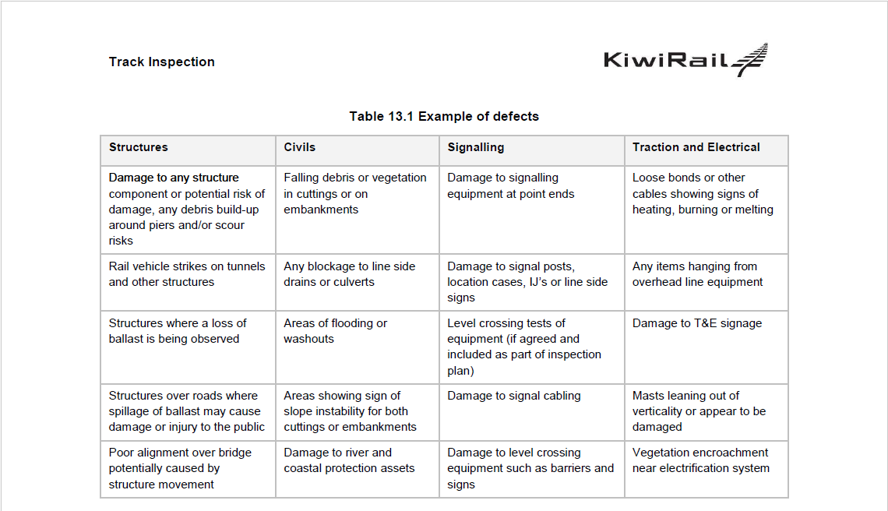
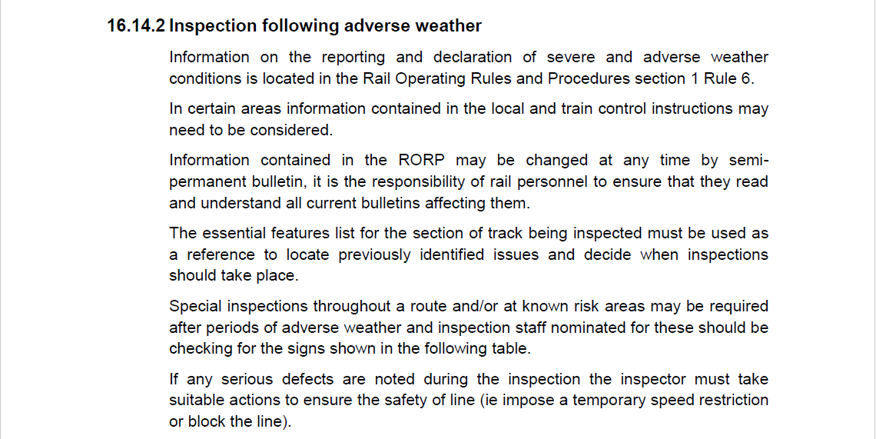
- The bridge inspection was completed according to the KiwiRail Track Inspection Standard T-ST-IN-5109. This standard refers to inspections required following adverse weather (Section 16.14.2) and inspection of other disciplines’ assets (KiwiRail’s assets are categorised into disciplines such as track, signals, and structures) (Section 13). Relevant sections of this standard are provided in Appendix 2.
- These sections of the standard refer to the risk of debris buildup at bridge piers and its impact on scour. However, they do not contain any guidance on the acceptable level of debris buildup or on a river flow that would present an unacceptable risk of structural collapse.
- The decision to keep the line open was based on previous events in which the river had flowed higher without causing any damage to the bridge.
- The track ganger had received no training in how to inspect a bridge under a river-flow event or to identify signs of scour.
- The track ganger’s assessment was based on their historical knowledge, as opposed to a scientific and statistical basis that could have been implemented had a risk-based asset management approach been implemented (see Safety issue 2).
- The action taken to ensure the line remained safe to operate in the adverse weather conditions was not a well-defined or documented process and did not include mitigation measures specific to the hazards for Bridge 57. The actions to be taken for yellow-, amber- and red-alert levels were not defined and documented. As a result, the inspection that was completed was based on the requirements of the Track Inspection Standard, which did not focus on risks specific to the structure.
Appendix 1. Stantec report on the structural analysis of pier stability



Appendix 2. KiwiRail Track Inspection Standard sections
Appendix 3. KiwiRail Structures Inspection Manual extracts