On Tuesday 3 September 2013 an express freight train operated by KiwiRail was travelling from Tauranga to Auckland. The train consisted of a single locomotive hauling 36 wagons, 14 of which were conveying hazardous goods. At about 0300, as the train was approaching Mercer, a wheel-bearing on the 20th wagon behind the locomotive failed, resulting in that wagon derailing and tipping onto the adjacent southbound track. The following two wagons also derailed, one of them spilling its container and contents onto the adjacent State Highway One Expressway.
Executive summary Tuhinga whakarāpopoto
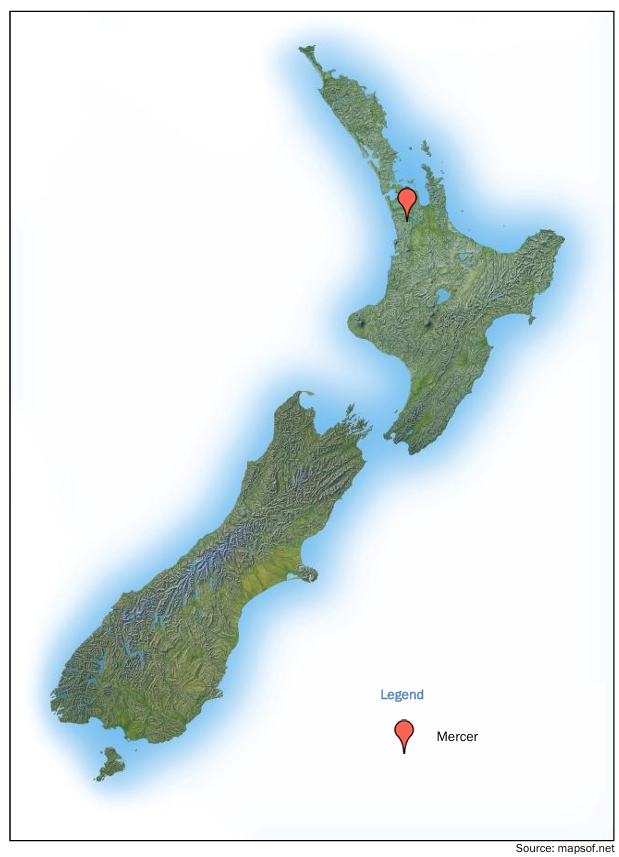
- On Tuesday 3 September 2013 an express freight train operated by KiwiRail was travelling from Tauranga to Auckland. The train consisted of a single locomotive hauling 36 wagons, 14 of which were conveying hazardous goods.
- At about 0300, as the train was approaching Mercer, a wheel-bearing on the 20th wagon behind the locomotive failed, resulting in that wagon derailing and tipping onto the adjacent southbound track. The following two wagons also derailed, one of them spilling its container and contents onto the adjacent State Highway One Expressway.
- Nobody was injured but significant damage occurred to the derailed wagons, their cargo and the rail infrastructure.
- Not enough of the failed wheel-bearing could be found to make a meaningful analysis of why it failed. However, there is some indication that previous issues with the wagon’s braking system were a factor contributing to the failure.
- KiwiRail had installed a wheel-bearing acoustic monitoring system at three locations on the rail network to gather data on, and detect any signs of, pending wheel-bearing failure.
- The Commission found that the wheel-bearing acoustic monitoring system had detected impending problems with the failed wheel-bearing. However, because the system had yet to be fully implemented and resourced, the impending failure was not acted on in time to prevent the derailment.
- The Commission noted the potentially serious consequences of mainline train derailments, particularly in double track areas and where the rail track comes close to roads and public areas. However, it also noted the trend of decreasing mainline derailments since the installation of the wheel-bearing acoustic monitoring system.
-
One recommendation has been made to the chief executive of KiwiRail to improve the accuracy of recording events involving train braking system failures to provide another predictive tool for detecting and preventing premature wheel-bearing failure.
- A key lesson arising from the inquiry is that, in order to achieve the full benefit of new technology introduced for the purpose of increasing rail safety, proper processes for applying the technology must also be introduced and sufficient staff provided who are fully conversant with those processes.
Factual information Pārongo pono
Narrative
- On Tuesday 3 September 2013 the train was travelling from Tauranga to Auckland. The train consisted of a single locomotive hauling 36 wagons, 14 of which were conveying hazardous goods.
- The train had undergone the standard checks on departure from Tauranga. No defects or abnormal conditions were found.
- An Auckland-based driver took over the running of the train at Hamilton, and it departed from there at 0206.
- Nothing untoward occurred during the trip until it was approaching Mercer. The train was travelling at about 73 kilometres per hour approaching Mercer Station when the driver began slowing the train for a 40 kilometre per hour temporary speed restriction at the north end of Mercer Station.
- The 20th wagon behind the locomotive derailed within Mercer Station limits (Wagon PKK321). The derailed wagon was dragged about 600 metres to a set of “trailing points” for the crossover between the northbound and southbound tracks at the north end of Mercer. The derailed wagon and its container tipped towards the right side, obstructing the southbound track. The following two wagons also derailed at the crossover points. Containers separated from the second wagon to derail and spilt out onto southbound State Highway One Expressway, blocking one lane (see Figure 1).
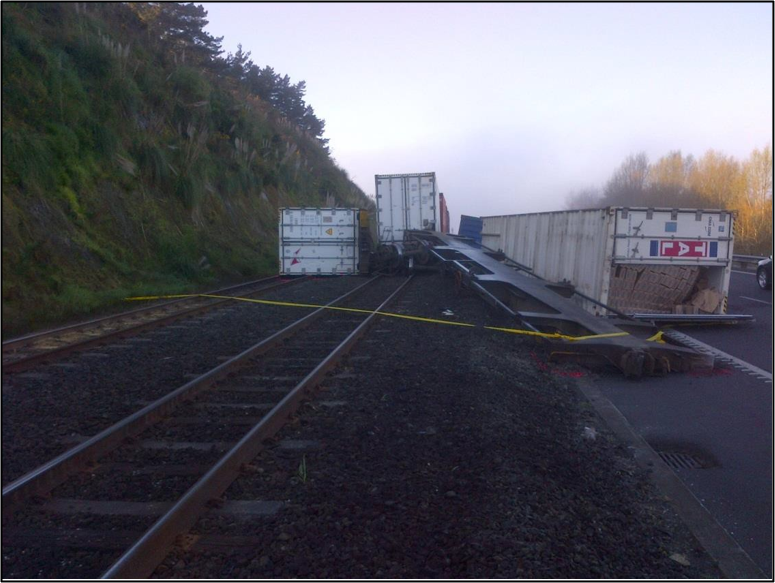
- The train parted after the derailed wagon struck a set of crossover points, causing the train brakes to apply automatically.
- At about the same time, another train was approaching Mercer on the adjacent southbound line. The derailment had tripped the track circuit for the southbound line, causing the approach signal to revert to red (stop). The driver of the southbound train saw the signal change and made an emergency brake application, stopping the train before the signal. The driver of the derailed train radioed the train controller to tell him that his train had stopped automatically and that he would walk back to inspect his train. The train controller then instructed the driver of the southbound train to remain stopped at the red signal.
- The driver of the northbound train radioed his findings to the train controller when he reached the derailed wagons, which were about 200 metres behind the front portion of the train. The train controller then informed him that the emergency services had already been called. The driver applied handbrakes to secure the rear of the train and then positioned himself in a safe place alongside the highway to alert road traffic to the danger ahead.
Site inspection and research
Track
- Marks on the head of running rail confirmed that the point of derailment was at 609.361 kilometres, North Island Main Trunk line, within station limits at Mercer (see Figure 2).
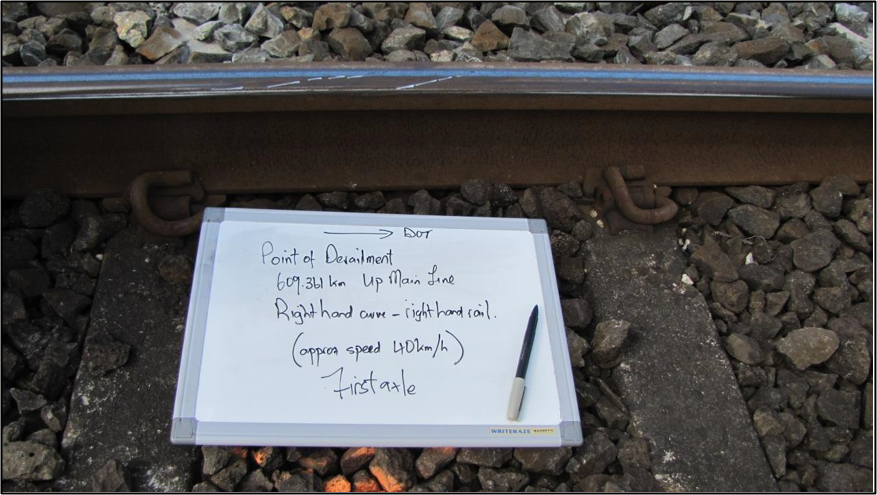
- The track at the point of derailment consisted of 50 kilogram per metre continuous welded rail fastened to concrete sleepers that were manufactured in 1976. The point of derailment, within Mercer Station limits, was on a 1 in 882 rising gradient within a 1200 metre radius right-hand curve.
- The track evaluation car had measured and recorded the track geometry on the northbound line through Mercer on 22 August 2013, 11 days before the derailment. The track evaluation car recorded track geometry that included: the gauge, the line, the top and the cant. The recorded information was compared against defined maintenance parameters and an exception report was generated to identify the location and the severity of the track geometry fault. The track evaluation car did not identify any track geometry faults leading up to the point of derailment.
- The track inspector had not identified any track issues on the northbound line through Mercer Station limits while he was carrying out his twice-weekly runs during August 2013.
-
A manual track geometry measure over 120 metres before and 20 metres past the point of derailment was carried out on the day of the derailment. No track condition was found that would have contributed to the derailment.
Derailed Wagon PKK321
- The derailed wagon was built in 1980 and first entered service as PK1866, which was a PK wagon class developed to carry combinations of three, six and 12 metre long containers. The wagon had a tare weight of 13.1 tonnes and was designed to carry a maximum load of 44 tonnes.
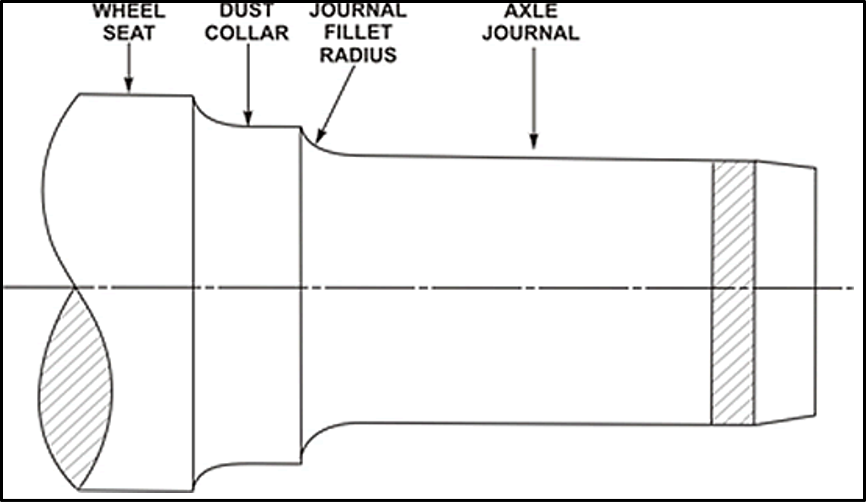
- The wagon rides on two standard three-piece bogies. Each bogie consists of two wheelsets and two connecting side frames. A wheelset assembly consists of two wheels, pressed onto an axle (the axle is a circular shaft connecting two wheels to form a wheelset), and two roller bearing assemblies pressed onto the axle journals (the axle journal is the part of the axle in contact with a bearing) (see Figure 3).
- The wagon was conveying one 12.2 metre container. The container and its contents weighed 16.6 tonnes, within its total load capacity.
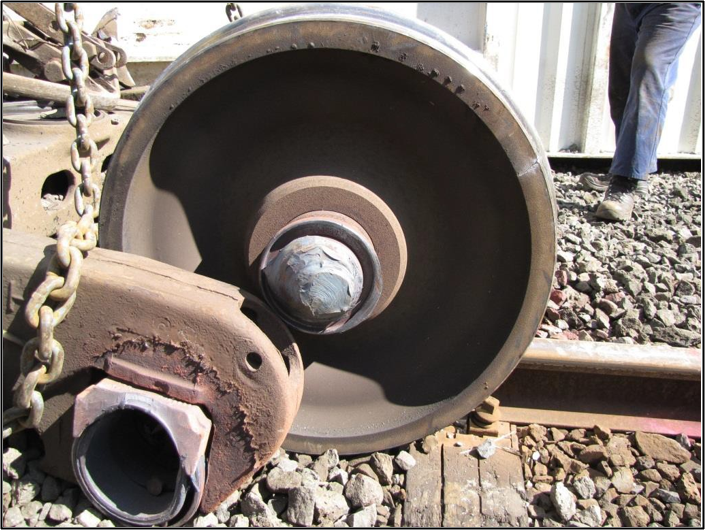
- The handbrake on the derailed wagon was trailing in the direction of travel. The bearing on the left-side trailing axle of the leading bogie (referred to as the A3 bearing) had failed (see Figure 4). The axle closest to the handbrake is axle 1 and the wheels on the handbrake side of the wagon are referred to as the A-side.
- The wagon’s wheel dimensions measured after the derailment showed that they were all within limits (refer to Appendix 1 for details).
- Maintenance records showed that the scheduled two-yearly C-check inspections had been completed on 15 March 2013, 4 July 2011, 17 July 2007, 29 December 2005 and 19 May 2005. The 10-year brake check was last carried out at the same time as the 2011 C-check. A bearing condition survey was carried out on the wagon on 20 May 2008 (see Appendix 2 for inspection schedule).
- The inspection record from the most recent C-check on the wagon showed that all bearings on every wheel had been reported as passing the visual inspection.
- The wagon had a history of frequent brake block replacement. The wagon maintenance records showed that two or more brake blocks had been replaced on nine separate occasions from 28 January 2013, namely 19 August, 14 August, 10 July, 24 June, 19 June, 4 June, 15 May, 15 March and 28 January.
Wheel-bearings
- Tapered roller bearings are fitted to the entire fleet of KiwiRail’s bogie freight wagons. The packed wheel-bearing type fitted to the axle was to Association of American Railroads Class C Standard. The life span of these wheel-bearings was in most cases determined by the wear limits of the wheel thickness, usually reached after about 10 years of normal running. The wheelset inspection check-sheet showed that new wheels were fitted to a new axle at
- KiwiRail’s Hutt Workshop on 16 December 2005. The bearings were fitted the next day and on 19 December the wheelset (which later became derailed wheelset number 3) was checked and certified by the team leader as compliant with the standard.
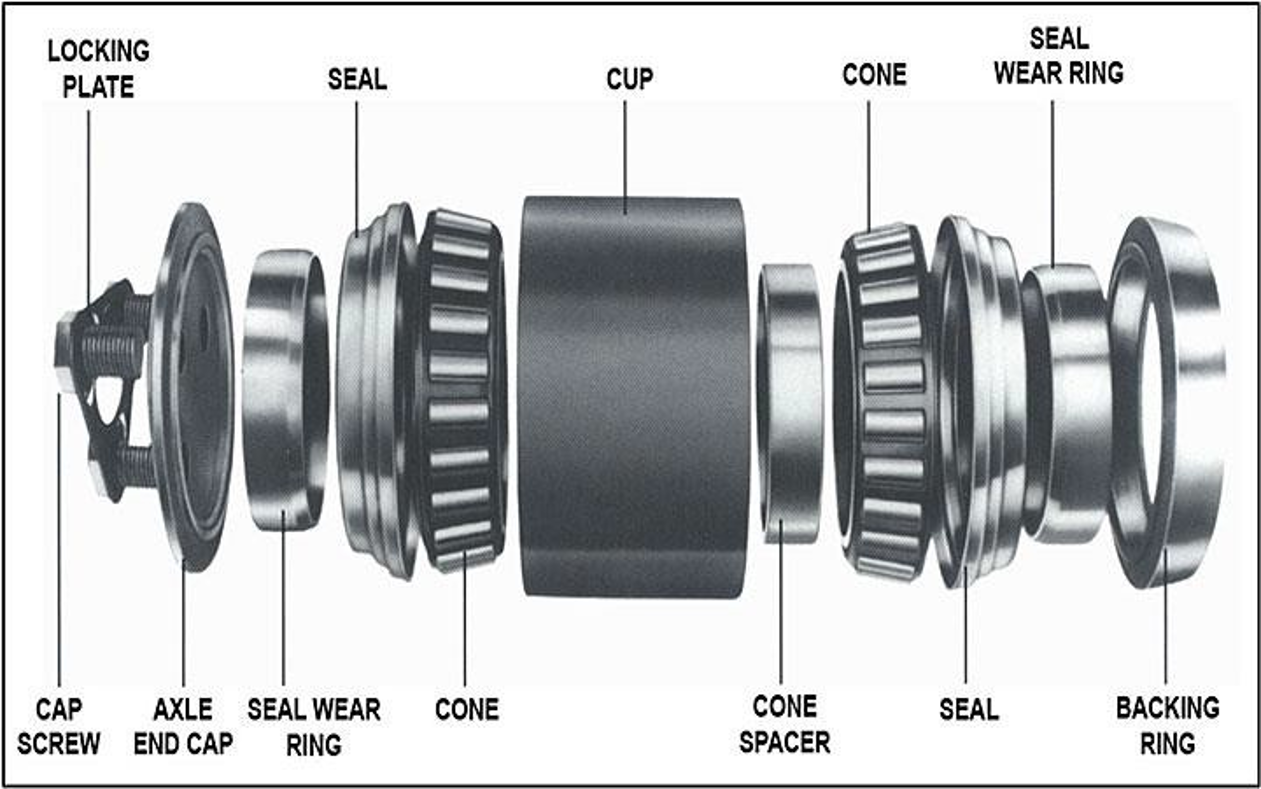
- A wheel-bearing assembly consists of an outer cup which houses two tapered roller cone assemblies separated by a spacer. Each cone assembly consists of a raceway, rollers and a cage. Inboard and outboard seals, seal wear rings, a backing ring and an end cap complete the bearing assembly. The cup, rollers and cones are case hardened with precision finishes to ensure closely matched mating surfaces. The cage is essentially a spacer that retains the rollers in place within the cone assembly. The entire assembly is pressed on an axle journal, and is retained by an end cap secured with three cap screws fixed in place by a locking plate (see Figure 5).
Mainline derailments
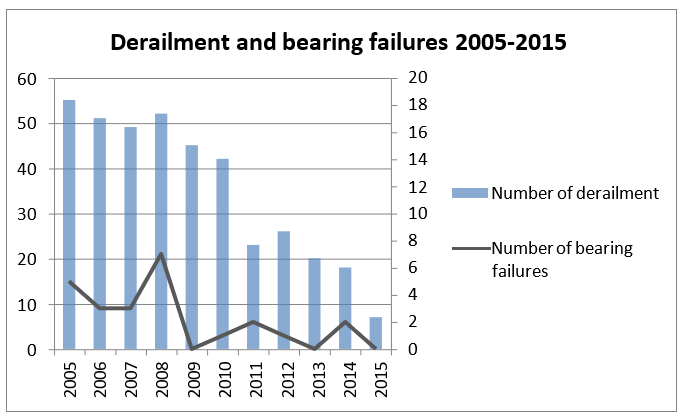
- Fifty-five mainline derailments occurred on the rail network in the financial year ending 30 June 2005. Since then, there has been a downward trend in the number of mainline derailments recorded, with seven derailments recorded during the financial year ending 30 June 2015 (see Figure 6). On 3 July 2015 KiwiRail confirmed that since the RailBAM systems were commissioned there had been one other derailment attributed to a bearing failure, which had occurred on 14 February 2014 on the Main South Line.
Analysis Tātaritanga
Introduction
- Mainline derailments not only result in damage to rolling stock and rail infrastructure equipment but can present significant risk to people and the environment. Freight trains travel close to major state highways, past station platforms and across some 1600 level crossings on the rail network. This accident occurred in the early hours of the morning, when traffic volume on the normally congested expressway was low.
- There is an additional risk associated with double track areas, where a derailment on one line can affect trains travelling on the adjacent line, as happened on this occasion.
- There was nothing in the way the driver was handling his train that should have caused the derailment. Nor was there any track abnormality that contributed to the derailment.
- The evidence points clearly to a wheel-bearing failure resulting in a “screwed” axle journal and the consequential dropping of the bogie side frame onto the rail. This sequence is described in more detail in the following analysis.
- The following analysis also discusses the safety issue with derailments in general, and the processes in place to mitigate the risks of wheel-bearing failures, which often result in a derailment.
- A safety issue arising from the derailment was the high incidence of brake block replacement, which can contribute to premature bearing failure. The wagon that suffered the wheel-bearing failure had a higher than normal brake block replacement, yet it was not put under an enhanced monitoring and inspection schedule.
The derailment
- Evidence from site observations showed that the bearing journal had separated from the left-hand side of the number 3 axle of Wagon PKK321 as the train approached Mercer. The first impact marks from the derailment were evident on the rail. The train came to a stop 630 metres further on.
- The bearing that failed was destroyed completely and most of the components were not found. Therefore, the evidence that may have indicated the probable cause of the failure was either not available or destroyed.
- An axle journal screwing (the term “screwed journal” is a rail industry term that describes the failure of a wheel-bearing and the consequential separation of the wheelset from the axle journal on which the bearing was fitted) off in the manner described and shown in Figure 3 is a typical result of a total bearing seizure. Once the bearing journal is separated from the axle, the bogie side frame and axle are no longer able to maintain their configuration. The bogie side frame then drops onto the rail. This then allows the unrestrained wheel to lift and derail. The markings on the rail at the accident site are consistent with this scenario.
- The train continued and eventually the derailed wagon turned on its side after the derailed wheelset struck the north end crossover points at Mercer. The rear of the train continued to push into the derailed wagon, forcing the following two wagons to also derail. The wagon behind came to rest on the highway 6.4 metres from the track centreline. Its two containers separated from the wagon with the extremity of one container some 8.1 metres from the centre of the track. One wheelset of the second wagon back also derailed but that wagon remained upright.
- This derailment is an example of the potential consequences of a mainline derailment. It was fortuitous that the bearing failure and consequential derailment occurred when the train was slowing for a 40 kilometre per hour speed restriction. If it had occurred at a higher speed, the damage to the train, its cargo and the rail infrastructure would almost certainly have been worse. This would also have been the case if the southbound train on the adjacent track had been travelling at the normal line speed. The southbound train would be less likely to have been able to stop before colliding with the derailed wagon that was obstructing its track.
- Because the derailment occurred during the early hours of the morning, the road traffic on the adjacent State Highway One Expressway was relatively light. Wagons and containers spilling onto the road pose a significant risk to road users.
Wheel-bearings
- There are a number of reasons why a wheel-bearing may fail in service:
- inadequate lubrication
- inadequate overhaul standards
- inadequate fitting practices
- leaving the bearing in service too long
- overheating
- shock loading caused by wheel flats.
- The inspection of rail bearings has traditionally been of a visual nature only. If the bearing did not show any external signs of damage or grease leakage then the internal components of the bearing were assumed to be in working condition. It was only when the wheel profile reached the condemning limit, or the wagon was due for its 10-year check, that the bearing condition was checked internally. As a general rule however, a complete wheelset change out was performed at the 10-year check.
- The scheduled inspections of the derailed wagon had been carried out at the required frequency. Additionally, nine B-check inspections had been carried out on the wagon in 2013, with the most recent on 19 August 2013, 14 days before the derailment.
- Neither the pre-departure inspection of the stationary train nor the roll-by inspection of the train as it departed from Tauranga noted any visual or audible signs of the impending bearing failure.
-
The bearing that failed was fitted to a new axle at KiwiRail’s Hutt Workshop on 17 December 2005. The bearing check-sheet showed that the package bearing installation complied with KiwiRail’s Wheelset Manual M6000 in that:
-
the press force to fit the bearing of 45 tonnes was at the maximum allowable range of 40 to 45 tonnes
-
the bearing cap bolt torque (torque is a measure of the turning force applied to an object such as a bolt. The magnitude of torque depends on the force applied, the length of the lever arm and the angle between the force and the lever arm) was to the required 220 newton metres
-
the bearing lateral end play of seven thousandths of an inch was within the allowable range of between one and fifteen thousandths.
-
-
Records show that the bearing had been in use since mid-2006 (about seven years) and the wagon had travelled 330,000 kilometres before the bearing failed.
-
Packaged bearings are fitted as a sealed unit and do not require re-greasing while in service. The normal running temperature for wheel-bearing was between 30 and 50 degrees centigrade. Generally, when a wheel-bearing assembly becomes too hot to be touched it is considered to be running over temperature and the wagon should be withdrawn from service for further inspection. A “hot box” (a hot box is the overheating of the bearing/axle journal assembly) will develop when the wheel-bearing is permitted to operate at excessive temperatures. If a hot box is not identified and the wagon continues running, the bearing may seize and develop a “screwed journal” and then the wagon will eventually derail if permitted to continue running.
- The enclosed arrangement of a packaged bearing makes it impossible to visually inspect its internal moving parts without disassembly, which only occurred nominally every 10 years when a wheelset overhaul was required because the wheel profile was at condemning limits. A study of overheated roller bearing data for 2008 to 2010 conducted by the Association of American Railroads concluded that the following defects accounted for more than 90% of confirmed overheated roller bearing failures:
- fatigue spalling 31.9%
- water etching (water etching is the rusting with pitting and corrosion from exposure to moisture) 25.8%
- mechanical damage 14.6%
- loose bearing 10.9%
- [bearing] adapter defect 4.6%
- wheel defect 3.7%
- The derailed wagon had between two and eight brake blocks replaced on nine separate occasions, as well as other repairs to the braking system twice in the eight months leading up to the derailment. Only the total number of brake blocks changed on the wagon was recorded when replacement was carried out. It was therefore not possible to determine whether or not the A3 brake block (failed bearing) was replaced more often than on any of the other seven wheels on the wagon.
- Given the frequency of the unscheduled work required on the wagon’s brake system during 2013, it is surprising that the wagon was not placed on a “watch list” or removed from service until the primary cause of the braking issue was determined and rectified. KiwiRail has addressed this issue with the reintroduction of a “rogue wagon” list (see section 6).
- A 2015 report by Indian Railways Rolling Stock Maintenance Inc. into brake binding (brake binding occurs whenever a brake block grips the wheel with excessive braking force, and/or does not release properly) stated that failures in the braking system and the operation of the braking system are the major causes of brake binding that then damages the wheels and the bearings.
- As previously mentioned, not enough of the destroyed bearing could be recovered to make a meaningful analysis of what ultimately caused it to fail. However, the high number of brake block replacements on the derailed wagon compared with other similar wagons on the train raises the question of whether the condition of the braking system and brake block replacement frequency could have been a factor contributing to the premature bearing failure. Brake binding can cause high wheel temperatures, which can transmit to the wheel-bearing, and can also cause wheel flats, which are also known to contribute to premature wheel-bearing failure. The Indian Railways study concluded that there was evidence that brake binding can contribute to premature wheel-bearing failure. Therefore, the Commission is recommending that KiwiRail consider recording brake block faults by wheel to provide another predictive tool for preventing premature wheel-bearing failure.
- The time from when the first visual signs of bearing failure become evident to total bearing failure can be short. The regime of visual inspection is not therefore an effective means of managing and preventing total wheel-bearing failure. This accident is evidence in support of that hypothesis. None of the routine or departure checks made on the wagon detected the impending failure.
Bearing acoustic monitors
- The issue of a trackside detection system to reduce the risk of bearing failures was referred to in Commission report 04-130, Express freight train derailments due to axle bearing failures, various locations. The report referred to four express freight train derailments attributed to axle bearing failures between 5 November 2004 and 21 March 2005. Toll Rail (KiwiRail’s predecessor) evaluated at that time that the cost of installing a trackside detection system outweighed the cost/risk of wheelset bearing related failures.
-
In 2007 the Commission investigated another mainline derailment, where a failed wheel-bearing caused the derailment of a freight train near Huntly (report 07-114, Derailment caused by a wheel-bearing failure, Huntly, 19 October 2007, and 11 subsequent wheel-bearing failures at various locations during the following 12-month period). There were 11 subsequent wheel bearing failures at various locations over the following 12 months. The Commission issued an urgent recommendation to the chief executive of the Land Transport Safety Authority (now NZ Transport Agency) on 4 March 2008, stating in part:
The Commission considers it a safety issue that the New Zealand rail network is not equipped with an integrated acoustic bearing monitoring system compatible with current international practice. The Commission recommends the Chief Executive of Land Transport NZ urgently addresses this safety issue. (008/08)
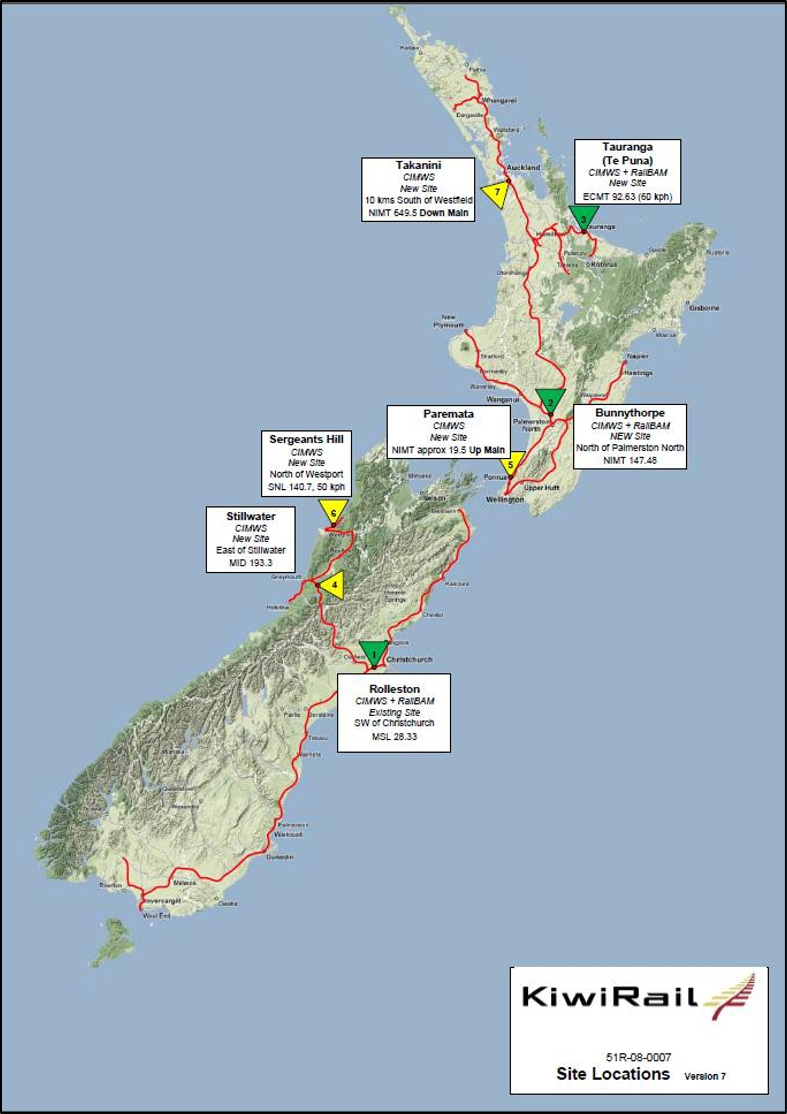
- Work then began on planning for a network of bearing acoustic monitors. On 12 November 2010 KiwiRail confirmed the first RailBAM system with an in-motion weighbridge had been installed at Rolleston, near Christchurch. Two other RailBAM systems were about to be installed at Te Puna, near Tauranga, and Bunnythorpe, near Palmerston North (see Figure 7). KiwiRail determined that these strategic locations had the potential to record the condition of more than 90% of the wagon fleet on a regular basis. The system relies on every wagon in KiwiRail’s fleet being fitted with a unique identification tag. KiwiRail advised that about 65% of the wagon fleet had been fitted with identification tags at that time.
- KiwiRail reported that the three RailBAM systems became fully operational from early 2012.
- The RailBAM system is a condition monitor, rather than a failure detector. The system provides data for both fault trending and an immediate alert to remove a wagon from service. The system is designed to detect and rank axle bearing faults, and provide condition monitoring reports and an advance warning of potential bearing failures, unlike a “hot box” detector, which typically gives up to 60 minutes’ warning between a fault being detectable and a complete bearing failure.
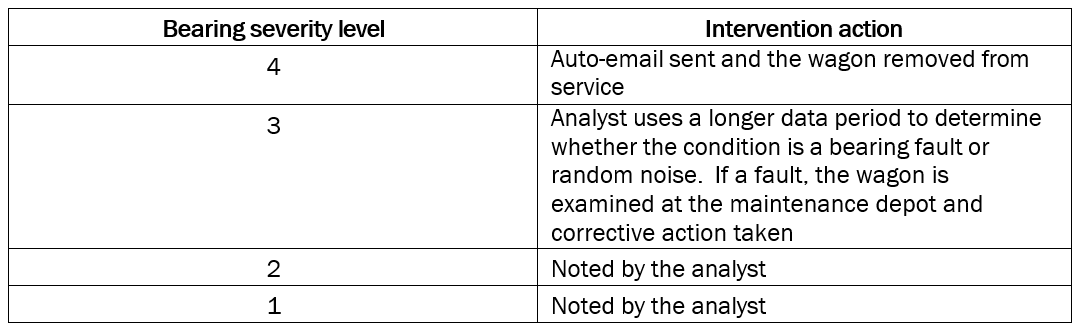
- Sampled real-time data is analysed by a computerised data acquisition and analysis unit during and immediately after the train has passed the RailBAM system. The RailBAM system extracts bearing fault and wheel flat “signatures” from extraneous noise, enabling fault identification and severity classification (refer to Table 1 below). The data for individual bearings is stored in the RailBAM trending database. The outputs are compared with the bearing standard and an exception report is generated. However, the acoustic measurement can be affected by environmental noise that may result in either missed faults or false alarms.
- When a “Bearing severity level” of 4 is reached, an auto-email is sent (see Table 1 below for intervention action at the time of this derailment). “Bearing severity” has a step scale where RS1 (bearing running surface fault) represents the highest fault types through to RS3 for the lowest fault, and also a no fault found (NFF). Other categories are LF (looseness/fretting) and WHLFLT (wheel flat). The step scale also has prefix descriptors to reduce the confidence of the fault level e.g. NOISY – unknown extraneous noise, FBS – flanging, braking or slamming, or SHRK – tonal noise (removed before bearing analysis).
- The C-class bearings fitted to wheelsets on KiwiRail’s wagon fleet had a tendency to generate an “extraneous noise” fault. Because the system had been operating for nearly two years and generated a large number of noisy bearing faults, none of which had resulted in a bearing failure, the condition was treated as acceptable and no further action was taken.
- The reported unknown extraneous noise on the rolling surface was mostly at level 1 only. Had the bearing severity been reported as a level “4” and sent an auto-alert, it was likely that the wagon would have been withdrawn from service and investigated for the source of noise. During the early phases of commissioning the RailBAM, a sample of wagons with noisy RS1 faults were withdrawn for service and closer examination. No faults relating to the bearing noise were detected.
- KiwiRail’s investigation identified loose bearing keeps as contributing to the extraneous environmental noise. On 25 February 2014 document TG-BO-113 Axle Keep Bolt Assembly was revised and issued to all field maintenance staff to ensure proper assembly and tightened to a minimum torque standard.
- Over a period of 23 days before the derailment, the Te Puna RailBAM had generated 20 fault records (NOISY (RS1), FBS (RS1) and RS1) for the failed wheelset A3 (which held the bearing that eventually failed); 15 were reported as bearing severity level 2, with the other five reported as bearing severity level 1. KiwiRail took no action to remove the wagon from service for closer examination at the time. KiwiRail’s rationale was that the recordings generated a maximum bearing severity of a level 2 fault, and the sampling examinations carried out during the commissioning of the system had shown no history of faults of this magnitude that had resulted in a catastrophic bearing failure. The high total number of bearing severity level 2 faults generated on a daily basis was such that only wagons having level 3 and above bearing severity level were determined to require further examination.
- At the time of the derailment, the position of a dedicated RailBAM analyst had not been created, nor was there an agreed RailBAM process that set out the responsibilities associated with the monitoring and reviewing of the RailBAM data and the actions to be taken. Instead, the data generated was perused by the manager in charge of the project, who did not have the time to properly analyse the data produced by the RailBAM system. KiwiRail has since addressed this issue so no recommendation has been made in this report (see section 6, safety actions).
- Before this derailment KiwiRail’s practice was to keep a wagon in service unless the evaluator was sure that it had a faulty bearing. From 28 November 2013 KiwiRail’s instruction required the RailBAM analyst to review the RailBAM data from the previous day or weekend every week day. The RailBAM analyst is required to sort, on a daily basis, data by the worst case bearings. All level 3 alert faults are analysed using a longer data period. When the analyst is able to identify clear faults, the wagon is added to the watch list and monitored on a weekly basis. The wagon is immediately coded as a “Bad Order”, and an email forwarded to the maintenance depot with a description of the findings and any remedial action required. When the analyst finds random noise on a wagon, an instruction is sent to the asset maintainers to inspect, investigate and undertake corrective action (see section 6, safety actions). Level 2 alerts are analysed in a similar manner.
- The fault developing in the wheel-bearing had been detected by the bearing acoustic monitor. Under the procedures adopted since this derailment there is a greater likelihood that the wagon would have been taken out of service for inspection and remedial work before the failure occurred, thus preventing this derailment.
- Also supporting the effectiveness of the bearing acoustic monitoring system is the number of mainline derailments recorded on the national rail network which has trended downward from 55 to seven over a 10-year period, a reduction of 87%. While not all wagons pass over a RailBAM unit on a regular basis, more than 90% of the fleet does. More importantly, the “high use” wagons on unit trains such as the MetroPort fleet that shuttle between Tauranga and Auckland pass over the RailBAM daily in both directions, providing valuable information on bearing condition that enables scheduling of preventative maintenance.
Appendix 1: Post-derailment wheel measurements for Wagon PKK321
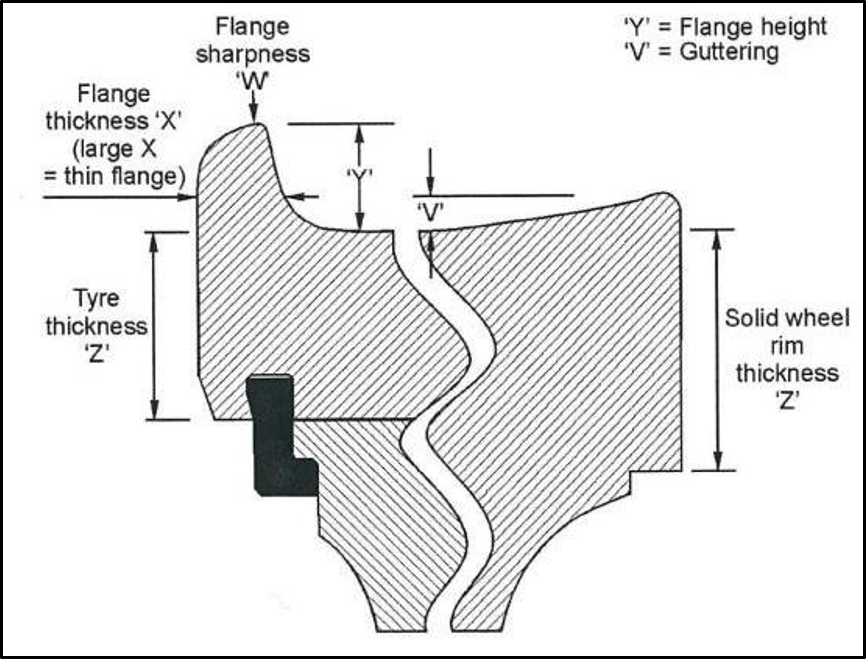
- (All measurements are in millimetres): A larger X reading indicates a thinner wheel flange.
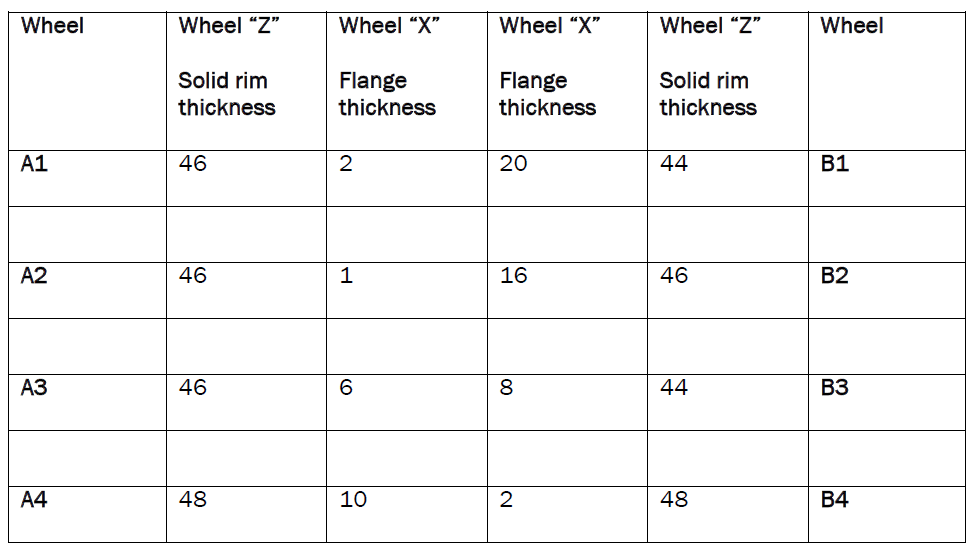
- The flange wear limits set out in KiwiRail’s Wheelset Manual M6000 Mechanical Code states in part that:
- the wheel is programmed for attention at 24 millimetres
- attention must be given at 30 millimetres
- the maximum limit allowed after wheel profiling is 40 millimetres.
- The solid wheel rim limits set out in the Wheelset Manual requires that:
- a new solid wheel fitted to a Type 14 bogie has a Z reading of 57 millimetres
- the diameters of two wheels on the same axle must not differ by more than one millimetre (Z gauges are not to be used for this purpose)
- the diameters of wheels on the same bogie must not differ by more than 20 millimetres
- the condemning limit for a solid wheel on a Type 14 bogie is a Z reading of 16 millimetres.