
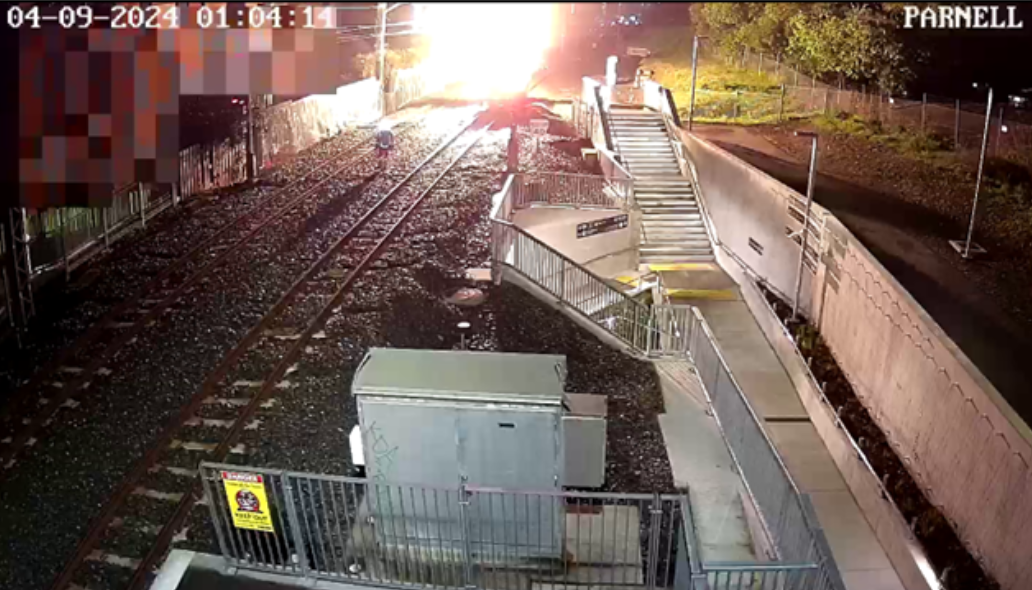
What happened
In the early hours of 4 September 2024, teams were inspecting and maintaining Auckland’s overhead rail power lines. One team had planned to work towards Waitematā Tunnel, but their hi-rail vehicle (HRV) lacked the required diesel permit for the tunnel, so the work location changed to the line towards Parnell. At 0104, they were within the worksite but beyond the electrical isolation limits. An operator and a traction electrician were in the basket of the HRV’s elevated work platform being raised towards an overhead line when an electrical arc flash caused serious burns to the electrician and minor injuries to the operator. The vehicle’s electrical and computer systems were extensively damaged.
Why it happened
When the work location changed, the team received no further briefings with the rail protection officer. The worksite boundaries stayed the same, and the team expected all overhead lines within those boundaries to be electrically isolated. But part of the worksite remained live.
As they travelled towards Parnell, there were no clear markers warning them that they were passing beyond the electrical isolation limits. They were still inside the worksite and protected from train movements, but the overhead wires were live.
The team had no information at hand to check the isolation limits and no testing equipment to check whether the wires were live before starting work.
Safety issues and safety takeaways
The report’s safety takeaways are relevant for any workplace where people rely on several safety controls at once.
Control for all hazards
Track protection and electrical isolation limits did not align. Live overhead equipment remained within the worksite.
- Safety takeaway: Plan how protection arrangements fit together. Make clear which hazards are controlled, where those controls apply and what dangers remain.
Enable workers to verify their protection
The isolation team had tested the electrical isolation, but it extended into the worksite and the line maintenance team who had travelled from another location lacked testing equipment and had no way to confirm that the line was not live at its work location.
- Safety takeaway: Provide a practical way to verify safety where the work will take place. Understanding a boundary and confirming the equipment is safe are both important.
Check shared understanding when work changes
The briefing did not give everyone in the protected work area the same understanding of the safe limits. The changed location for the line maintenance team altered their risks but there was no fresh briefing.
- Safety takeaway: When work changes, STOP. Reassess before proceeding. Make limits visible and provide clear information workers can refer to. Check understanding across roles and teams.
Use consistent location references
Some documented traction asset locations differed from their actual locations by 460 metres. The inquiry did not directly attribute the accident to that discrepancy, but identified an additional safety risk.
- Safety takeaway: Use consistent, accurate references across records, signs and teams so that people mean the same place when identifying work and protection limits.
(Traction asset: equipment that supplies electricity to trains. In this report, includes overhead wires, the poles, support structures, and other electrical equipment such as isolating switches.)
Safety actions and recommendations
KiwiRail reported improvements to physical demarcation, permit information, planning and supervision, and the introduction of personal voltage detectors. The Commission considers safety actions have addressed the issues about verifying electrical safety and sharing an understanding of protection limits.
The Commission’s two recommendations to KiwiRail (please see links for full wording):
- Use consistent track distance references across all rail disciplines (Recommendation 031/26)
- KiwiRail accepted this recommendation. The Commission acknowledges their work underway to improve consistency.
- Ensure overhead line isolation fully protects the work area. (Recommendation 030/26)
- KiwiRail challenged the wording and described its approach to clearly defined, communicated and verified safe limits.
- The Commission’s concern is that live overhead wires remained inside the established worksite. KiwiRail’s own safety guidance required the worksite to be protected from both trains and electrical hazards. Clear boundaries, briefings and documents help workers understand their protection, but the arrangements must keep the worksite electrically safe.
TAIC Watchlist
The report reinforces the Commission’s Watchlist 2026 concern about safety for workers in the rail corridor. Read about the TAIC Watchlist here: https://taic.org.nz/watchlist