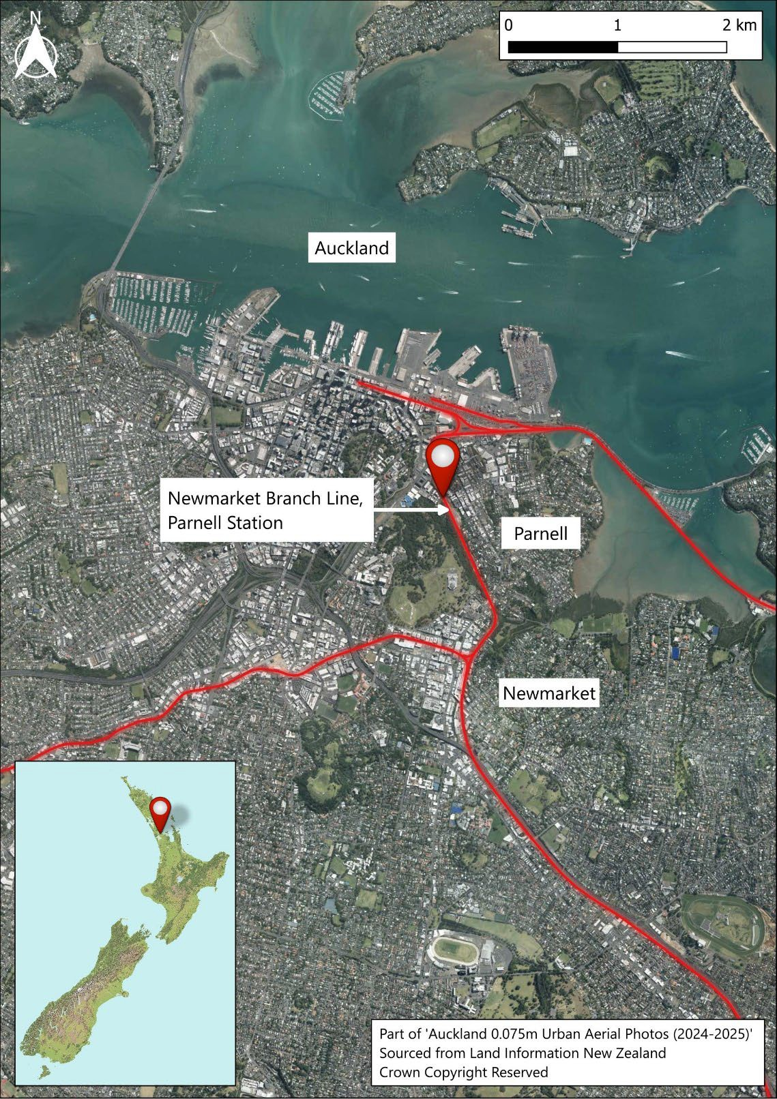
Two rail maintenance workers were injured, one seriously, when an elevated work platform approached a live overhead line at Parnell, Auckland, on 4 September 2024. The team’s work location had changed. The worksite was protected from train movements, but its electrical isolation covered a smaller area. TAIC identified four safety issues involving protection limits, verification, shared understanding and location references. KiwiRail safety actions addressed two issues; the Commission made two recommendations. The report has lessons for rail and other industries conducting safety-critical work.
Executive summary Tuhinga whakarāpopoto
What happened
- On the night of 3 September 2024, and into the morning of 4 September 2024, routine inspection and maintenance was being conducted on the electrified rail network in Auckland. This included visual inspections and maintenance of the overhead line equipment (OLE) supplying power to commuter trains in Auckland.
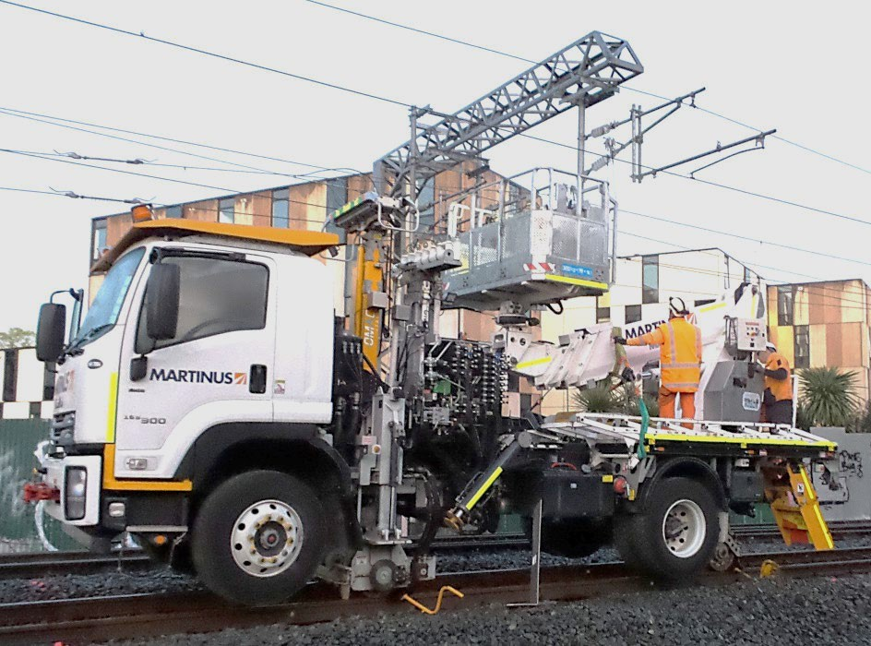
- At 0104 on 4 September 2024, three crew (the workers) were operating a specialist hi-rail vehicle (HRV) equipped with an elevated work platform (EWP) near Parnell Station on the Newmarket Branch Line.
- The EWP operator (a hi-rail mobile elevated work platform operator) and a traction electrician (also known as a traction line mechanic, is a specialised electrical professional who constructs, installs and maintains high-voltage electrical propulsion supply networks used to power electric trains) were in the boom basket of the platform as it was being raised towards the contact wires that formed part of the OLE.
- When they approached the contact wire, an electrical arc flash occurred, causing serious burns to the traction electrician and minor injuries to the EWP operator. The HRV sustained extensive damage to the electrical and computer systems.
Why it happened
- The planned work changed following the briefing because an issue arose with the EWP operating within the tunnel to Waitematā station on the North Island Main Trunk line.
- The electrical isolation applied did not cover the entire protected work area or worksite limits, and the isolation limits were neither clearly defined nor physically delineated.
- The workers were unclear about the isolation limits and their relation to the authorised worksite boundaries, and they moved beyond their briefed area.
- Before raising the EWP, the workers had no tools or testing procedure available to confirm the OLE was isolated and safe before starting maintenance activities.
What we can learn
- When work plans change, the activity must be reviewed to identify and mitigate any new safety risks.
- Effective communication of safety-critical information includes clear explanations, accessible documentation, consistent terminology and a delivery tailored to the intended audience.
Who may benefit
- Industries involved in high-hazard operations where safety-critical work is conducted may benefit from the findings in this report.
Factual information Pārongo pono
Background
- On the night of 3 September 2024, and into the morning of 4 September 2024, workers were carrying out scheduled maintenance on the Auckland Metropolitan Rail Network between Pukekohe and Waitākere, including its associated branches.
- The maintenance activity included track work, maintenance and inspections on the overhead line equipment (OLE) located at Waitematā Station (Britomart), sections of the Newmarket Branch Line (NEW) (the Newmarket Branch Line code is abbreviated to NEW within KiwiRail’s infrastructure information but is often referred to as NBL on completed documentation) and the North Island Main Trunk (NIMT) line including Auckland Station (the Strand).
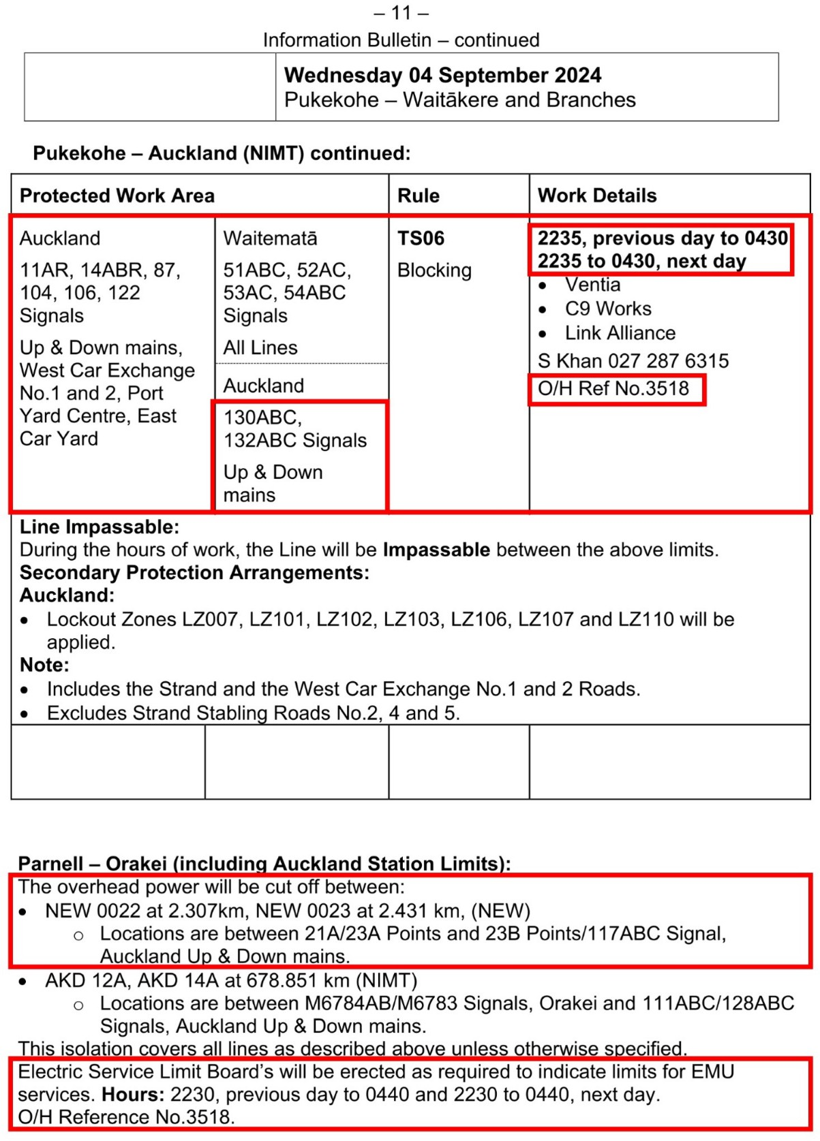
- The Daily Information Bulletin (DIB) (a controlled instruction, printed, typed or handwritten, issued by those authorised in the Rail Operating Rules) (dated 4 September 2024) described the protected work area (PWA) (section of line or lines where rail personnel are carrying out activities using an approved protection method. Fixed and/or mobile worksites will operate under the direction of a Rail Protection Officer in a protected work area) and included blocking protection (requires the RPO to contact train control and request signals in the worksite be placed at stop to prevent the movement of rail vehicles into the area) (see Appendix 1), which set signals to stop to prevent unauthorised rail movements into the PWA.
- The DIB also described the arrangements for the isolation of the OLE, which did not cover the entire worksite, leaving parts of the OLE within the worksite live.
- The OLE supplied 25 kilovolts (kV) of power to the Auckland electrified area for the purposes of providing traction power to propel trains.
- The maintenance worksite was one of multiple worksites across a large portion of the rail network within Auckland.
Narrative
- The Rail Protection Officer (RPO) (person responsible for managing potential hazards between worksite activities by ensuring that track occupations do not conflict with other work being carried out. They also ensure that access to the track is orderly and unobstructed, allowing safe travel to the relevant work location) scheduled to work that evening arrived at Scene Lane, Auckland (the designated safe place) (a place where people and equipment cannot be struck by passing rail traffic, which may be at a designated location that is at least 2.5 metres (m) from the centre of the nearest running line, within an approved refuge, behind a permanent safety line on a designated walkway, behind a permanent structure or permanent physical barrier that protects against moving trains, or behind authorised fencing) at about 2235 (times in this report are in New Zealand Daylight Time (Universal Coordinated Time +13 hours) expressed in a 24-hour format) on 3 September 2024.
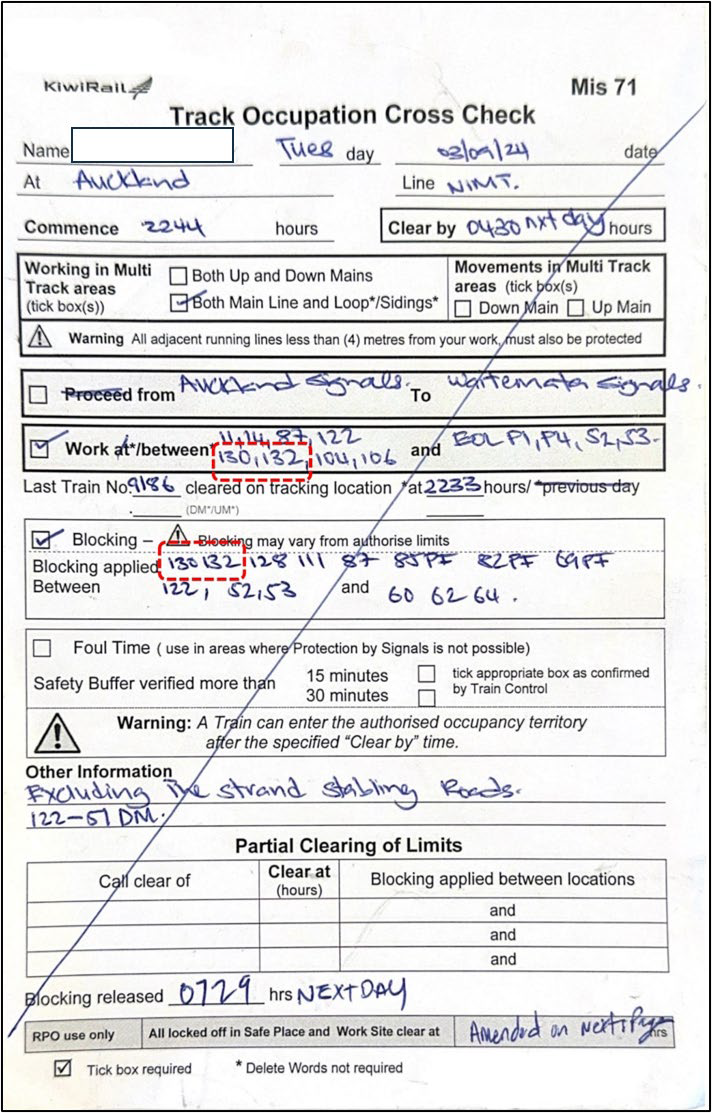
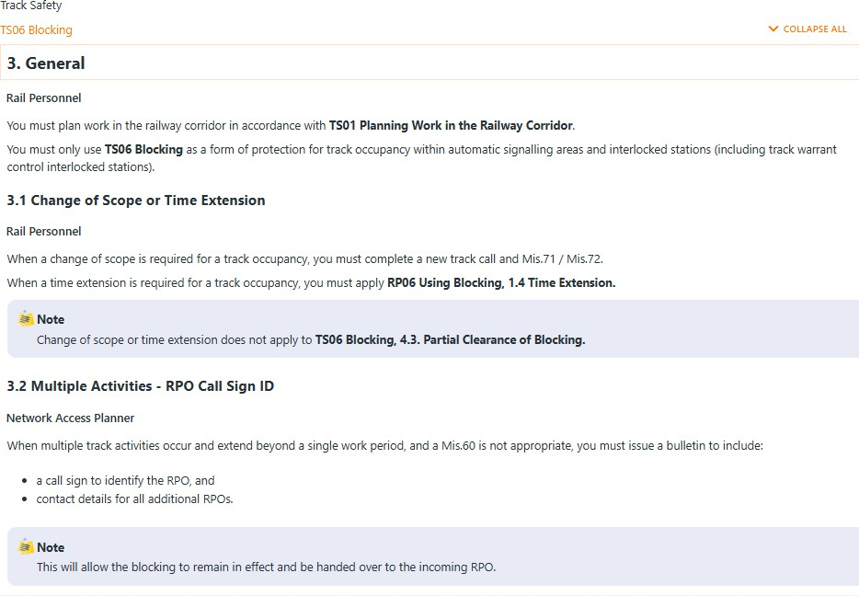
- They contacted train control (TC) to establish the protection and requested blocking using rule TS06 Blocking (the process of using a Mis.71 Track Occupancy Cross Check or Mis.72 Release Code Blocking with signal blocking to establish a protected work area) on signals 11, 14 and 87 on the NIMT, signals 130 and 132 on the NEW, end of line Platform 1 Waitematā (Britomart) (see Figure 3, blue line).
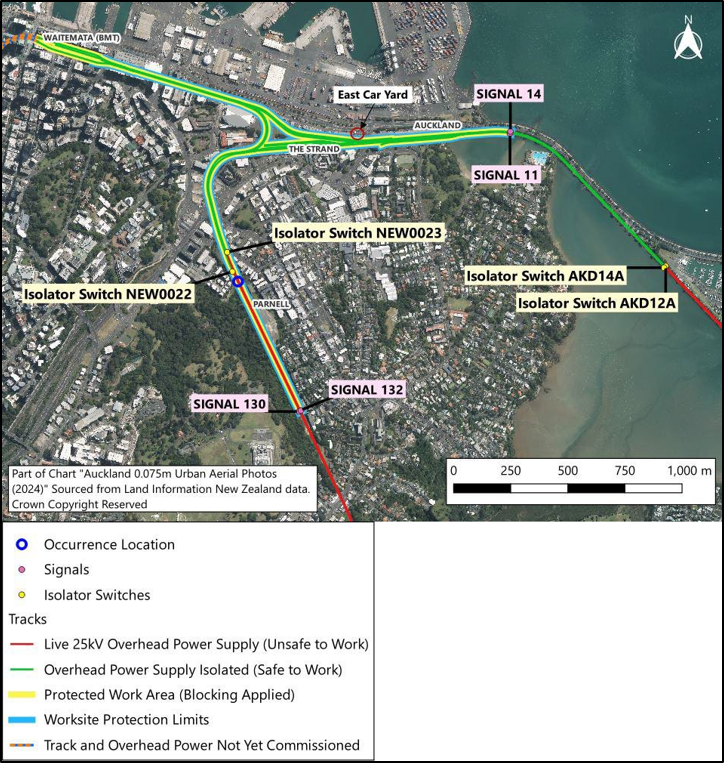
- They also arranged for separate blocking beyond signals 11 and 14 at Ōrākei to enable the Traction Isolation Team (specialised group of electrical and rail personnel responsible for safely cutting off, testing and grounding the high-voltage electricity (traction power) in a specific section of the rail network so that crews can safely perform maintenance or emergency repairs) to access the track and put in place isolation at AKD12A and AKD14A isolator switches (see Figure 3).
- Following confirmation of the blocking and completion of the Mis.71 (a form required to be completed for track occupation cross-checks when requesting track time from train control. KiwiRail has several different ‘Mis’ (Miscellaneous) forms) form by the RPO (see Appendix 2), the worksite protection limits (an area with defined limits that is protected so that work can be performed) were established (see the blue line on Figure 3).
-
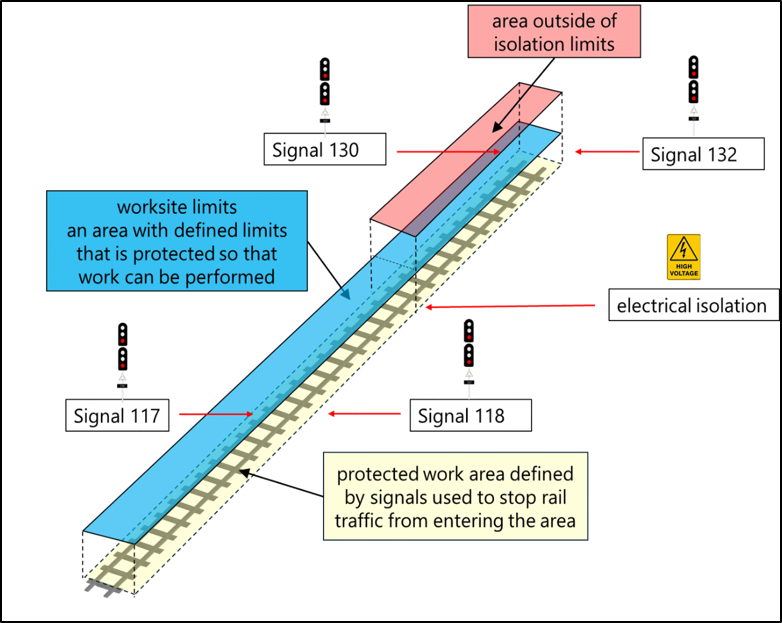
KiwiRail’s rules and procedures require a worksite to be established within a PWA. The PWA establishes the blocking limits to prevent unauthorised rail movements into the protected area, and the worksite limits establish the area where work can be conducted (see Figure 4).
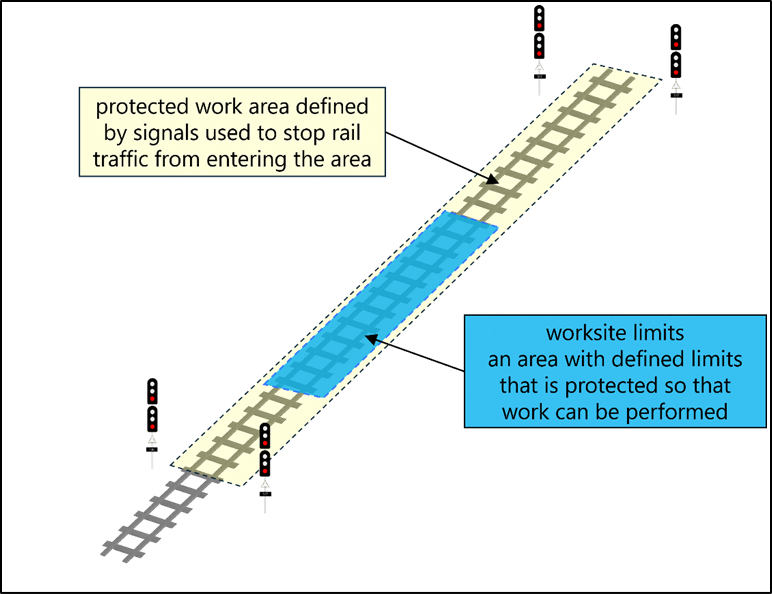
Figure 4: Relationship between protected work area and worksite - The RPO contacted the assigned Traction Isolation Team who advised them what protection was needed to give the workers access to the network.
- The workers were divided into two teams, Team 1 and Team 2, to complete the inspection and maintenance of the OLE.
-
Team 1 consisted of a team leader and four traction workers. Team 2 consisted of the team leader, a traction electrician and an elevated work platform (EWP) operator. The traction electrician was also acting in the role of Mobile Plant Controller (the competent worker responsible for controlling mobile plant within a worksite).
- At the start of their shift, while still at the traction depot, the Night Shift Traction Supervisor briefed the two team leaders about the maintenance work to be completed that night. The team leaders then briefed their team members.
- Following the briefing, the two teams travelled to the East Car Yard siding to wait for the safety briefing about the track protection limits and the isolation limits.
- The RPO arrived at the East Car Yard siding where Team 1 and Team 2 were waiting and briefed the teams on the protection arrangements for the night, including the protection limit of the worksite.
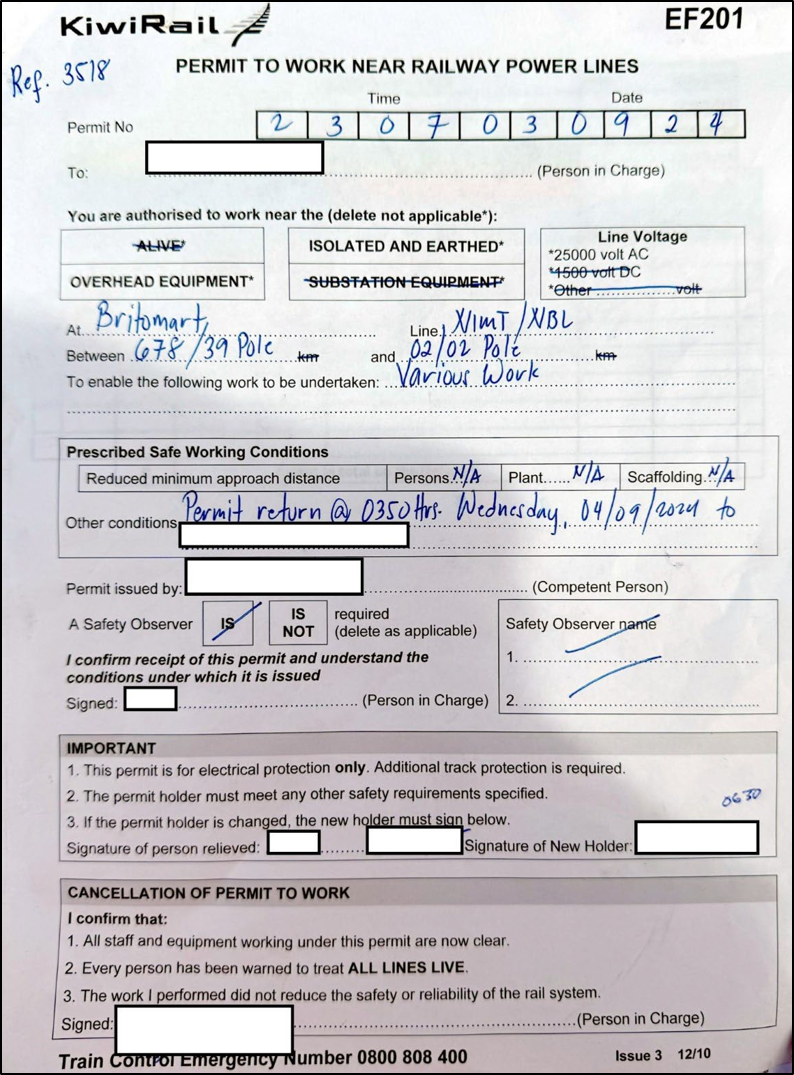
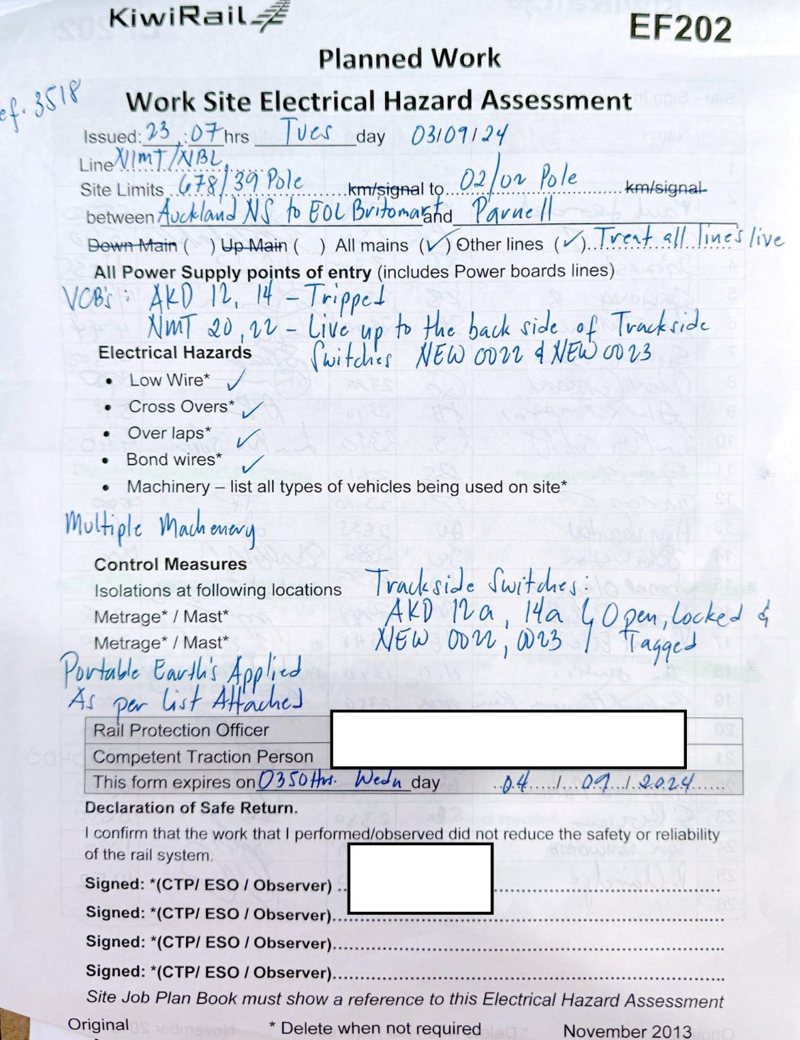
- Then the Traction Isolation Team gave a briefing, advising that the EF201 Permit to Work Near Railway Powerlines (see Appendix 3) (a permit to work under isolated overhead line equipment) provided for the OLE to be isolated and earthed at Waitematā between the NIMT 678/39 pole (the reference refers to the track kilometre (km) reference followed by the pole number. In this example, the location is at the 678-km track reference and at pole 39) and the NEW 02/02 pole. The Isolation Team recorded this same information on the EF202 Planned Worksite Electrical Hazard Assessment, which also recorded that the power was live beyond isolator switches NEW 0022 and NEW 0023 (see the red line on Figure 3).
- The EF202 required all workers to sign that they understood the electrical isolation limits, and they all did so (see Appendix 3).
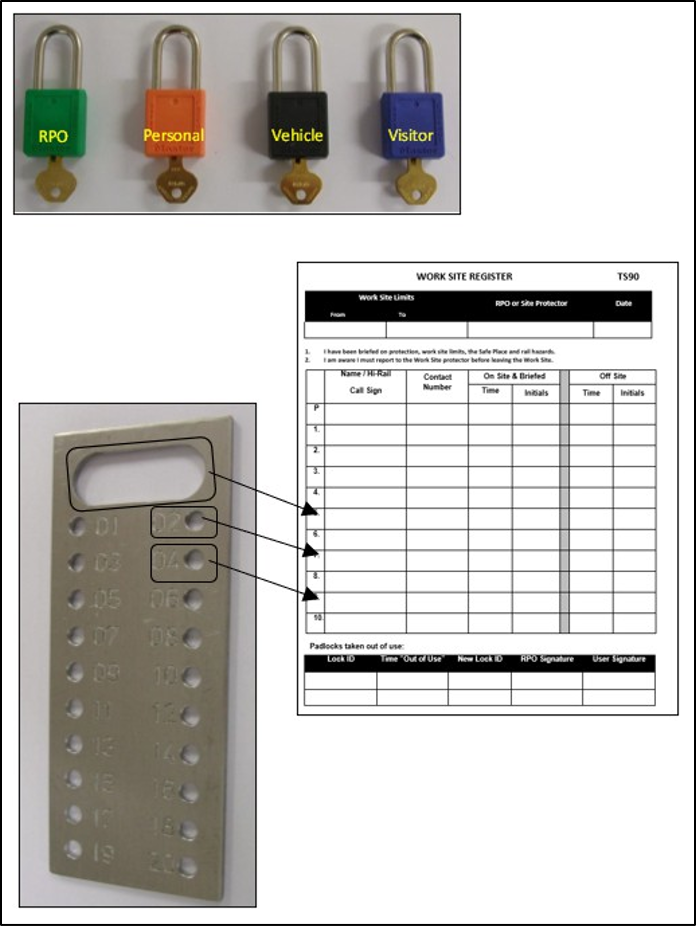
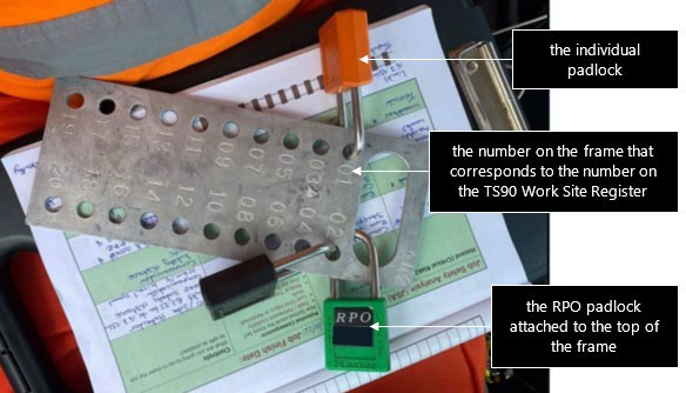
- The RPO completed the TS90 Work Site Register (a document that records the name and contact details of the RPO, the names and contact details of people who have been briefed and are locked onto a worksite, and the details of vehicles operating within the worksite. The register also includes the identifying padlock used by each worker or vehicle as appropriate, and the time of entry and departure from the worksite so that workers and vehicles can be accounted for) and lock-on procedures (the method of either placing a padlock on a lock-on frame or removing it in a dedicated protected work area location) (see Appendix 4). Fourteen track workers, including KiwiRail employees and contractors, signed onto the Work Site Register. In addition, five vehicles were listed on the register as working within the PWA: three EWPs, a hi-rail vehicle (HRV) and a trailer. The workers and vehicles were all locked on by 2300.
- At 2307, the RPO received confirmation of the isolation of the overhead power from the Traction Isolation Team, and a copy of the EF201 permit (see Appendix 3).
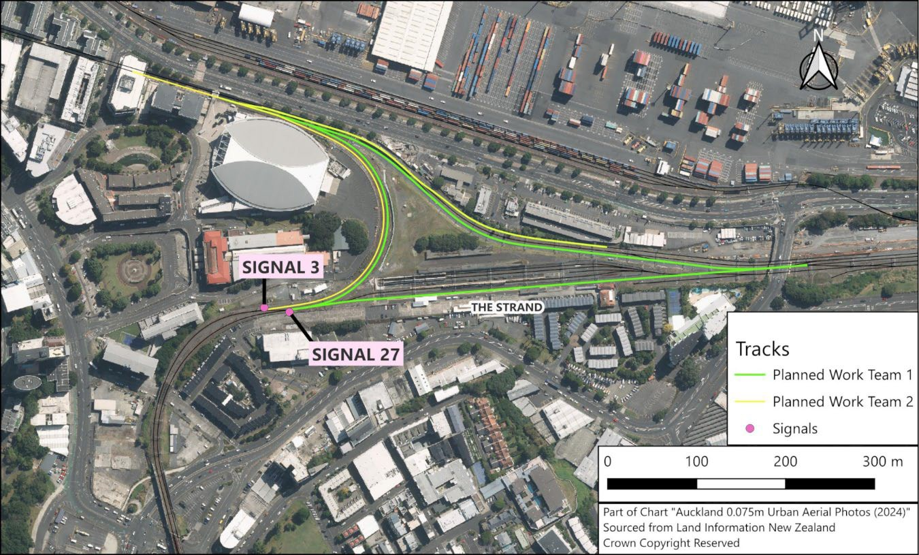
- Team 2 was preparing to work at Waitematā up to signals 3 and 27 on the UP Main of the NEW, while Team 1 was preparing to work on the NIMT through to the Strand and meet Team 2 on the DOWN Main of the NEW (see Figure 5).
- Immediately before on-tracking, a City Rail Link project worker checked the necessary permits for Team 2’s EWP and noted there was no current diesel permit displayed (required when entering Waitematā Tunnel) but no action was taken.
- Because the necessary diesel permit had not been obtained before the shift, the Night Shift Traction Supervisor decided that rather than inspecting the Waitematā Tunnel, Team 2 would instead carry out the remaining planned work from traction pole NEW 002/49.
- Team 2 on-tracked at 0028 at the East Car Yard siding and headed towards signal 34, as directed by the RPO, to enable them to move from the NIMT onto the NEW.
- At 0030, Team 2’s EWP was set a route from the NIMT towards NEW. At 0036 the EWP moved onto the DOWN Main on the NEW.
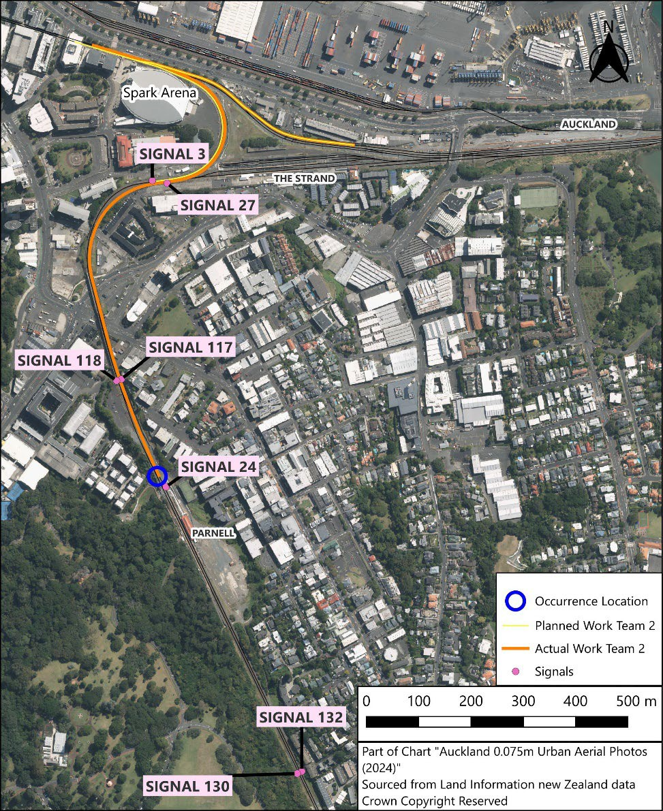
- At 0054, the EWP moved past signal 118, the last signal before the end of the overhead isolation, stopping short of signal 24 at Parnell Station (see Figure 6).
-
At about 0104, the traction electrician and the EWP operator were on the EWP and raised it to conduct maintenance on the OLE while the team leader walked towards signal 24.
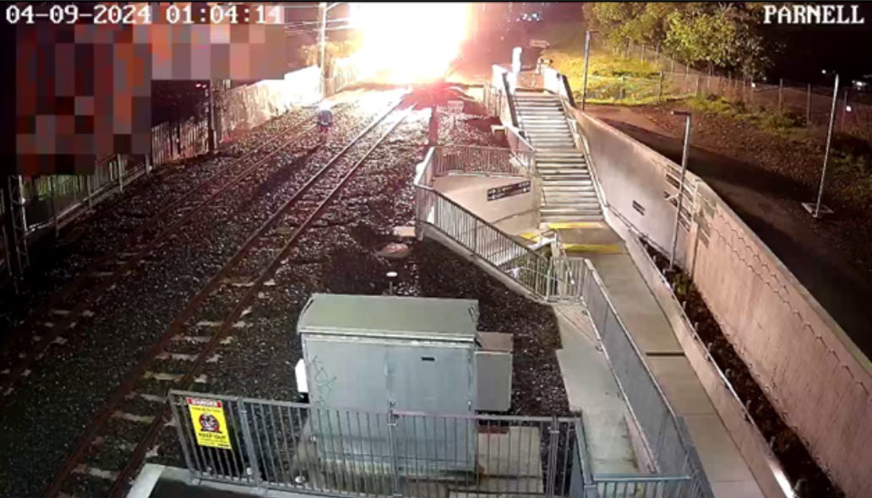
- As the EWP moved closer to the OLE, an electrical arc formed, followed by a flashover (a type of electrical explosion or discharge that results from a connection through air to ground or another voltage phase in an electrical system). The accident was captured on closed-circuit television (CCTV) from Parnell Station (see Figure 7). The traction electrician, who was taller than the EWP operator, was positioned closer to the OLE and was more directly exposed.
- Seeing the flashover, the team leader immediately returned to the EWP and saw that the EWP operator had climbed down, but the traction electrician was unconscious and remained on the EWP.
- At 0107, the team leader phoned the Night Shift Traction Supervisor, informed them of the accident and requested assistance. The supervisor confirmed Team 2’s location and, realising they were outside the isolation limits, instructed the team leader to call Traction Control immediately, give them information about what had happened and request emergency services.
- At about 0108, the RPO, unaware of the accident, received a call from the Traction Control Room Operator to say the power had been tripped on the overhead on the UP Main at Newmarket and seeking clarification if power could be restored.
- The RPO stated to the Traction Control Room Operator that they didn’t have anyone working at that location but to wait until they had gone to the location to confirm that there was no one there.
- The RPO then attempted to contact the traction electrician but could not get a response so contacted Team 2’s team leader.
- Emergency services arrived on site at 0128, with an ambulance arriving at Parnell by 0132.
- The flashover caused serious burns to the traction electrician and minor burns and lacerations to the EWP operator.
- The EWP was seriously damaged and non-operational.
Personnel information
Rail Protection Officer
- The RPO had been employed by KiwiRail since 2023 and was appropriately qualified for the position of RPO, with a Licence to Operate that included the application of the protection methods of blocking.
Traction electrician
- The Traction Electrician had been employed by KiwiRail since 2022 and at the time of the accident was engaged in the inspection of OLE. They held a licence from the Electrical Worker Registration Board and had completed KiwiRail’s Electrical Awareness Advanced training. They had also completed training and possessed unit standards in Mobile Elevated Work Platform operation.
Elevated work platform operator
- The EWP operator had been employed by Martinus Rail New Zealand Limited (Martinus) since July 2022. They had completed the required KiwiRail Electrical Awareness Intermediate training. They had also completed the required unit standards for operating the EWP and working at heights and were qualified to operate HRVs on KiwiRail’s rail network.
Team leader of Team 2
- Team Leader 2 was employed as a traction line mechanic leading hand responsible for supervising workers on site. They had been employed by KiwiRail since 2021 and had previous related experience in the rail industry in other jurisdictions. At the time of the occurrence, they had completed the required KiwiRail Electrical Awareness Intermediate training.
Vehicle information
- The EWP HRV was an Isuzu FVR purpose-built road-rail vehicle. It was fitted with an EWP used to conduct work at heights within the rail network.
- The vehicle was fitted with a power take-off unit that allowed the vehicle to be operated from the cab or from the EWP. The speed when operating in EWP mode was restricted to 3 kilometres per hour (km/h).
- The EWP compliance certificate was current at the time of the accident. The EWP had current certification for operation on the network and there was no evidence of any defects with the EWP that contributed to the accident.
Organisational information
KiwiRail Holdings Limited
- KiwiRail Holdings Limited (KiwiRail) is a New Zealand state-owned enterprise. It operates trains and rail vehicles, controls rail movements on the national rail network and maintains the railway infrastructure as the rail access provider.
Martinus Rail New Zealand Limited
- Martinus is a privately owned rail infrastructure company founded in Australia in 2005. It was contracted by KiwiRail to supply the HRV (involved in the accident) and its own EWP operator. While on site, the EWP operator worked under KiwiRail’s direction.
Recorded data
Hi-rail vehicle EWP
- The Commission obtained recorded data from the E-Roads system fitted to the EWP and used this data in the inquiry.
Closed-circuit television
- The accident was captured on CCTV from Parnell Station and the Commission obtained copies from Auckland One Rail.
Train control replay file
-
The Commission obtained train control replay files of the vehicle movements. These showed the various route settings and movements of the EWP as it progressed from the on-tracking location to the accident location at Parnell.
Previous occurrences
- The following occurrences reviewed by the Commission highlight the importance of safe systems of work around electrical isolations. These occurrences highlight that workers must be informed of the electrical isolation limits through diagrams. They emphasise the dangers that exist where the limits of electrical isolation are not clearly identified or understood and the importance of a ‘test before touch’ before starting work.
WorkSafe Victoria, Australia : Linesman injury, arc flash incident, Kooyong Station, Victoria, July 2018
- In July 2018, a linesman sustained burns to their hand and required hospital treatment after a live wire caused an arc flash while they were installing a steel bracket on an overhead gantry near Kooyong Station (https://www.worksafe.vic.gov.au/news/2022-03/metro-trains-fined-100000-after-arc-flash-injury).
- A WorkSafe Victoria investigation found that a 600-volt (V) feeder cable running into the intersection had not been isolated because diagrams prepared for the work did not show where the live electrical assets were physically located.
- The investigation found that there was a failure to:
- provide safe systems of work and the necessary information and training for identifying and isolating the tram squares
- inform workers of the location of all electrical assets through sectionalised diagrams
- perform a site inspection where each asset was identified and isolated.
Office of Rail and Road investigation: Linesman serious electric shock, Kensal Green, London, UK
- On 25 December 2019 at Kensal Green, London, a linesman suffered serious burns and damage to their eyesight and hearing after touching an overhead line. The workers were unaware they were outside their isolated work area. The Office of Rail and Road (ORR) investigated and found that there was no effective system in place with regards to the planning of this work and inadequate supervision in place to oversee the safe conduct of the works.
- Amey Rail Limited, the principal contractor, was later fined for inadequate planning and supervision and for failure to ensure a ‘test before touch’ was properly carried out (Office of Rail and Road, 2023).
Rail Accident Investigation Branch 07/2015: Train driver receiving a severe electric shock at Sutton Weaver, Cheshire, UK
- On 23 September 2014, a train driver received a severe electric shock from a hanging live wire after leaving the train to inspect damaged overhead lines.
- The Rail Accident Investigation Branch (RAIB) found that:
- overhead line examinations did not inspect for signs of wire damage at attachment positions
- clarification was needed on what actions a train crew should take if they are required to leave a train where the OLE is known to be damaged and still live (Rail Accident Investigation Branch, Department of Transport, 2015).
Analysis Tātaritanga
Introduction
- On the night of 3 September 2024, and into the morning of 4 September 2024, two teams of workers were conducting routine inspection and maintenance over multiple worksites on the electrified rail network in Auckland. Team 2 entered a portion of track that had not had the OLE isolated, resulting in a high voltage flashover. This caused serious injuries to the traction electrician and minor injuries to the EWP operator.
- The following section analyses the circumstances surrounding the event to identify the factors that increased the likelihood of the event occurring or increased the severity of its outcome. It also examines any safety issues that could adversely affect future operations.
Track protection and electrical isolation arrangements
Safety issue 1: The track protection limits and the overhead line isolation limits within the work area were misaligned, adding an unnecessary complexity to the protection arrangements. These arrangements left an electrically live section of the overhead line equipment within the protected work area, exposing traction workers to the risk of electrocution
Rules and procedures for protected work areas and worksites
- Rules and procedures for rail worksites are essential to create a structured, safe and efficient environment for everyone involved. The rules and procedures for establishing a worksite are contained in KiwiRail’s Track Safety (KiwiRail, updated 2026) and, specific to Auckland, the Auckland Electrified Area (AEA) Traction Electrical Safety Principles (AEA Traction Electrical Safety Principles [Document E-PR-AE-0010 effective 31/07/2015]).
- Track Safety rule TS01 Planning Work in the Railway Corridor defines nine underlying principles. Principle 9 states, ‘people must be protected from the hazards associated with electrical infrastructure’.
- When undertaking work within the rail corridor, protection arrangements for workers must ensure unauthorised rail traffic does not enter the location.
- When the PWA and worksite locations are established, workers entering are subject to Track Safety rule TS02 Protected Work Area. This rule ensures all personnel and equipment at a worksite are accounted for when on-tracking and when completing and clearing the track, before the PWA is released and protections removed.
- On the night of the accident, all workers and equipment assigned to the worksite had completed the lock-on process and had registered this on the TS90 document, meeting the requirements of TS02 (see Appendix 4).
Protection arrangements for the worksite
- On the evening of 3 September 2024, the RPO obtained blocking for the PWA in accordance with Rule TS06 Blocking (see Appendix 5).
- The PWA, worksite and blocking extended to signals 11 and 14 on the NIMT at Ōrākei. In addition, blocking was also obtained beyond those limits to allow the Traction Isolation Team to on-track and travel to the isolator switches 12A and 14A to put the electrical isolation in place (see Figure 8).
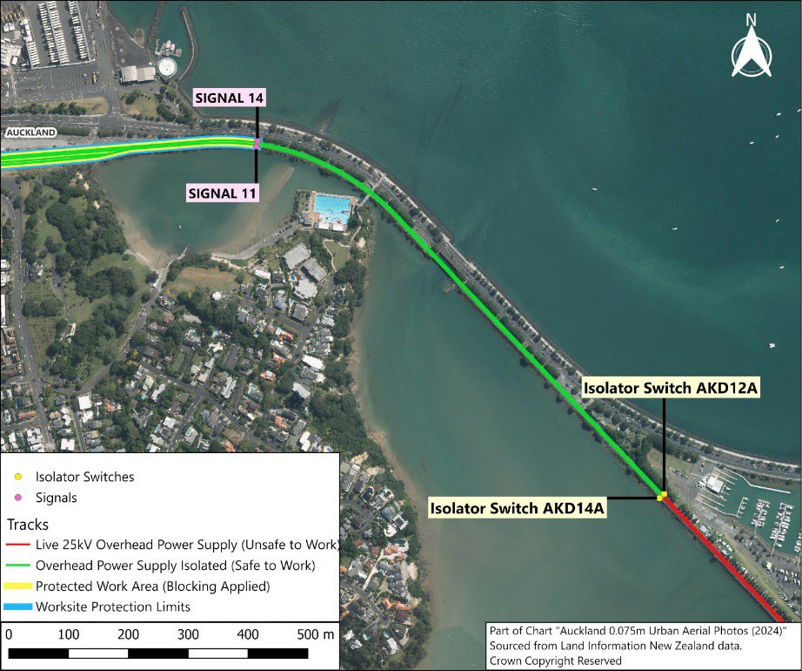
- Once the electrical isolation was in place, the additional blocking obtained for that portion of the network was removed.
- In organising the protection in this way, the electrical isolation extended beyond the PWA and worksite. This meant the risk posed by live OLE had been eliminated from the worksite.
- In contrast, the protection arrangements for the PWA and worksite limits on the NEW were located at signals 130 and 132.
- Signals 130 and 132 were used to provide blocking for the PWA and to establish the limits of the worksite.
- The electrical isolation on the NEW extended to isolator switch NEW 0022 and NEW 0023. These isolators were located within the worksite limits (see Figure 9).
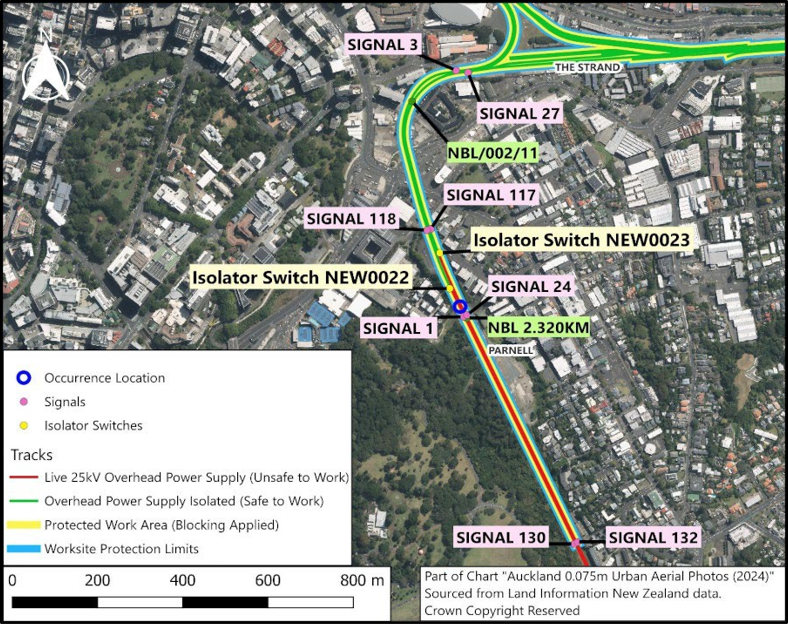
- In organising the protection in this way, the electrical isolation did not cover the entire worksite. This meant the risk posed by the live OLE remained within a portion of the worksite (see Figure 10).
KiwiRail’s safety system for managing electrical isolation
- Additional controls are essential when working with overhead electrical wires for several safety and operational reasons, including:
- overhead wires in rail corridors often carry high-voltage electricity and accidental contact or even close proximity can result in injury or harm
- without proper controls, workers or equipment may enter unsafe zones.
- Under single worksite arrangements, the rules and procedures did not require the placement of additional signage or equipment to define the worksite boundary limits.
- In November 2013, KiwiRail published an interim guide (Interim Guide to Electrical Permit to Work in Auckland Electrified Area Nov 2013) to obtaining an Electrical Permit to Work in the AEA. The guide formed part of KiwiRail’s documented safety system and outlined that ‘worksites were to be completely protected by both electrical and track (rail movement) protection’.
-
Section 11 of the guide stated, ‘The Track Protection boundary should normally be greater than the electrical protection and an electrical safety buffer used to ensure that the electrical protection is not compromised.’
- In addition, the guide stated that the electrical isolation should be greater than the worksite limits and defined by worksite limit boards, safety buffer zone, electrical isolation limits and stop protection to allow workers to conduct maintenance and inspection activity (see Figure11).
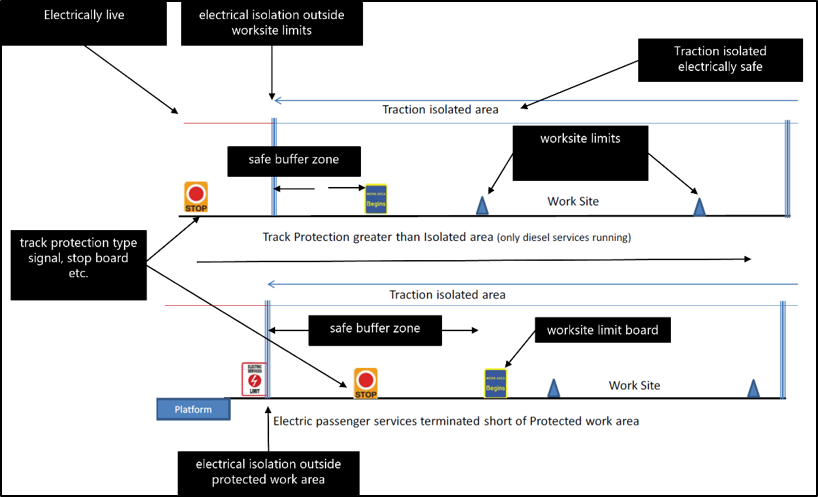
- The absence of boards to define the worksite limits meant the opportunity to show the demarcation between the limits of the electrical isolation protection and live OLE was missed.
-
Since there were no provisions for multiple worksites to be deployed at the site, all the activities came under a single worksite provision. To comply with the guide the options available were:
- to electrically isolate beyond the PWA limits coinciding with complete isolation of the worksite (see Figure 12), or
- confine the worksite to within the electrical isolation, with appropriate protections in place to show workers the physical limits of the worksite, together with the appropriate buffer (see Figure 13).
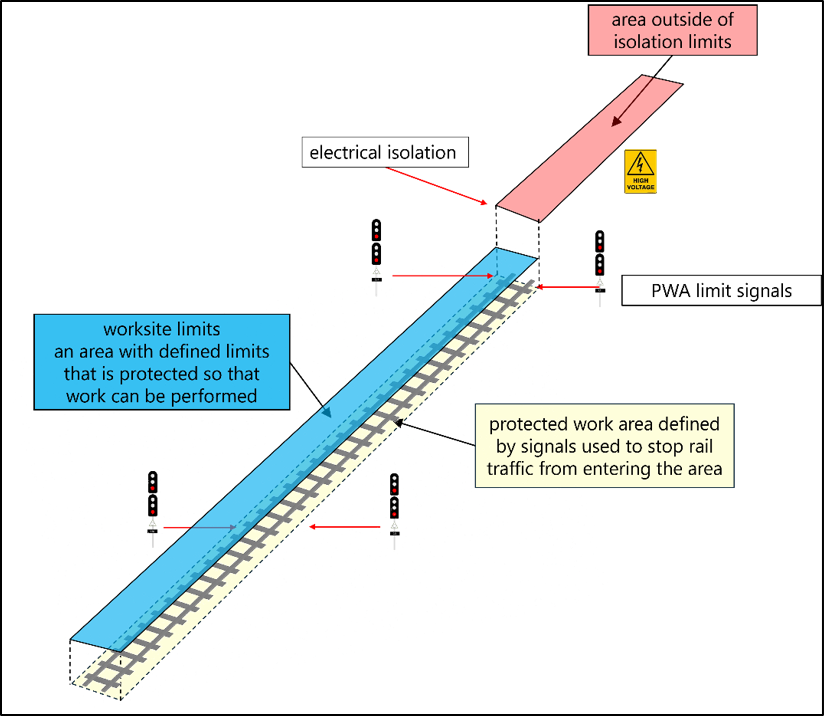
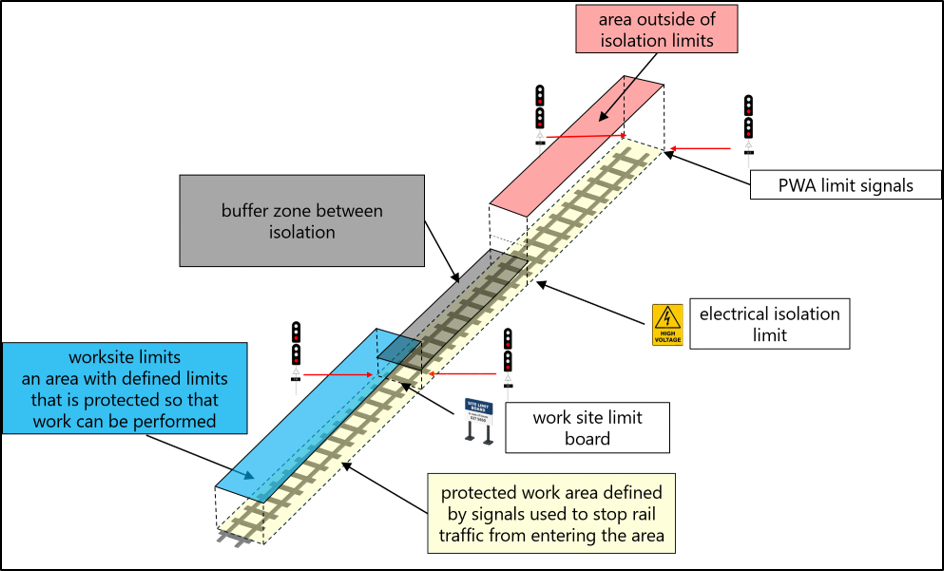
- On the night of the accident, the track protection limits coincided with the worksite limits. This meant that there was not a complete electrical isolation or safety buffer within the worksite at the Parnell end of the PWA and those arrangements did not comply with the interim guide.
- The Commission found that on the night of the accident each end of the worksite had different control measures in place (see Figure 14).
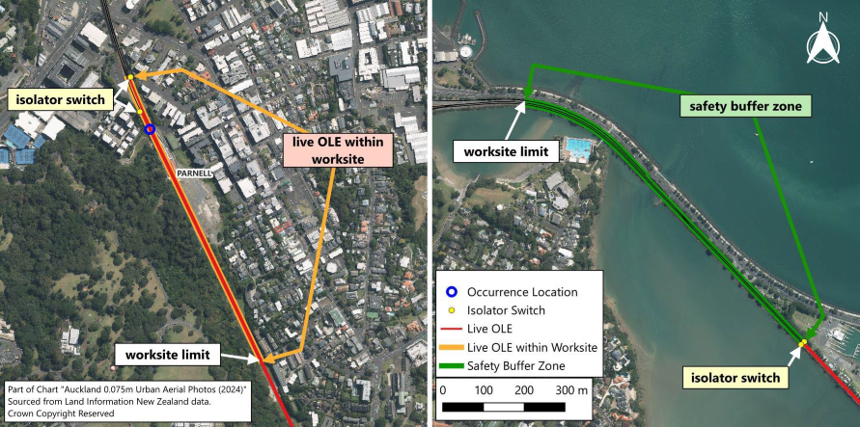
- The misalignment of the track protection and the OLE isolation at the Parnell end of the worksite meant that 1.14 km of track was not isolated from the 25-kV electrical supply, creating an additional complexity to the protection arrangements.
Safe area of work
- Additional protection is required for workers who are engaged in the maintenance of overhead traction systems.
-
In establishing and planning a safe area to work on the OLE, KiwiRail’s documented process included the AEA Traction Electrical Safety Principles, which require in part:
Work on or near traction systems shall be subject to sufficient planning, risk assessment and checking that all electrical hazards or contributions to other hazards due to the electrical hazards are removed or adequately mitigated.
There must be clear processes for making live HV (high voltage) equipment safe to work on or in proximity to, and for proving and demonstrating it is safe. This shall include isolating the worksite [emphasis added] from all possible sources of electricity, including power line crossings, and mitigation of any induced voltage risk or EPR (earth potential rise) due to nearby HV faults on other circuits.
- In addition, the AEA – Instructions to Plan provides instructions to establish the safe working area and requires the isolation and earth points (Designated locations where parts of the railway's electrical infrastructure are connected to the ground (earth)) to be outside the safe working area (see Figure 15).
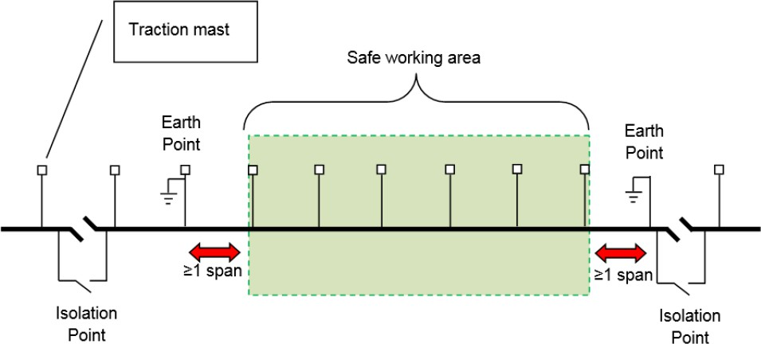
- The isolation planned and conducted on the day of the accident included the isolation and earth points on approaches to the electrical isolation at Parnell.
- KiwiRail’s documentation on safety procedures when working on or near high-voltage traction equipment is contained in its Traction & Electrical Standard (KiwiRail internal standard, Traction & Electrical Standard [E-ST-TR-0109]). This standard provided the safety procedures to protect people working on or near any traction asset (the context of electrified railways, the term ‘traction asset’ (or traction asset) typically refers to the equipment and infrastructure dedicated to providing propulsion power – that is, moving the train).
-
The procedure required that:
When working, an Electrical Safe Working Area must be created. The boundary of the Electrical Safe Working Area may be marked if deemed necessary for safety. These markings are more and above the blue visual markings demarcating the earthing at the isolation limits. The marking shall be agreed between the Traction Competent Person and the Person in Charge. Boundary markers are more likely to be used where:
-
The people involved in the work are not familiar with the site.
-
There is a risk that people in the worksite may stray outside it.
-
Live equipment is close to the edge of the working area.
The agreed access point(s) to the Electrical Safe Working Area are important to safety. All workers requiring to be protected by the Electrical Work Authority shall sign the Job Plan Book / TS90 Work Site Register to acknowledge their understanding of the Electrical Safe Working Area and the controls that have been implemented.
Should the work scope or method change, then the hazards shall be reviewed and any additional control measures applied.
-
-
The Traction and Electrical Task Instructions to Test and Earth OLE detailed the methods for earthing, using short leads to connect a Designated Earthing Point (DEP) on the 25-kV side of OLE and an earth connection on the mast or the earth wire (see Figure 16).
Additional task instructions caution that the earthing leads in some situations should not hang below the contact wire to avoid contact with diesel- hauled rolling stock. In addition to the application of earthing leads, the isolation switches are opened, tagged and locked as part of the process (these instructions are contained in Traction Task Instruction AEA Instructions to Lock and Tag Switches). These tags and locks were applied at the approach to Parnell Station at NEW 0022 and NEW 0023 (see Figure 17).
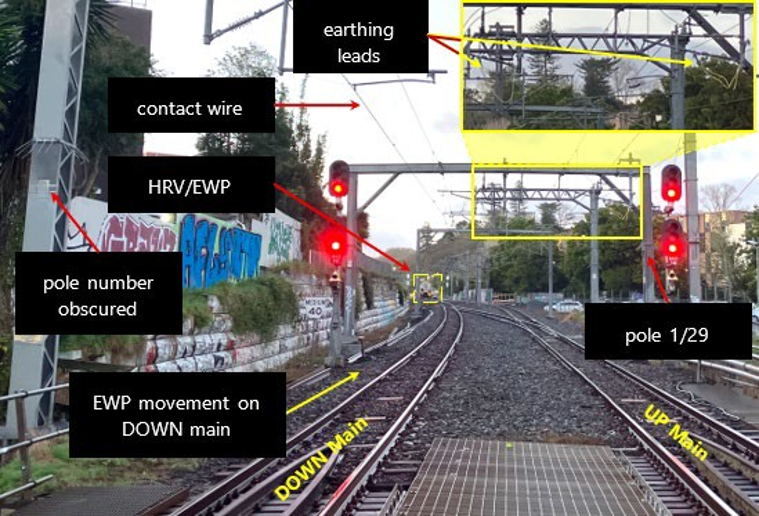
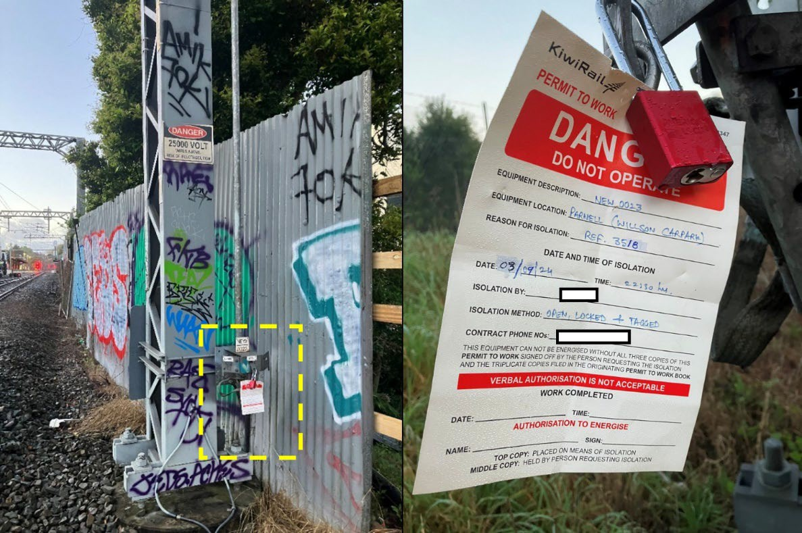
- The protection markers were almost all located near the UP Main track. However, Team 2 was operating on the DOWN Main, with the EWP headlights providing the main source of illumination.
- There were no additional markers at the electrical isolation limits on the NEW to alert Team 2 that they were crossing beyond the limits of the isolation, other than the earth straps that were difficult to identify, especially at night.
- On the night of the accident the approach to Parnell was unlit, therefore it was very likely that the earthing leads, tags and locks were not seen by Team 2 as they approached Parnell.
Testing for electrical isolation to confirm safe work limits
Safety issue 2: Before starting work, workers have no way to confirm that the lines are not live and that it is safe to proceed, relying instead on their understanding of where the protection limits are. This increases the likelihood of workers starting work in an unsafe area, which could result in injuries or death.
- ‘Test Before You Touch’ is a critical safety procedure in electrified railway environments, especially where high-voltage traction power systems are present.
- Team 1 and Team 2 carried out traction system maintenance and operated independently of the Traction Isolation Team. The Traction Isolation Team was responsible for implementing the planned electrical isolation and confirming that the overhead line equipment (OLE) was electrically safe before maintenance started.
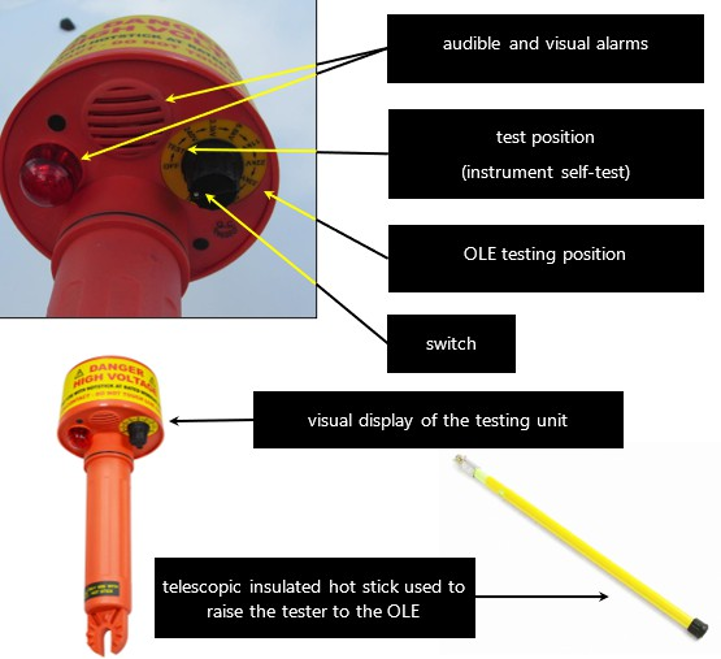
- The purpose of the EF201 Permit to Enter form was to disclose to personnel operating in a location that the OLE had been electrically isolated and was safe to work on. As part of the isolation process, the Traction Isolation Team tested the isolation using an approved device. This device was a voltage detection unit mounted on an insulated pole. When the unit is held close (the recommended position is about 100 millimetres (mm)) to the contact wire of the OLE, the tester provides a visual and audible alarm if the OLE is live (see Figure 18).
-
Team 2 relied on the Traction Isolation Team to conduct the ‘test before touch’ to confirm that the area was electrically isolated. Team 2 did not have any equipment with them to confirm that the OLE had been appropriately isolated and was safe.
-
The expectation that the area was electrically safe was based on the team leader’s experience that work had always occurred in electrically isolated areas.
-
Had Team 2 been provided with and used testing equipment, it is very likely they would have identified that the OLE was not isolated and was energised.
Protection and isolation limit information
Safety issue 3: The track protection and isolation limit information shared in the prestart briefings did not provide all workers with a shared understanding of the limits, increasing the likelihood of workers exposing themselves to risk within the protected work area.
- The original plan was for Team 2 to conduct maintenance towards Waitematā Tunnel on the NIMT, meaning they would be far from any exposure to the isolation limits on the NEW. However, when the work location changed, so too did the risks associated with the team’s maintenance activity.
Management of change in work circumstances
- Effective change management is critical when planned work activities change, particularly in safety‑critical environments.
- Any change in the direction, sequence or intent of work can not only alter risk exposure, but also how it is perceived and managed. Once a plan is established and endorsed, workers may not consciously reassess risk without a clear trigger (such as new documents, additional reference material or a further briefing).
- The original prestart briefing included the location of the isolation limits. However, the workers’ mental models were shaped by the knowledge that their intended work area was far from the isolation limits. Additionally, the workers thought that worksites would be isolated from power, based on Team Leader 2’s previous experiences of worksites always being isolated from live OLE.
- When the work instruction changed, the original mental model of risk was no longer valid. However, without an active step in the process, the opportunity to reassess Team 2’s understanding of the isolation limits did not occur.
Documents plans and maps about the isolation
- The Traction Isolation Team responsible for implementing the isolation on site had tested the isolation and, before work started, briefed the RPO and both teams about the isolation limits by completing the following:
- EF201 Permit to Work Near Railway Power Lines
- EF202 Work Site Electrical Hazard Assessment, which was acknowledged and signed for.
- The procedure prohibited anyone from taking photocopies or photographs of either EF201 or EF202 without the specific approval of the issuer of the permit to work. There was no requirement within the procedure for persons to take notes.
- The prestart briefing given by the RPO to Team 1 and Team 2 included information about the protection and isolation limits. These were shown to the teams on the RPO’s iPad using the signal and interlocking diagram. The isolation limits were presented as between two sets of points at Parnell.
- Team 1 continued with their briefed area of work while Team 2 started work that was different to what was originally planned within Waitematā Tunnel. Team 2 did not have any information immediately available to them concerning the isolation limits. Instead, they relied on memory of what had been discussed earlier.
- During interview, the team leader for Team 2 recalled that the worksite limits were at signal 130 and signal 132, and from the signal and interlocking diagram they had not passed that location. They had never worked within a worksite on OLE that had not been isolated and had an expectation the OLE was isolated up to those signals, and that the entire worksite was isolated.
Work methods and safety briefings
- The Commission reviewed other jurisdictions’ approaches to work methods and safety briefings. For example, Network Rail Limited in the United Kingdom provided workers with ‘go no-go’ zones (see Figure 19 and Appendix 7).
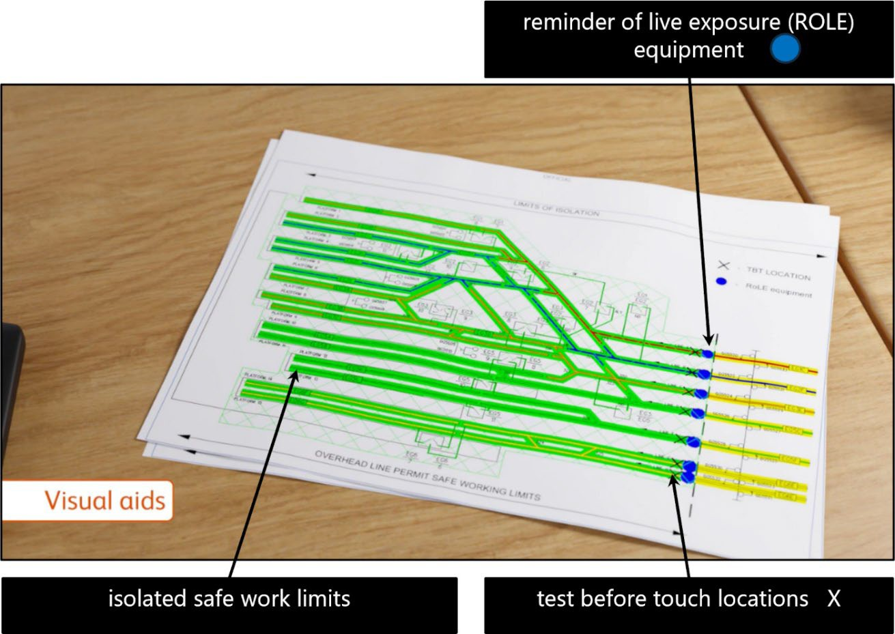
- The information provided to the workers included:
- marked-up diagrams showing the isolated areas that were safe to work
- the location at which live OLE was located by placement of ‘equipment reminder of live equipment’
- the location where ‘test before touch’ was to be completed by staff.
- The documentation and diagrams used by KiwiRail to describe the location of protections varied, with no common identifier. Instead, the following were all interchangeably used:
- meterage
- traction pole reference
- structures
- signal number
- interlocking and traction diagrams
- traction worksite limits
- Daily Information Bulletin.
- The lack of common identifiers for the protection limits inhibited those involved from having a shared understanding of the isolation and track-protection complexities.
- The EF201 provided the meterage of the isolation, but there was no graphical representation provided to Team 2 that would have assisted them in visualising the location of the isolation limits.
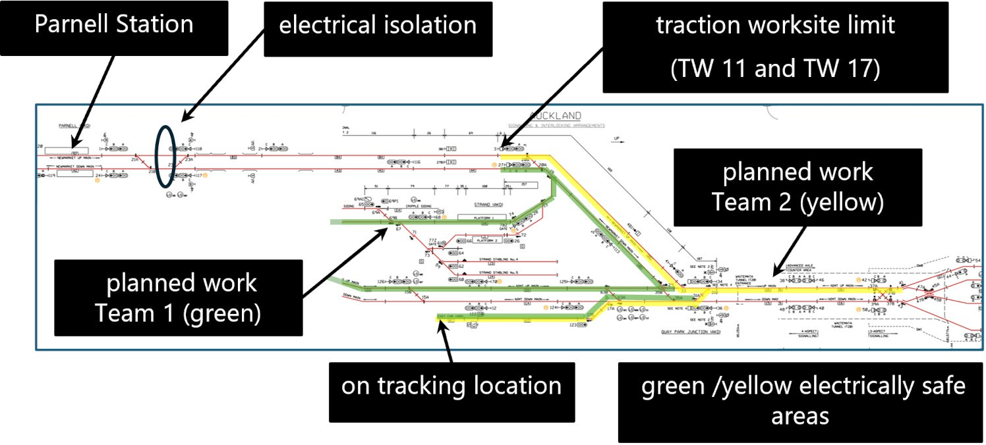
- The signal and interlocking diagrams (while not providing a common identifier) were available to graphically represent the isolation and planned work limits (see Figure 20).
Visual markers in the field and asset description
- In reviewing KiwiRail’s traction assets at other locations around New Zealand, the Commission found that other areas, such as the NIMT in Wellington, provide greater clarity as to the location by use of the km and meterage referenced on the asset. Queensland Rail, Australia, further expands this by adding direction and line identifier (see Figure 21).
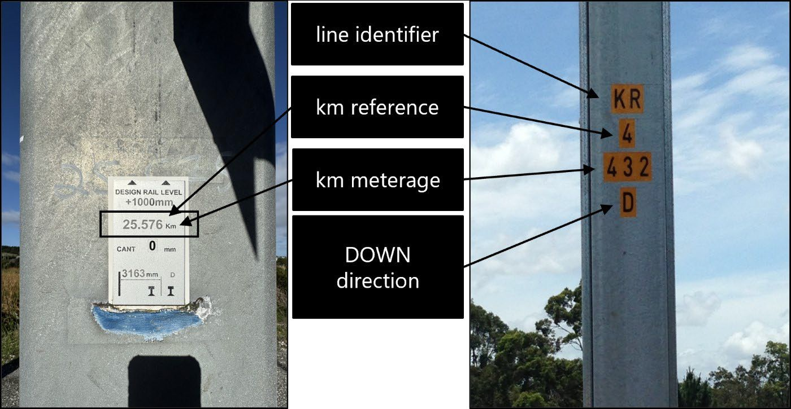
- Had Team 2 been provided with clear, concise signage at the isolation mast, it is likely they would have identified the end of the isolation point of the OLE.
Discrepancies in track meterage and asset reference
Safety issue 4: The track meterage on the Newmarket Branch Line differed from KiwiRail’s track meterage described within the documented safety system. This increased the risk of rail personnel applying the incorrect meterage, which can result in maintenance activity being conducted outside the protection limits.
Track meterage
- In the rail industry, track meterage is the primary reference used to define the exact location of every asset, defect, worksite and rail vehicle operating on a network. Unlike road systems that might rely on street addresses or GPS coordinates, rail networks operate on a single-dimensional line where every point is defined by its distance from a fixed reference origin (km 0.000) for a particular railway line.
- The meterage system is the foundation of track protection. If the system contains inconsistent location data, it undermines the reliability of information used to identify where activities are being conducted and which areas require protection.
- There is an ongoing risk that personnel may apply protection to the wrong area or undertake work in an unintended location, which can result in potentially significant consequences.
- The meterage system acts as the common language between railway disciplines, which include:
- the signalling system – defining the location of signals, interlocking points and train detection loops
- civil and track – defining specific assets such as bridges, culverts, level crossings and track components
- traction power – locating items such as overhead masts, tensioning equipment and circuit breakers
- operations – in which train controllers issue track warrants and other movement authorities and institute track blocking so workers can safely access the network
- emergency response to occurrences – in which emergency services are dispatched to specific access gates or track locations based on the km reference.
How were the traction maintenance and assets organised in Auckland?
- The traction assets were divided into specific locations within a section of track and had the following details defined to show their limits:
- start mast number
- start meterage
- end mast number
- end meterage.
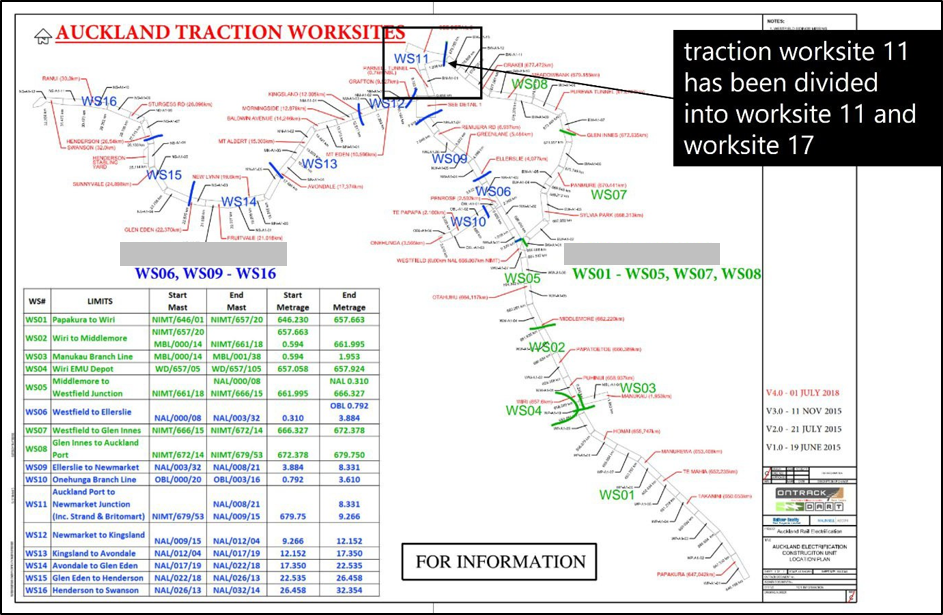
- The location of each area was known as a ‘traction worksite’ (TW) and was listed on a display board located in a prominent position at the traction depot where the traction workers were based (see Appendix 6, Figure A6.2).
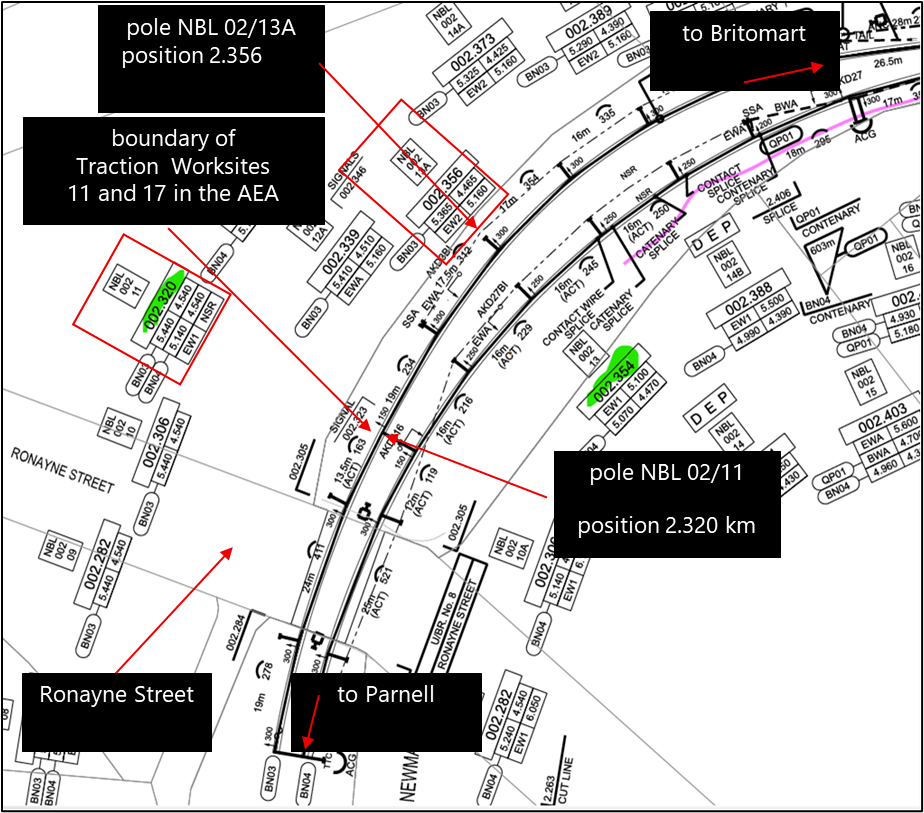
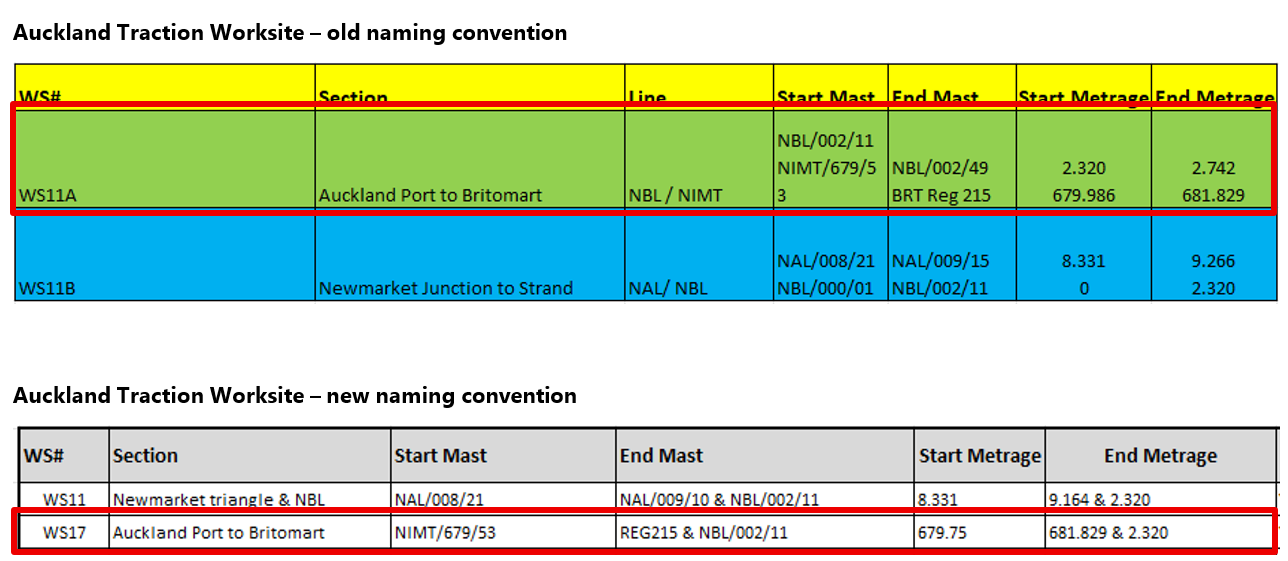
- In reviewing KiwiRail’s documentation, Commission investigators identified that TW 11 listed on the board had subsequently been divided into two separate areas: TW 11 and TW 17 (see Appendix 6, Figure A6.3). TW 17 was the actual location in which both Team 1 and Team 2 were to be conducting the maintenance activity on the night of the accident.
- The boundary between TW 11 and TW 17 was pole NBL/002/11. According to KiwiRail documentation, this was located at 2.320 km.
- Both TW 11 and TW 17 were located within the PWA and ‘worksite limits’ under the control of the RPO, meaning they were both protected.
Traction maintenance conducted by traction workers
- The Commission obtained information from KiwiRail regarding maintenance activities undertaken by Team 2. Investigators specifically identified that the last maintenance task closest in proximity to the isolation limit was a defect at pole NBL/002/13A.
- The documentation listed the asset as being located at the 2.356 km, meaning the defect was located about 36 m within the limits of TW 17. The physical location of the maintenance activity was within the isolation limits and within the limits of TW 17, based on the Geographic Information Systems (GIS) mapping of the traction assets.
- However, the documented meterage position of pole NBL/002/13A did not correlate with the actual position on track. When plotted using the documented km meterage, the asset was located between NEW 0022 and NEW 0023 isolators, and outside the isolation limits.
- The documented position of TW 17 was clear of the isolation at 2.780 km at its actual location. When plotted using the documented meterage of 2.320 km, however, its boundary was located 13 m from isolator NEW 0022 and outside the isolation limits (see Figure 22).
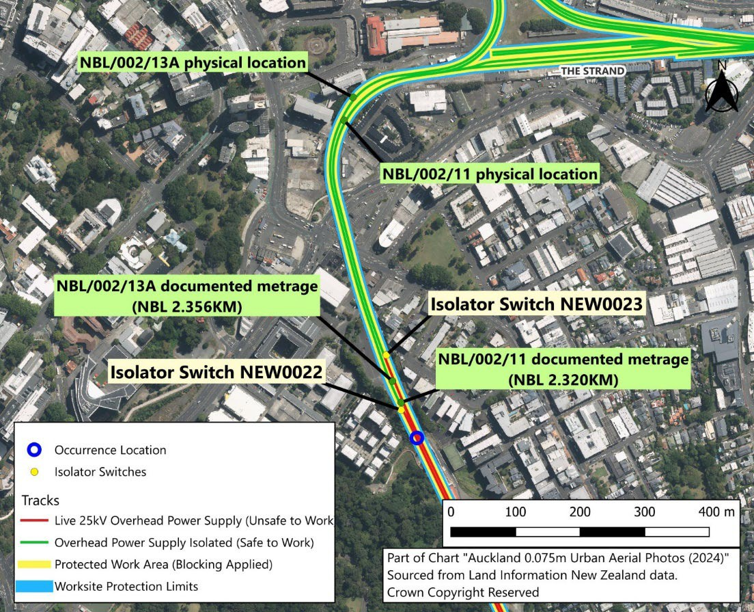
- The isolation limits were in effect located at NEW 0022 and NEW 0023; their stated positions in the DIB were at 2.307 km and 2.431 km respectively. Their metrages were consistent with the signal and interlocking diagrams, the GIS data and their physical location on the track.
-
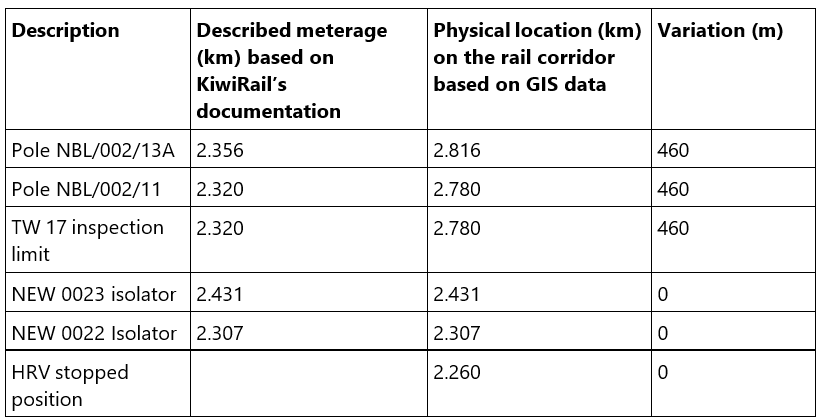
Commission investigators correlated the documented assets, including the isolators, masts and TW 17 boundary, and compared them to their mapped locations and the location of the accident using the GIS data (see Table 1).
Track meterage inconsistency and its effects
- KiwiRail was aware of the inconsistency in the meterage because it had been incorporated into the notes on the traction diagrams.
- During interview, Team Leader 2 stated that they had relied on the PWA and worksite limits of signals 130 and 132 as the isolation limits.
-
While the inconsistency of the meterage could not be directly attributed to Team 2’s entry into the non-isolated section at Parnell, the location at which they stopped was 60 m outside the documented meterage of 2.320 km for TW 17.
- The meterage of the assets on track was insufficient to assist Team 2 in confidently confirming their location. Even if this had been available, the 460-m variation in documented and actual location of the assets would have further undermined their ability to accurately gauge their position.
- The absence of a common meterage amongst all the railway disciplines presented additional risks to safe operations. The use of an incorrect meterage for the purposes of defining a safe limit of operation or directing workers to a specific meterage for maintenance had the potential to expose workers to harm.
Appendix 1. DIB protected work area
Appendix 2. Mis 71
Appendix 3. EF201 permit and EF202 electrical hazard assessment
Appendix 4. TS90 Work Site Register, lock-on frame and colour-coded padlocks
Appendix 5. TS06 Blocking
Appendix 6. Auckland rail corridor meterage and traction worksites
Appendix 7. Network Rail
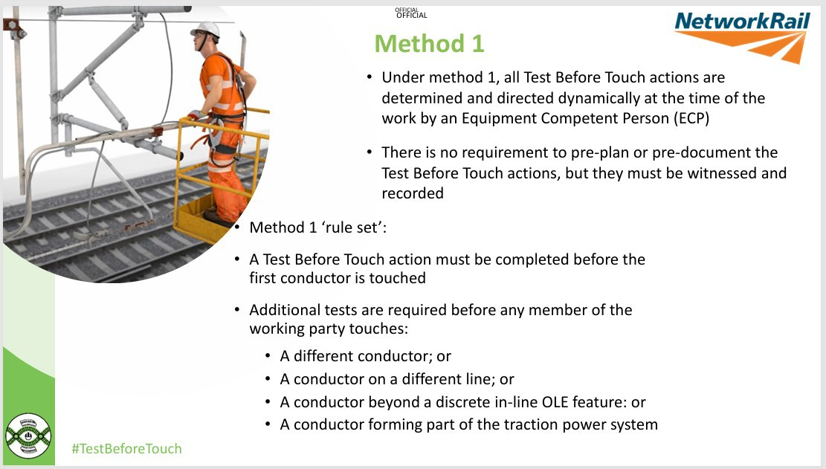
Research to determine what practices other jurisdictions had in place on ‘test before touch’ found Network Rail in the UK had introduced the Test Before Touch standard (Network Rail standard NR/L3/ELP/27720) for OLE to enhance electrical safety and prevent life-changing injuries caused by inadvertent contact with live equipment (see Figure).
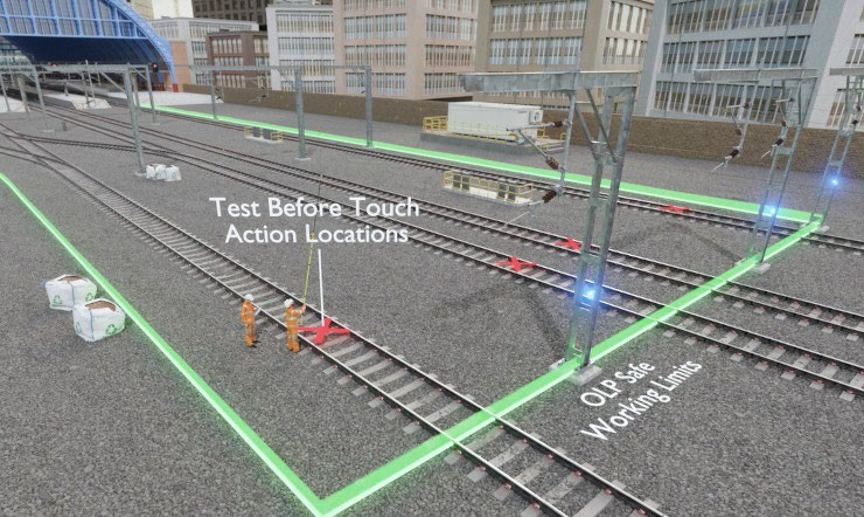
The standard formalised existing guidelines on the Test Before Touch Life Saving Rules. The test is a final step in the isolation process demonstrating that the OLE is de-energised at the test location.
The standard contains four different methods. For example, Method 1 provides the opportunity for an Equipment Competent Person to test at the time of the work. This does not require pre-planning, but it must be witnessed and documented.