
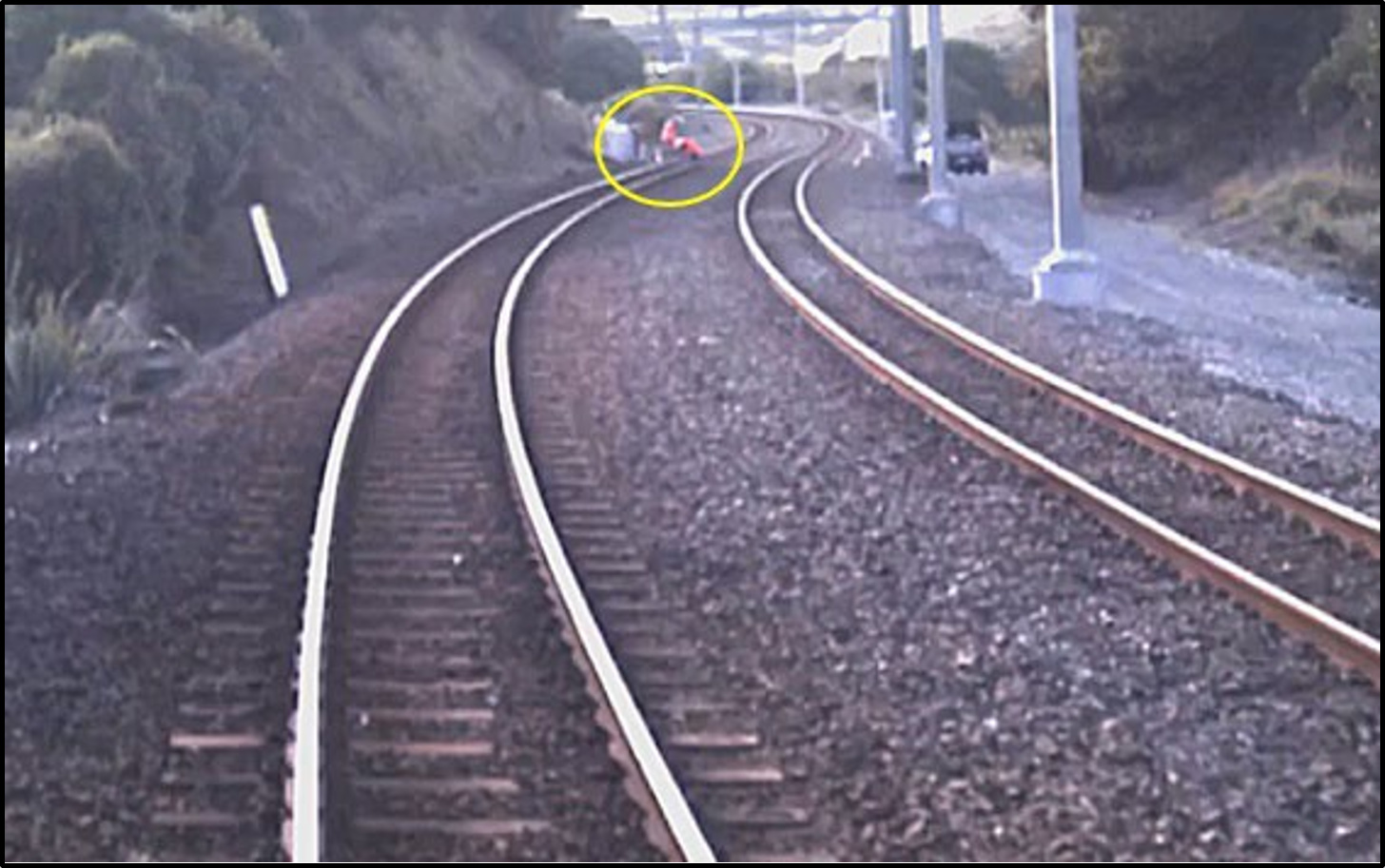
The Transport Accident Investigation Commission today published its final report about a near miss incident involving a passenger train entering the worksite of a track maintenance team at Plimmerton.
TAIC Chief Investigator of Accidents Louise Cook says the maintenance team had a formal protection system available to them, but it was difficult to use in the short periods between frequent train movements, so the workers used a simpler method that was not permitted.
“The people involved – the workers, the train driver and train control – lacked a common understanding of the protection arrangements and competencies required, and KiwiRail’s monitoring and assurance processes didn’t identify the unsafe practice.
“The Commission has made recommendations to strengthen worksite protection and for management to be better assured that safety controls are working.
Ms Cook says the Plimmerton findings add to TAIC’s longstanding concerns in its Watchlist about the safety of people working in the rail corridor.
“The TAIC Watchlist identifies recurring issues including procedures that do not meet national standards, procedures not being followed, miscommunication and fatigue-related impairment. These issues have repeatedly put people working in the rail corridor at risk.
A series of seven Transport Accident Investigation Commission reports published over just 15 months shows how safety can be compromised when controls don’t work as intended.
TAIC Chief Investigator of Accidents Louise Cook says the seven reports together point to a straightforward lesson for people and organisations involved in safety-critical work: safety controls need to be practical, understood, followed and checked.
“Safety-critical work depends on more than having rules and procedures; they need to fit the practical circumstances of people’s work. Everyone should understand what’s expected and who is responsible. Agreed procedures need to be followed, and organisations need to check that their controls are actually working as intended.”
Today’s TAIC report follows last week's report about a freight train colliding with a stationary hi-rail vehicle near the Kaimai Tunnel in April 2025. The HRV crew jumped clear before the collision. The Commission highlighted weaknesses in arrangements for protecting track workers and preventing rail traffic from entering an occupied worksite.
Near Morrinsville in August 2024, a freight train passed two stop signals and without authority entered a section of track where track workers in a hi-rail vehicle had permission to be. Key factors included train driver distraction, shortcomings in management of the driver's workload and issues with the signalling system. (Reported in April 2026)
At Port Chalmers in January 2025, two workers connecting a locomotive to a wagon were endangered when the other end of the locomotive was hit by a set of wagons that had rolled down from the marshalling yard. The wagons had been improperly secured due to limited radio communication and failure to follow the approved process. (Reported in April 2026)
In March 2024 at Hornby in Canterbury, four track workers cleared out just in time before a train passed through their worksite. The workers were alerted only by the alarms on a nearby level crossing. An ineffectively supervised trainee rail protection officer had authorised them onto the worksite while the train was still approaching. (Reported in May 2025)
Near Mataura in January 2025, a freight train travelled at 77 km/h passed through a worksite where a 10 km/h temporary speed restriction was in place. The train driver hadn’t been told in time because the train controller was waiting for the driver to call train control. (Reported in November 2025)
In October 2023, a large track maintenance machine derailed inside the Purewa Tunnel in Auckland after it was authorised to enter that worksite where track had been removed. Key safety information hadn’t been shared and staff were under-resourced. (Reported in June 2025)
Two of the Commission’s ongoing rail inquiries also involve workers at risk in the rail corridor. One is an accident in September 2024 at Parnell, where two workers maintaining an overhead power line sustained significant electric shocks while working from an elevated work platform. Another is a reportedly incorrect removal of track blocking, resulting in a near miss between track workers and a freight train near Wiri in South Auckland.
Ms Cook says the lessons are relevant beyond rail.
“Leaders and managers need to ask the same questions of their own safety systems: Do we have controls that are practical? Does everyone understand them? Does everyone follow them? And do we check that they’re working?”
Every TAIC inquiry seeks to identify the broader circumstances as well as the proximate causes of transport accidents and incidents, identify system-level safety issues, and provide lessons that will help the sector avoid similar accidents in future. The Commission does not assign blame or liability.