
Chief Investigator of Accidents Louise Cook says the accident shows why worksite protection must account for every hazard, and everyone in a worksite should know all the risks.
“Keeping trains out doesn’t make live wires safe. The workers expected the overhead lines within their protected worksite to be isolated from electricity. They weren’t.”
The team had planned to inspect and maintain overhead lines around Waitematā Tunnel but its vehicle lacked the diesel permit required for the tunnel so its work location changed to the line towards Parnell. There was no additional briefing with the rail protection officer after the change. The team moved towards Parnell.
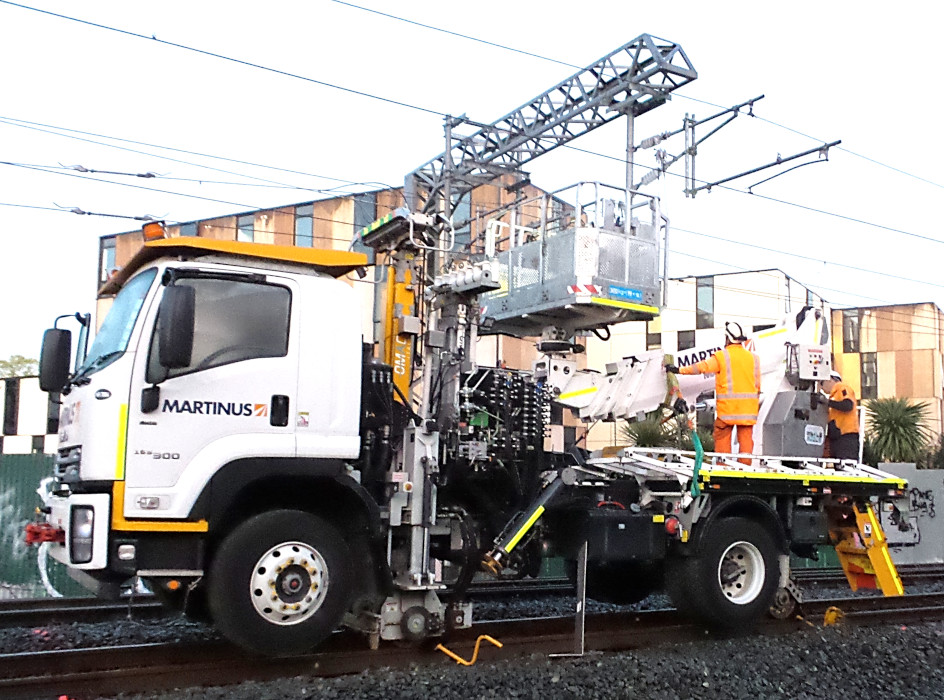
At Parnell, the line maintenance team had no clear physical markers warning that they were entering the live area, no information immediately available to check the isolation limits, and no testing equipment to confirm whether the line was live. They were within the worksite but beyond the electrical isolation limits when they raised their vehicle’s platform towards an overhead line. An electrical arc flash caused serious burns to the traction electrician and minor injuries to the platform operator.
“When the job changes, stop. Check the risks again. Everyone needs the same picture of where it’s safe to work, where the danger is, and what’s protecting them,” says Ms Cook.
“The isolation team had tested the electrical isolation. But the line maintenance team had no way to check the line where they were about to work. Workers need a practical way to verify the protection they rely on.”
The Commission identified four safety issues involving overlapping protection arrangements, verification of electrical safety, shared understanding of safe limits, and inconsistent location references. Some recorded locations of overhead power equipment differed from their actual positions by 460 metres. The Commission did not directly attribute the accident to this additional risk.
KiwiRail’s safety actions, including personal voltage detectors, revised permit information and clearer marking of isolation limits, addressed two safety issues.
The Commission made two recommendations to address the remaining issues. KiwiRail accepted the recommendation for consistent track distance references across railway disciplines. For the recommendation that electrical isolation result in a fully protected work area, KiwiRail challenged the wording and argued that clearly defined, communicated and verified electrical safe working limits were sufficient.
“KiwiRail’s own guidance required the worksite to be protected from both trains and electrical hazards. The arrangements at Parnell did not meet that guidance,” said Ms Cook.
The report reinforces the Commission’s Watchlist concern about safety for workers in the rail corridor. Its lessons also apply to other industries where several hazards and safety controls overlap.
Read the report: https://taic.org.nz/inquiry/ro-2024-105