
What happened
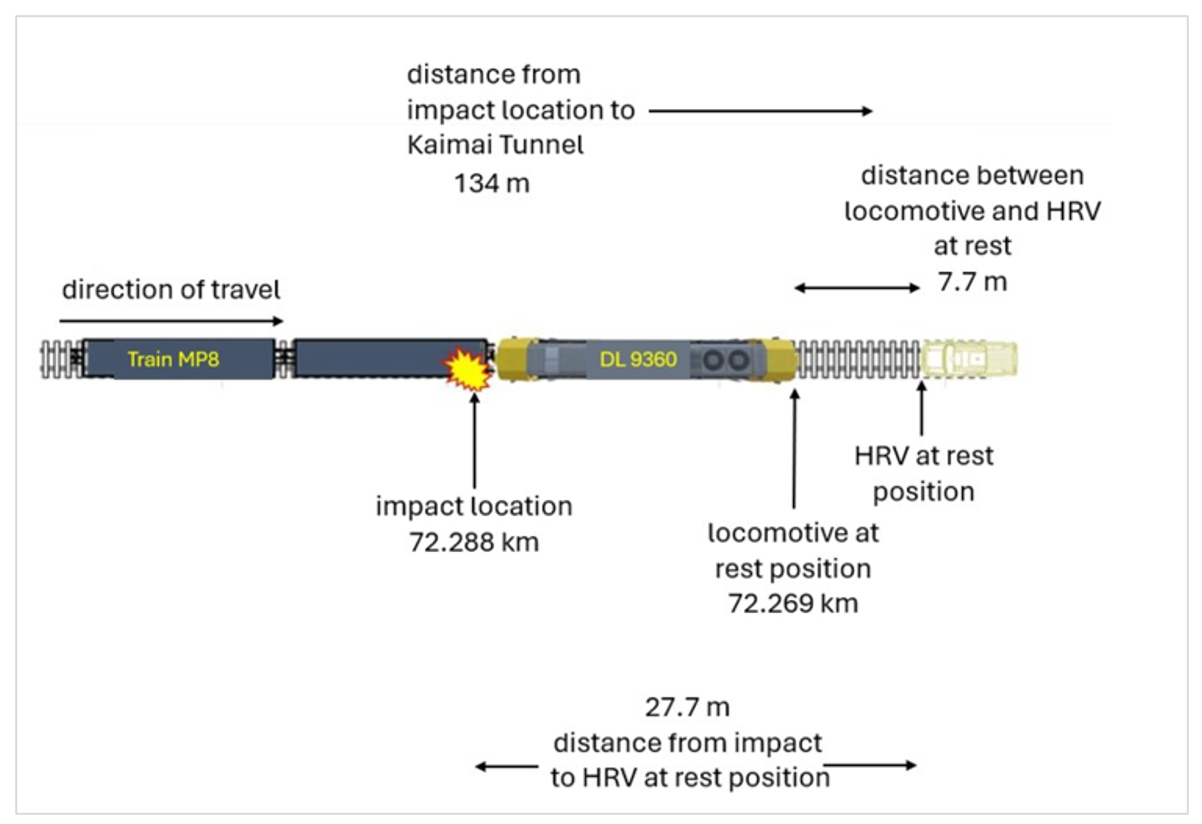
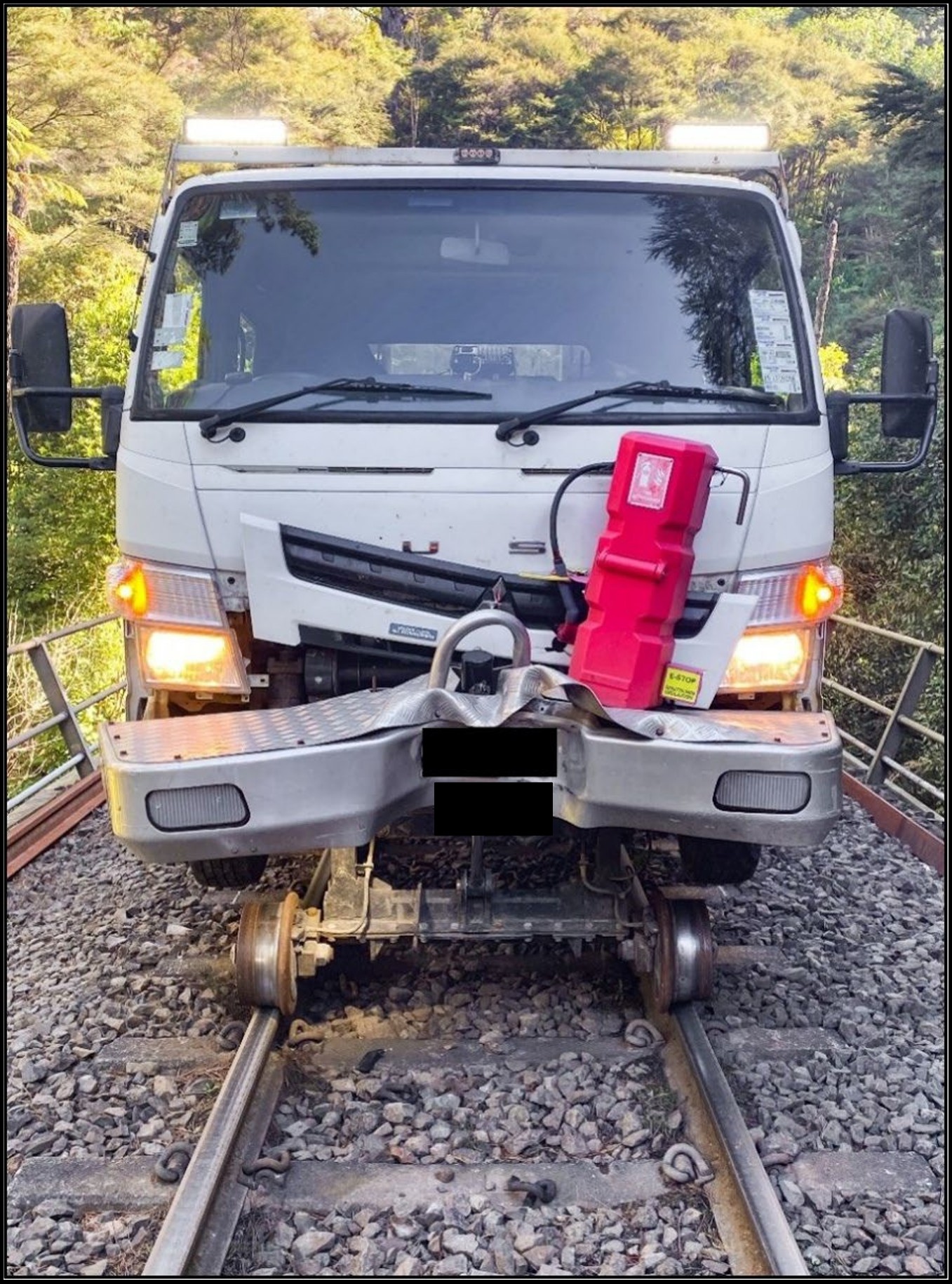
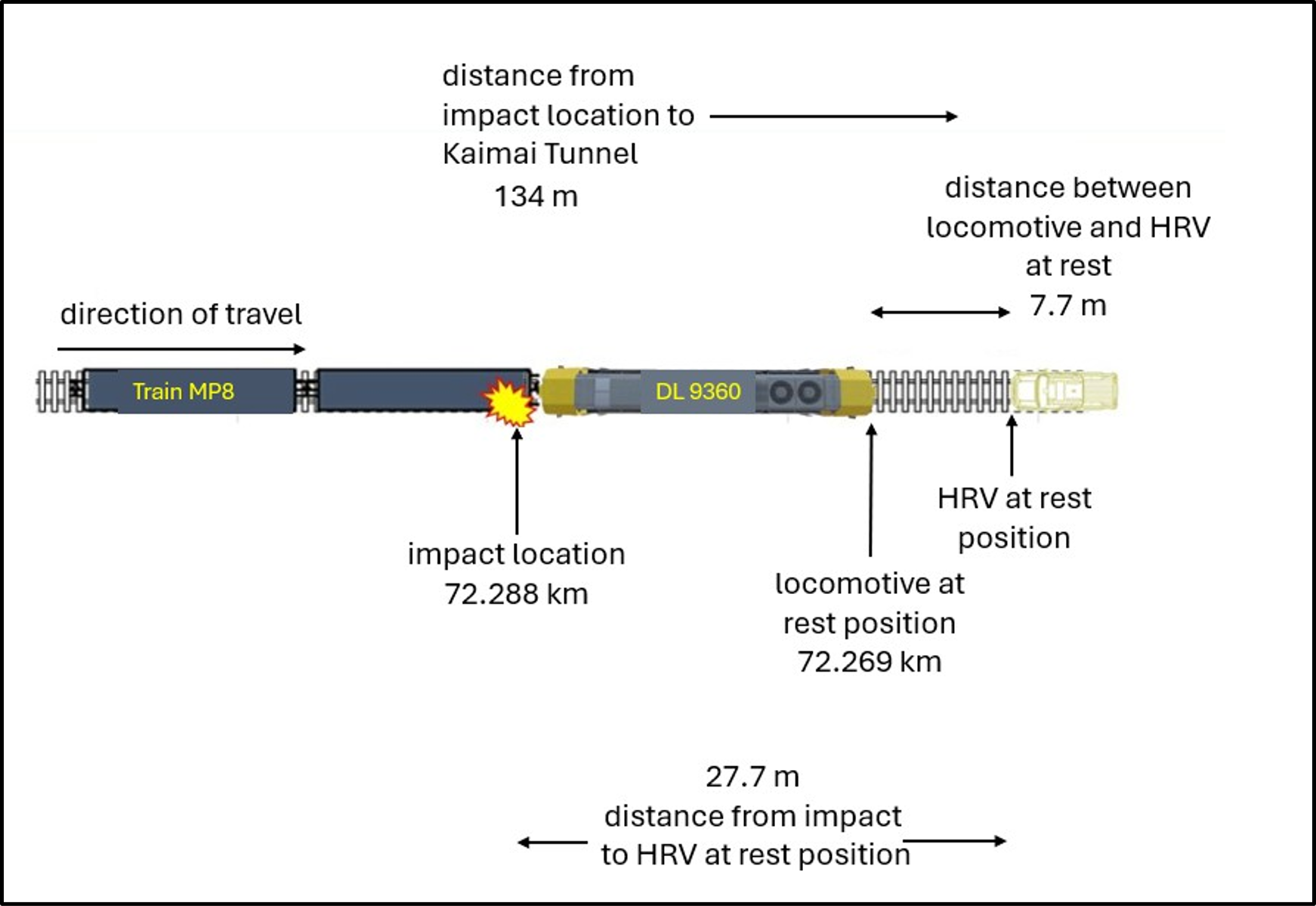
At about 12.40pm on Sunday 6 April 2025, two track workers completed maintenance work inside the Kaimai Tunnel on the East Coast Main Trunk line. They each got in a hi-rail vehicle and drove along the line towards Tauranga. Soon after exiting the tunnel, a freight train travelling west appeared from around a bend ahead. The worker driving the leading vehicle jumped out before the train struck it, causing substantial damage to the HRV but none to locomotive. Nobody was injured.
Why it happened
The accident resulted from a series of communication and procedural failures that meant two work groups did not have the same understanding of the protection arrangements.
Two work groups were operating near the tunnel that morning. A series of miscommunications led to the tunnel work group believing that protection from rail traffic had been arranged by a rail protection officer (RPO) from the other group in a different location. But neither that RPO, nor Train Control knew the tunnel work group was still on the track and there was no protection in place.
Safety issues and avoiding similar incidents in future
TAIC identified three safety issues for people undertaking safety-critical work around communication, situational awareness and challenge to establish a shared understanding.
Communication: ambiguity in the requirements for contacting Train Control
Clear and consistent procedures are important because workers’ actions need to be predictable. But there was contradictory and ambiguous direction in KiwiRail’s procedures around whether it was necessary to advise Train Control before the track workers entered the tunnel. This led to one RPO believing that protection was already in place for the tunnel; and the mistaken belief that the first work group no longer required protection. In fact, Train Control was unaware the workers were in the tunnel and the workers in the tunnel had no protection at all.
- KiwiRail has begun a process to review its relevant standards and procedures. It has accepted the Commission’s recommendation to ensure safety-critical information is communicated with appropriate formality when using mobile phones (recommendation 023/26)
Comms channel prevented check-and-challenge (Inadequate radio coverage)
Radio coverage within the tunnel was insufficient to allow direct communication between work groups, so the RPOs resorted to mobile phones. This meant only the two RPOs heard what each other was saying; Train Control and other rail workers could not hear the discussion, so there was no opportunity to intervene if they had recognised the misunderstanding.
- TAIC considers this safety issue has been addressed because KiwiRail has extended Train Control radio coverage to a nearby on-tracking pad and introduced a dedicated maintenance channel in the area from Hemopo, through the tunnel, to Whatakao.
Situational awareness limited by ambiguous procedures
There was ambiguity in KiwiRail's requirements for contacting Train Control. The Commission found contradictory direction between the relevant standard and the local Kaimai Tunnel instructions. This increased the risk of work being carried out without adequate protection.
Safety-critical communication discipline and the procedures expected of radio communication ought to include using mobile phones when radio can’t be used.
- KiwiRail is changing its communication formats so protected work-area limits are formally recorded, including when mobile phones are used. New forms are due to be introduced from 1 January 2027. KiwiRail has accepted the Commission’s recommendation to review procedures for track workers in tunnels, to ensure they are clear and unambiguous as to the requirement to advise train control before entering a tunnel. (recommendation 022/26)
TAIC Watchlist: safety of workers in the rail corridor
TAIC's Watchlist identifies the ongoing risk to track workers: anyone in the rail corridor risks serious harm, even death, if a train enters their worksite unexpectedly. The Commission notes that safety depends on three things working together — robust operator procedures, workers trained in non-technical skills (clear communication, check-and-challenge, situational awareness), and systems ensuring workers are fit for duty.
TAIC has repeatedly recommended improvements since 2011, covering operating rules, permit-to-enter processes, non-technical skills standards, engineering controls, and fatigue management.
Despite this, non-compliance and miscommunication remain recurring themes – as shown in numerous final reports, underscoring continued concern.