
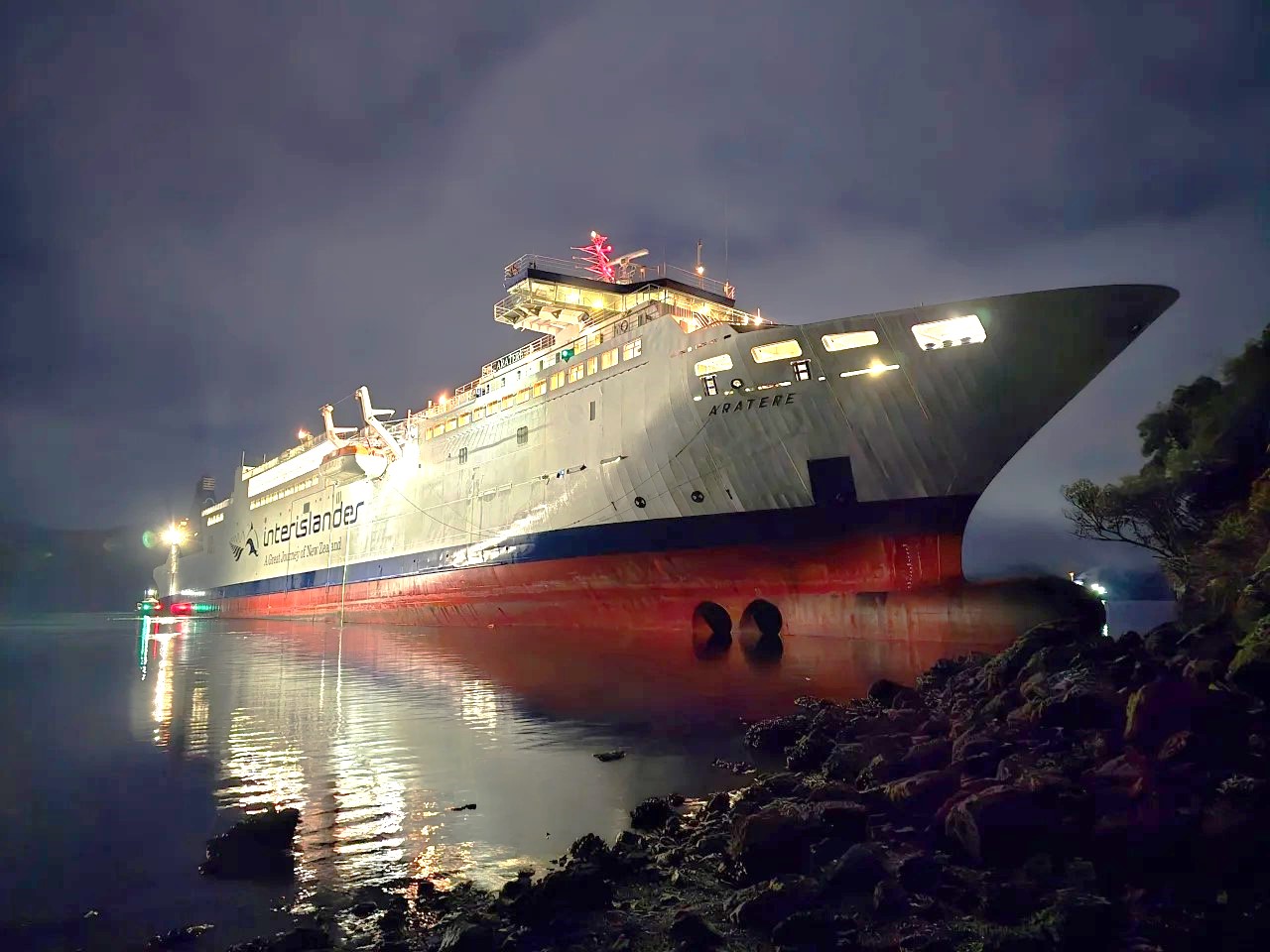
The ferry grounded shortly after departing Picton for Wellington on 21 June 2024 after making an inadvertent turn towards shore. The bridge team had expected the ship’s autopilot to make a programmed three-degree right turn, but the ship was already past the waypoint for that turn so the autopilot locked onto the next programmed alteration -- a much larger 34-degree turn.
The crew reacted quickly but they could not immediately regain steering control because they had not been trained on the operational differences in the new steering system.
Chief Investigator of Accidents Louise Cook says the key issue was the management of change around a safety-critical system.
“Interislander had treated the replacement steering system as a like-for-like change, without identifying important operational differences before returning the ship to service,” said Ms Cook.
“They focused on installing the equipment, but not enough on understanding how the changes affected operation of the vessel and what crews needed to know to use it safely.”
Crucially, the crew had not been trained for two safety-critical operational differences – to align steering commands before transferring control from one steering console to another; and how to use the force takeover function to override that requirement.
The Commission also found that safety audit and assurance checks were not being properly carried out, so shoreside management lacked visibility of day-to-day practice on the bridge drifting away from ideal.
“Bridge procedures are there to catch small errors before they escalate,” said Ms Cook.
It was about as likely as not that shared familiarity with the operation led to none of the bridge team members challenging the lack of a rigorous pre-departure briefing. And it is very likely they would have detected earlier or avoided the inadvertent turn if they had followed protocols such as holding a briefing to clarify roles, responsibilities and communication protocols, and to develop a shared mental model of pilot actions and co-pilot monitoring actions.
Interislander has since revised bridge resource management training, updated navigation assessments, improved change management processes, and developed ship-specific steering system guidance and training.
The Commission considered those actions addressed the safety issues identified in the report, so it made no formal recommendations.
“Any organisation introducing new safety-critical equipment needs to ask not just whether the system works, but how it changes the way people operate,” said Ms Cook.
“The human and operational side of change management is critical to safety.”