
A heavy truck was struck by a freight train at Waikanae after an unexpected brake failure left it stranded on a level crossing. The collision highlights weaknesses in safety systems intended to protect road and rail users, says the Transport Accident Investigation Commission (TAIC).
TAIC has published its final report into the 15 October 2025 collision at the Elizabeth Street level crossing. The truck driver escaped five seconds before the freight train struck at 68 kilometres per hour. Nobody was injured, but the truck was extensively damaged.
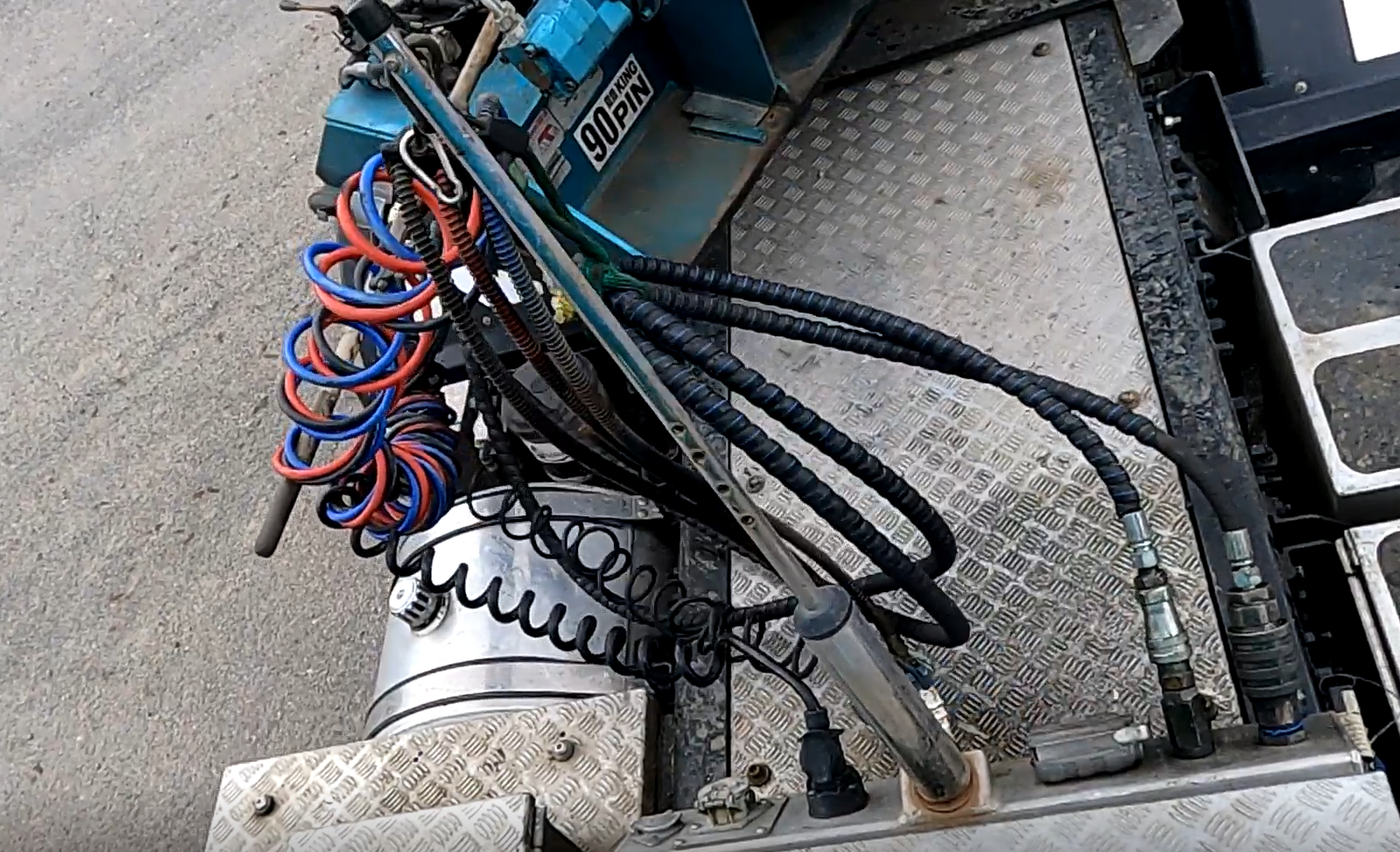
The Commission found that the handle of a broom stowed on the trailer caught and disconnected an air brake hose during a sharp turn onto the crossing. This caused the trailer brakes to apply and stay applied, leaving the truck unable to move.
Chief Investigator of Accidents Louise Cook says an important safety precaution had also been missed.
“If the truck driver had called train control before crossing, controllers could have checked for approaching trains and either arranged protection or told the truck driver to wait until it was safe.”
The truck operator's current permit required that call, but the company considered it was exempt. That understanding dated back to a 2014 permit stating that there was no need to call train control for loads less than 4.8 metres high.
The Commission found this was, as likely as not, due to confusion between the phrases ‘train control’, which is about train movements, and ‘traction control,’ which is about electricity supply.
KiwiRail repeated the exemption in permits for ten years. It removed the exemption in May 2024 but over the next seventeen months did not separately advise the operator that it now needed to call train control. But the Commission found KiwiRail's permit renewals and changes lacked adequate safety risk assessment and compliance monitoring.
“When a permit says the same thing for ten years, it's understandable that people come to rely on it. If the conditions change, it's vital that the change on paper becomes a change in people's understanding. Everyone involved needs to know what's required.”
Train control also received no warning when the truck became stuck. The crossing had no automatic obstruction alert, and no emergency contact number was displayed.
“Once the truck was stuck, every second mattered. An automatic warning could have given train control an opportunity to slow or possibly stop the approaching train. We shouldn't have to rely entirely on someone seeing the danger and having the speed and presence of mind to make a call.”
The Commission has made four recommendations. It wants NZTA, KiwiRail and the NZ Heavy Haulage Association to check for operators relying on historical exemptions and ensure permit conditions are understood and followed.
Three recommendations to KiwiRail concern better risk assessment of permits, practicable early-warning systems, and prominently displayed emergency contact and location information.
The truck operator has modified its brake couplers and connections. KiwiRail and the Heavy Haulage Association have reported other safety actions and further work planned.
The report reinforces TAIC's Watchlist 2026 concern about safety where roads and railways meet. Its lessons are relevant to heavy haulage operators, rail personnel and road controlling authorities nationwide.
TAIC investigates to establish circumstances and causes and help avoid similar accidents, rather than assign blame.
Read the report: https://taic.org.nz/inquiry/ro-2025-108
Read Watchlist 2026: https://taic.org.nz/watchlist