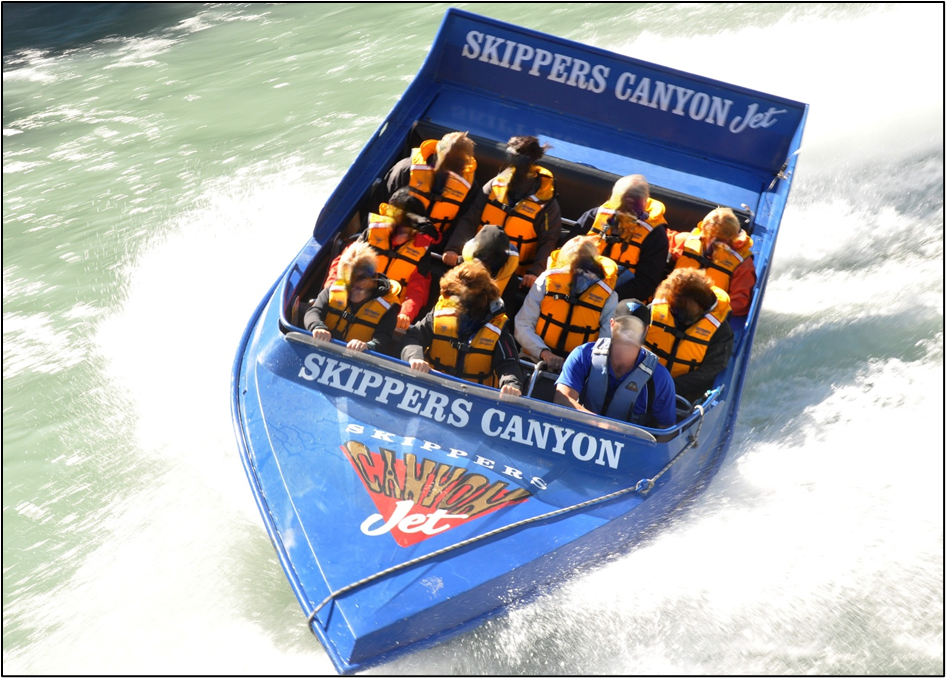
A jet boat was carrying 11 passengers on an adventure thrill ride. It lost power and therefore steering and struck a canyon wall. The engine had shut down after a wiring fault caused a short circuit. Passengers were thrown forward and injured. They were ineffectively protected by the padding fitted to the boat and they were not sufficiently informed about risk or how to act in an emergency. The operator has improved how it explains risk and safety procedures to passengers. TAIC recommends Maritime NZ work with jet boat operators to drive improvements to standards for passenger protection.
Executive summary Tuhinga whakarāpopoto
What happened
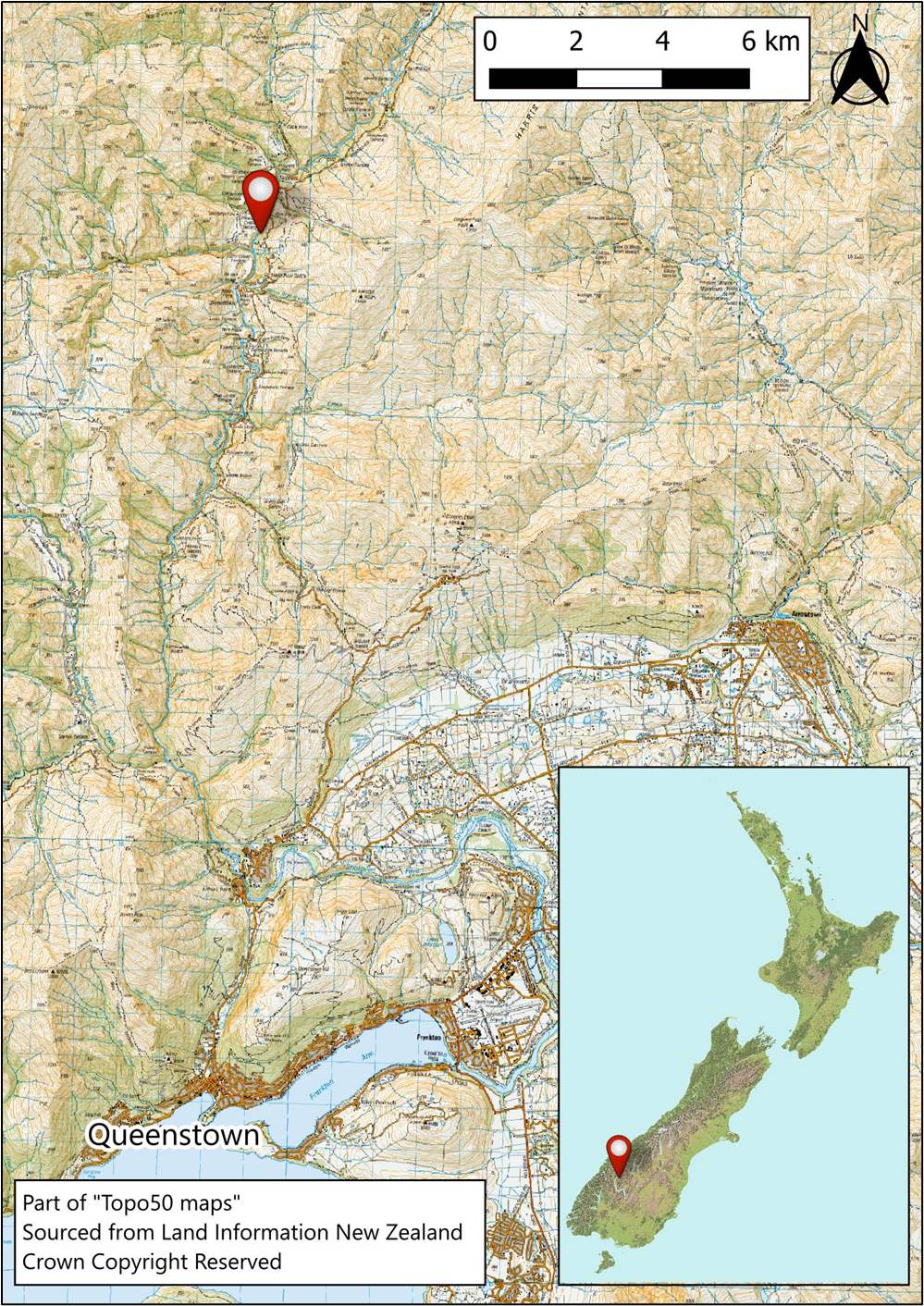
- On 25 February 2025, the commercial jet boat Discovery 2 (the boat) was operating in Skippers Canyon, on the Shotover River, with 11 passengers on board.
- Shortly after commencing the return leg of the journey, and as the boat completed a right-hand turn, its engine suddenly cut out. The driver immediately reset the ignition, but the engine would not start, so the boat had no propulsion and no thrust to provide steering control.
- As a result, the boat continued across the river, where it made heavy contact with the canyon wall. The boat’s speed upon impact was estimated to have been between 30 and 35 kilometres per hour.
- The sudden stop caused the passengers to be thrown forward and resulted in one passenger fracturing their wrist and several passengers suffering deep cuts and bruising. Two adults and two children from the same family were evacuated by helicopter.
- Some of the passengers reported significant psychological trauma following the accident.
Why it happened
- The driver lost control because the engine suddenly shut down, leaving the boat with no thrust and therefore no steering capability.
- Tests ruled out contamination of the fuel and the lubricating oil as contributing to the accident. Relevant properties were consistent with their grade specifications (requirements and limits that define the properties and quality of a product, ensuring it performs correctly and meets safety and environmental standards).
- It is virtually certain that the engine shut down because part of the engine’s wiring harness (an assembly of electrical cables or wires that transmit signals or electrical power throughout an auto-electrical installation) had chafed against a casting edge (finished edge or imperfection of a mould-cast product) of the engine. The chafing exposed a wire and eventually caused a short circuit (when an unintended path with low resistance is created in an electrical circuit, allowing the current flow to bypass the load) when it contacted part of the engine. This resulted in the loss of the 5-volt reference voltage (a stable, low voltage supply from the engine control module that powers various sensors such as the throttle (pedal position sensor), camshaft and crankshaft sensors) shared by the critical engine sensors, and the engine shut down.
- The padding requirements, prescribed in the Maritime Rules for commercial jet boats, did not include enough detail to form a measurable standard for passenger protection. Padding of the seats and surrounds of Discovery 2 did not adequately protect the passengers from injury during a sudden stop.
- Passengers were not informed of, and therefore were uncertain about, what was an appropriate brace position for an emergency on board a jet boat. It is likely that some passengers suffered worse injuries due to this uncertainty.
What we can learn
- Canyon jet boating is a high-risk activity that leaves little room for error when travelling at high speeds in narrow, rock-walled stretches of river.
- Operators conducting thrill-type trips (Commercial jet boat operations in which spins, extreme turns, and similar manoeuvres are undertaken, as described in Maritime Rules Part 82: Commercial Jet Boat Operations – River) should inform passengers of the risks involved so that the passengers know when things are going wrong, and how best to aid themselves.
- Single-engine jet boats are vulnerable to loss of control, because once the engine fails, a jet boat has no steering.
- Safety solutions are unique to each operator. Preventive maintenance and survivability measures are critical when redundancy is not a viable option.
Who may benefit
- Commercial jet boat operators, private jet boat operators, adventure tourism operators, regulators, insurance underwriters and training facilities may all benefit from the findings and recommendations in this report.
Factual information Pārongo pono
Narrative
- At 1530 on 25 February 2025, a bus operated by Skippers Canyon Jet Limited (SCJ) departed Queenstown for its final trip of the day. There were 20 passengers on board for the scenic bus and jet boat tour of Skippers Canyon.
-
The bus leg of the tour included commentary, provided by the bus driver, on the way out to Deep Creek. From Deep Creek, the passengers would travel by jet boat up to Skippers Bridge and back to Deep Creek (see Figure 3).
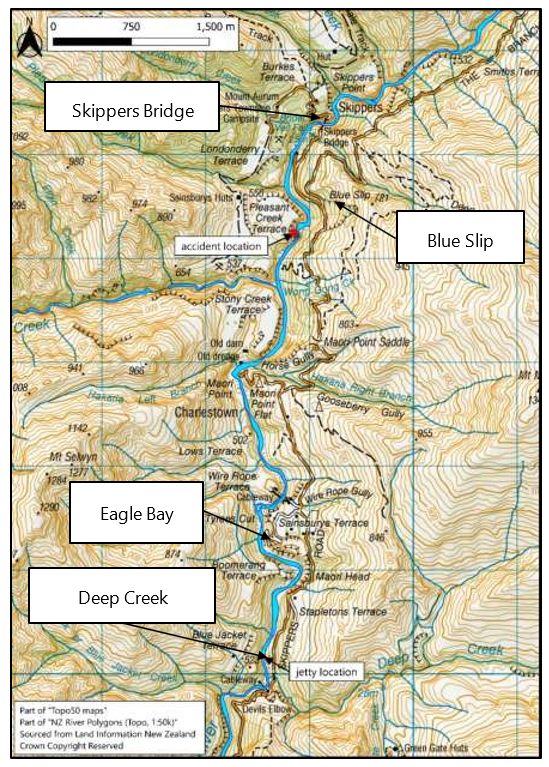
Figure 3: Shotover River – area of operation for Skippers Canyon Jet Limited (Credit: Land Information New Zealand Toitū Te Whenua, labelled by the Transport Accident Investigation Commission) - SCJ had two jet boats operating that day: Discovery 2 and Armadillo. Both boats had completed two trips earlier in the day.
- The bus ride into Skippers Canyon normally takes less than an hour. The last jet boat trip was due to set off at about 1630. However, the driver of Discovery 2 (the driver) was off-site and was delayed in returning to Deep Creek by a work-related phone call. To avoid making the passengers wait at the jetty, the driver called the bus driver and requested the passengers be taken to use the toilets and take photographs prior to the jet boat ride.
- This stop was normally taken after the jet boat ride, but from time to time the tour schedule changed in this way. This variation to the usual schedule allowed the driver to return to Deep Creek and greet the passengers when the bus arrived. Armadillo’s driver had already gone down to the jetty but had heard on the radio that the bus had diverted to the toilet facilities.
- After about 10 minutes at the toilet facilities, the bus driver took the passengers down to Deep Creek to commence the jet boating part of the tour. As the passengers disembarked from the bus, the jet boat drivers handed out lifejackets and divided the passengers into two groups. Nine passengers boarded Armadillo and 11 boarded Discovery 2.
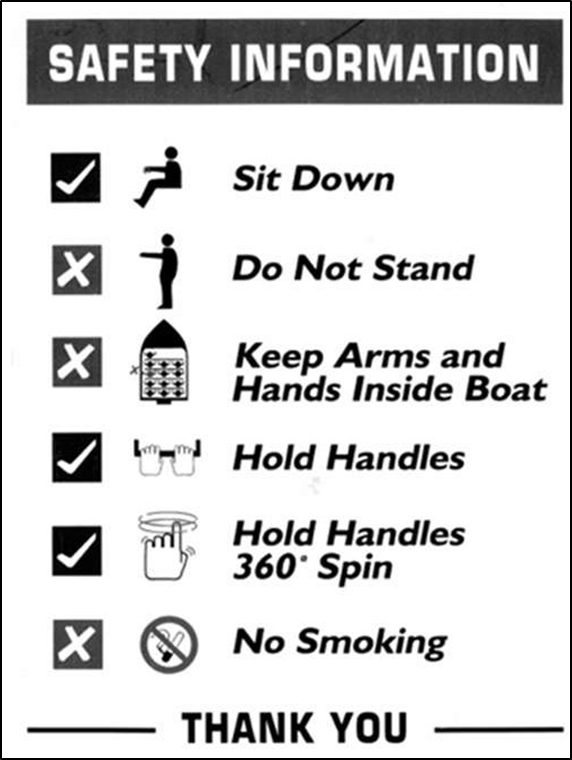
- On board Discovery 2, the driver carried out a pre-departure briefing. As well as referring to the Maritime New Zealand (Maritime NZ) pre-departure briefing card (see Figure 4, the driver told the passengers to stay seated, hold on to the handrails and keep their hands inside the boat. The driver also instructed the passengers to ensure they were holding on with both hands and bracing with their feet anytime the driver indicated their intention to carry out a spin.
- At about 1646, Armadillo departed and called to the SCJ base, by radiotelephone, that they were departing Deep Creek with nine passengers. Discovery 2 left at 1647 and informed SCJ base that they were departing Deep Creek with 11 passengers, three of whom were children.
- At 1659, Armadillo arrived at Skippers Bridge and began the return trip down the river. Discovery 2 arrived at Skippers Bridge at 1700 and also commenced the return trip.
-
At 1701, just as Discovery 2 passed Blue Slip (see Figure 5) at an estimated speed of 60–65 kilometres per hour, the engine cut out. The driver reset the ignition key to restart the engine, but the engine did not fire. The vessel had no power and no steering and continued across the river in a south-westerly direction (see Figure 6). The driver instructed the passengers to “brace”.
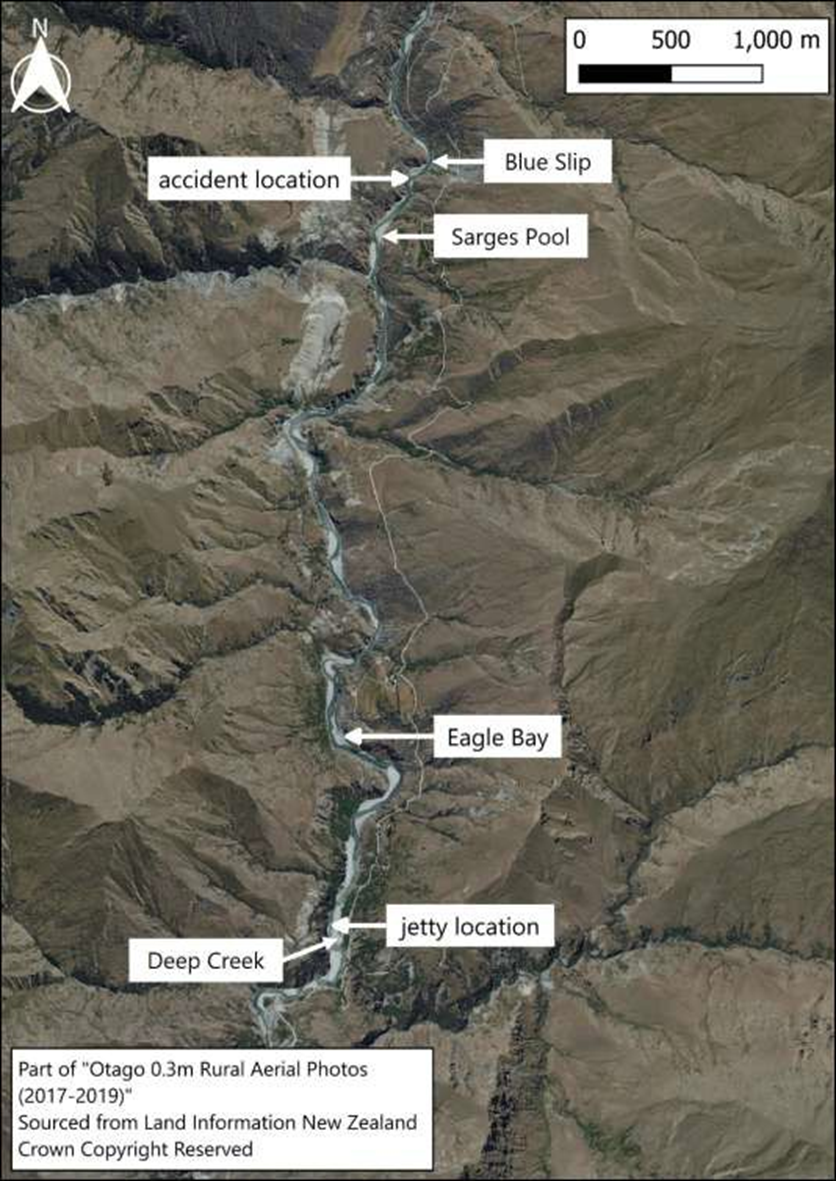
Figure 5: Locations on the jet boat tour -
At about 1702, Discovery 2 collided with the canyon wall, into a rocky bluff, at an estimated speed of 30–35 kilometres per hour. The driver briefly assessed the extent of the injuries to passengers and damage to the boat. The driver decided that a medevac (Medevac is the transportation of patients from the accident site to a medical facility) would be required, so called “Mayday” on the radio and requested SCJ base to arrange a helicopter evacuation. Armadillo’s driver heard the radio calls and contacted Discovery 2 to offer assistance. The Discovery 2 driver instructed them to drop off their passengers at Deep Creek and pick up the maintenance engineer before returning to the location of Discovery 2.
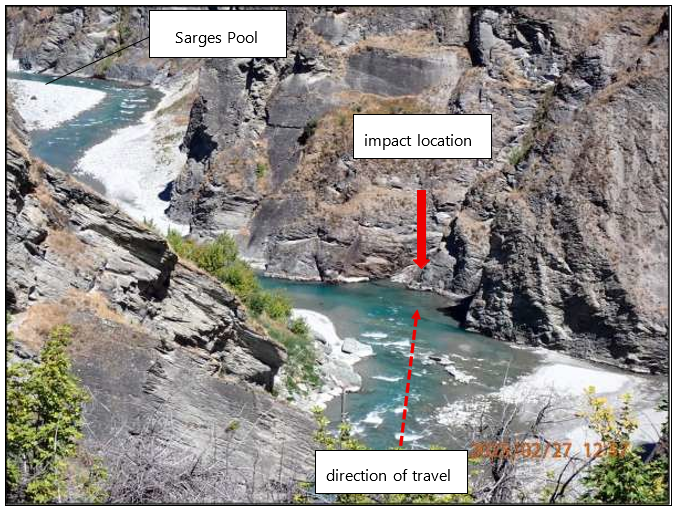
Figure 6: Accident location – looking downriver from near Blue Slip - On board Discovery 2, the driver tried to restart the engine again. This time they were successful. The driver assessed that there was a risk of a high-side (where a vessel is swept onto the upstream side of an obstruction in a river; the downstream side of the vessel lifts and causes the upstream side of the vessel to submerge and allow the ingress of water. This situation can result in a capsize or the vessel becoming stuck on the obstruction) and this meant it was hazardous to remain in situ. The driver decided to move the boat to a safer location – Sarges Pool – which had a beach with space for helicopters to land.
- At about 1705, the driver relocated Discovery 2 to Sarges Pool, where the passengers were able to get out of the boat and onto the beach. Further assessment of their injuries was carried out by two fellow passengers: one a doctor and the other a paramedic.
- At about 1714, Armadillo arrived back at Sarges Pool to assist and transport passengers to Deep Creek.
- At about 1810, the first of two helicopters arrived at Sarges Pool.
- At 1822, the first helicopter departed with two of the injured passengers.
- Armadillo departed Sarges Pool with seven passengers from Discovery 2, transferred them to the jetty at Deep Creek, and then returned to Sarges Pool at 1913.
- At 1918, the second helicopter departed Sarges Pool with two injured passengers on board. The four passengers that were evacuated by helicopter were taken to Dunedin hospital.
- After the passengers had all been evacuated, the driver moved Discovery 2 to a sheltered location, upriver from Sarges Pool, and secured it for the night. However, as rain was forecast for overnight, the driver obtained permission from Maritime NZ to move the boat away from the accident scene and off the river.
- At 2010, Discovery 2 and Armadillo returned to Eagle Bay and all SCJ boats were off the water by 2015.
Personnel information
- The Discovery 2 driver held a New Zealand Commercial Jet Boat Driver (River) Licence, issued by Maritime NZ and valid until 2033. This was the appropriate qualification that entitled them to drive a commercial jet boat in the context of SCJ’s operations. They had more than 20 years’ experience of driving jet boats on the Shotover River.
Vessel information
- Discovery 2 was 6 metres in length and propelled by a single 6.2-litre engine supplying power to a jet propulsion unit.
Meteorological and ephemeral information
- There was rain forecast on the day of the accident, but it was not raining at the time of the accident. The river flow was estimated to have been about 25 cumecs (cubic metre per second as a measure of the rate at which water is flowing). The operator’s safe operating parameters, as stated in their safe operational plan (SOP), were 5–60 cumecs.
Site and wreckage information
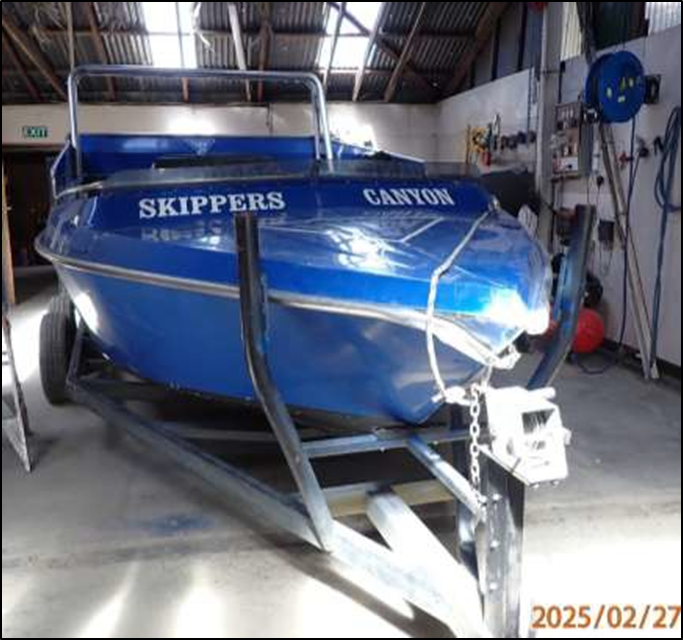
- Damage to Discovery 2 consisted of moderate buckling and cracking of the hull at the bow and windscreen, bent handrails and bent seating.
Medical and pathological information
- The following injuries were recorded.
- The passenger seated in the front seat, starboard side sustained a deep laceration to their left knee (required surgery), bruising to face, right knee, right arm and shoulder.
- The passenger seated in the front seat, centre received facial bruising, and cuts inside the mouth that required sutures.
- Other passengers suffered bruising to knees, cuts to legs, neck sprain, facial injuries, back pain and one fractured their wrist.
- Some passengers suffered psychological trauma.
Tests and research
- The engine’s diagnostic system did not register a specific fault code when the engine cut out. The operator’s technicians, observed by the Commission’s investigators, could not identify or replicate the fault during initial testing and tracing of the engine system.
- Samples of the boat’s fuel and lubricating (lube) oil were taken and sent for laboratory analysis.
- The boat’s wiring harness was removed and inspected by Commission investigators before it was sent for testing and detailed inspection under laboratory conditions with Commission investigators observing. Observations made during these laboratory inspections instigated further testing of the wiring harness in situ.
- On 21 August 2025, the wiring harness was refitted to Discovery 2 and tests were carried out, as recommended by the Commission’s independent expert. The results of this testing are discussed in section 3.
Previous occurrences
- On 23 February 2019, Discovery 2, operated by Skippers Canyon Jet Limited, was on its return leg from Skippers Bridge with nine passengers on board when it collided with the canyon wall. The driver had been negotiating a series of bends in the river when the steering became jammed. The vessel impacted the canyon wall at a speed of about 20–30 kilometres per hour. One passenger was thrown partially overboard and suffered a broken leg, while the remaining passengers suffered minor lacerations and bruising. The Commission found that the driver lost control of the vessel due to mechanical failure of the jet unit; three of the four stud-bolts securing the steering nozzle to the jet unit had cracked, leaving the steering and propulsion system ineffective (Transport Accident Investigation Commission, 2020).
- On 21 March 2021, the commercial jet boat KJet 8, operated by KJet Limited, was travelling on the Shotover River, with a driver and 12 passengers on board, when the engine stopped and the driver could not control the vessel. The vessel continued under its own momentum and collided with a low overhanging branch of a tree on the bank of the river. The driver and one passenger received moderate head injuries when they were struck by a branch. They were airlifted to hospital and discharged the same day. The Commission found that a fuse within the engine control system failed, resulting in the engine stopping and, consequently, propulsion and steering were lost and the driver was unable to control the jet boat (Transport Accident Investigation Commission, 2022).
- The cause of both accidents was a single point of failure in a critical jet boat control system (system through which the jet boat is controlled, such as propulsion and steering), which resulted in total loss of control of the jet boat.
Organisational information
- At the time of the accident, SCJ was a family-owned and operated adventure company. Based in Skippers Canyon on the Shotover River, the following activities and experiences were available with SCJ:
- jet boat trips
- scenic four-wheel-drive trips
- gold panning and gold history
- helicopter flights
- clay pigeon shooting
- golf.
- Jet boat trips were available all year round depending on the weather and conditions on the Shotover River. The main limiting factors were water flow, weather, visibility and actual or potential ice/debris in the river. During summer months, up to five trips per day were available, with the first bus departing Queenstown at 0800 and the last at 1530. The tour took two and a half to three hours and comprised a:
- guided tour into Skippers Canyon
- 25-minute jet boating experience in the upper Shotover River canyons
- return bus trip to central Queenstown.
-
The jet boat ride is marketed as an exciting and thrilling experience. The following description is from the SCJ website:
Once on the boat you will feel your adrenalin surge as you power deeper into Skippers Canyon and up the Shotover River. Our highly skilled jet boat drivers manoeuvre the boat just inches from the sheer canyon walls and keep the excitement levels high with speeds in excess of 80kmh and a series of 360-degree spins. This is canyon jet boating at its best.
- SCJ had an SOP as required by Maritime Rules Part 82: Commercial Jet Boat Operations – River (MR Part 82). All boat inspections and audits required under MR Part 82 had been carried out and copies of the audit reports from 2023 and 2024 were provided to and reviewed by the Commission.
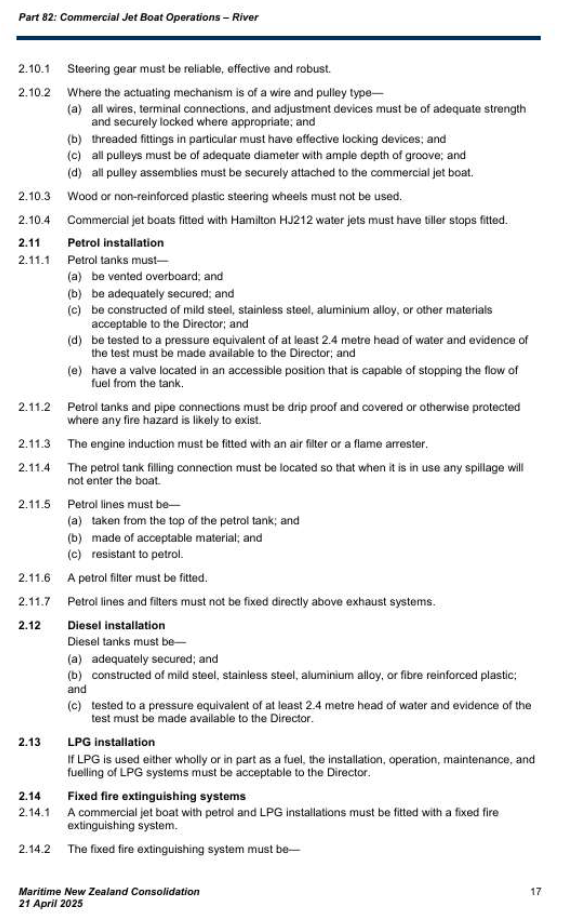
- The company had five jet boats, each fitted with a single Chevrolet L86 engine that powered a single Hamilton 212 jet unit. The engines were adapted for maritime use by KEM Equipment Incorporated. Each boat had its engine secured to the foot beds of the hull using 10-millimetre bolts that were welded for extra security. Additionally, collision chocks were fitted to prevent the engine moving forward in a sudden stop. The boats were kept at Eagle Bay (see Figure 5), a short way upriver from where SCJ had a jetty for embarking and disembarking passengers.
- SCJ implemented a maintenance programme for their jet boats that consisted of 30-hour, 50-hour and 400-hour services in addition to monthly services. At the time of the accident, SCJ staff had carried out all required servicing on Discovery 2.
Other relevant information
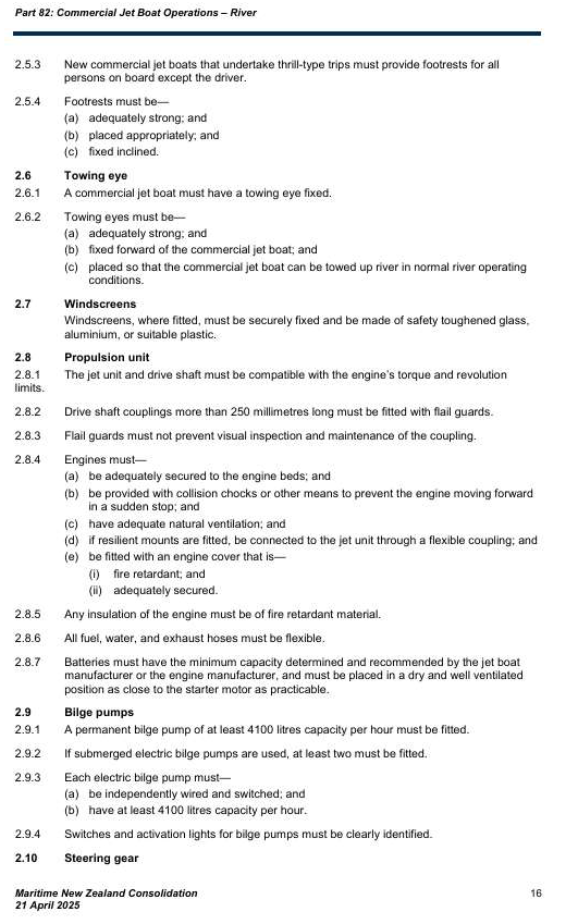
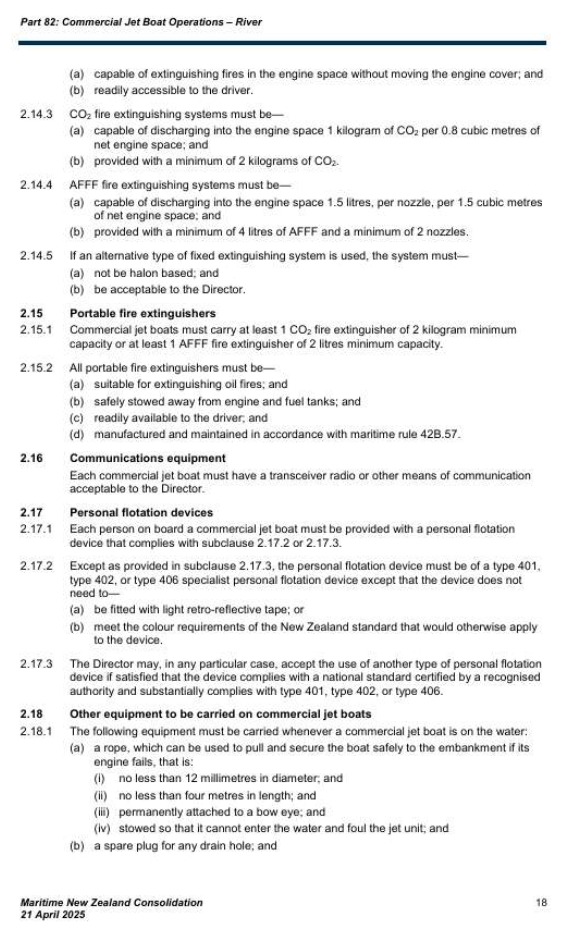
- MR Part 82 applies to operators and drivers of commercial jet boats that are less than 9 metres in length and operate on rivers, carry passengers and are designed to carry no more than 34 people. MR Part 82 sets safe design and construction standards for jet boats (see Appendix 1), sets standards for safety equipment, and establishes safe operating procedures that commercial jet boat operators and drivers must follow.
- MR Part 82 requires drivers to hold a New Zealand Commercial Jet Boat Driver (River) Licence and to meet the competency requirements of the operation in which they drive. MR Part 82 is intended to limit the likelihood and consequences of serious harm to people on board commercial jet boats operating on rivers. Maritime NZ regularly inspects jet boats and safety equipment, and audits operations to ensure continued compliance with MR Part 82 requirements (https://www.maritimenz.govt.nz/rules/all-rules/maritime-rules-part-82).
Analysis Tātaritanga
Introduction
- The jet boat Discovery 2 was operating in Skippers Canyon, on the Shotover River, with 11 passengers on board, when it struck the canyon wall. The impact resulted in multiple passenger injuries, with four passengers requiring evacuation by helicopter. Some passengers reported that they suffered significant psychological distress following the accident. The boat sustained moderate damage to the bow area.
- Discovery 2 was travelling at high speed in the canyon when its engine shut down. Without engine power, the boat’s jet unit could not provide thrust or steering and the driver had no way to control the boat. As a result, the driver was unable to negotiate the next bend in the river, and the bow made heavy contact with the rocky canyon wall. Despite their attempts to brace themselves, the passengers were thrown forward into the seatbacks or dashboard when the boat came to a sudden stop upon impact.
- Jet boating is a high-risk activity that leaves very little margin for error when navigating at high speed in narrow channels and rivers. The consequences of an accident can be catastrophic and traumatic when passengers are on board. It is essential that safety systems are in place, clearly communicated and practised frequently to reduce the risk of an accident occurring or, should one occur, to help lessen the consequences.
- Previously the Commission has investigated jet boating accidents that resulted from a single point of failure in a critical control system, causing total loss of control of the vessel. Such occurrences can result in the vessel coming to a sudden stop. Maritime Rules acknowledge this risk by requiring measures to protect passengers from harm in the event of a sudden stop.
- The following section analyses the circumstances surrounding the event to identify factors that increased the likelihood of the event occurring or increased the severity of its outcome. It also examines any safety issues that could adversely affect future operations.
Why the engine shut down
- Commission investigators considered potential causes of the engine shutdown could be traced to either the fuel system, the lubricating system, or the wiring system.
- Contamination of the fuel and the lubricating oil was discounted as contributing to the accident because test results showed relevant properties were consistent with their grade specifications (requirements and limits that define the properties and quality of a product, ensuring it performs correctly and meets safety and environmental standards).
- The wiring harness was initially tested and inspected in situ by Commission investigators and the operator. Further in situ testing and inspection were undertaken in March 2025 by the Commission’s investigators and independent expert along with SCJ’s owner and mechanic. The wiring harness was removed from Discovery 2 to allow closer inspection. These tests and visual inspections did not identify any damage or fault in the wiring harness.
-
Testing and inspection schedules for forensic examination of the wiring harness and leads were devised by the operator and the Commission’s independent expert. The examination was carried out under laboratory conditions and observed by a Commission investigator. It identified chafing damage to the wire protection on the pedal position sensor (PPS) (sensor that detects the position of the throttle pedal) lead (see Figure 8 to 10).
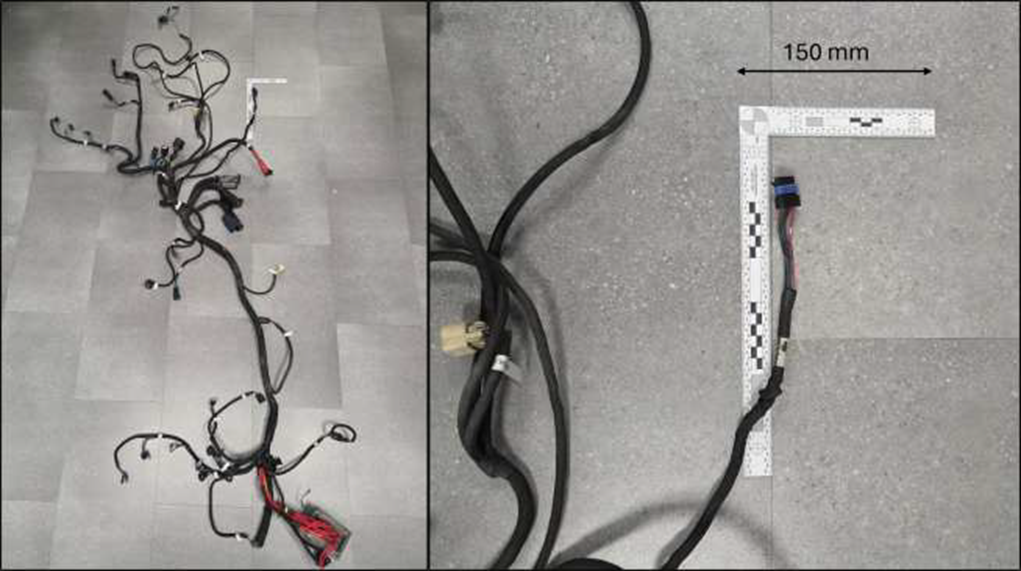
Figure 8: The entire wiring harness (left) and the pedal position sensor lead (right) 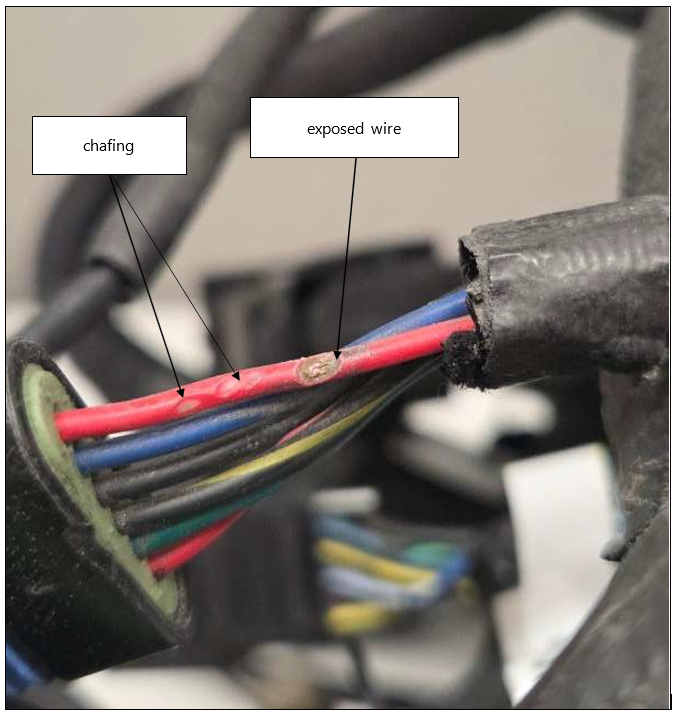
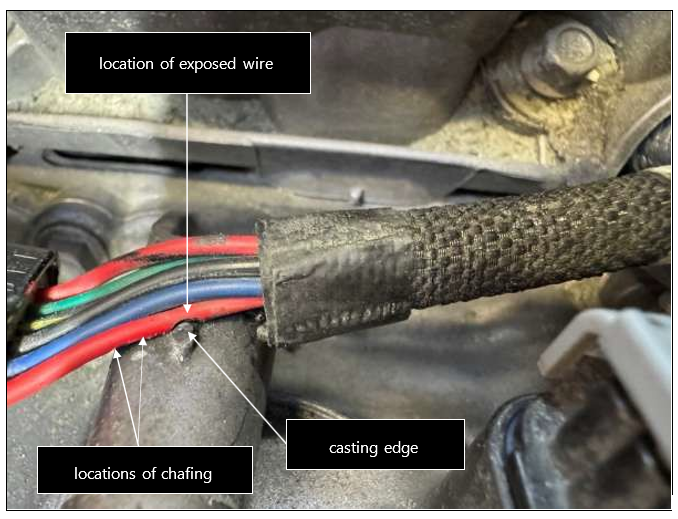
Figure 9: The pedal position sensor lead showing signs of chafing where the wire is exposed - KEM Equipment Incorporated confirmed that arcing on the PPS lead would probably cause the engine to cut out. The Commission’s investigators travelled to Skippers Canyon to test this hypothesis with the Commission’s independent expert and the operator. When the wiring harness was reinstalled, it naturally rested against the area of the suspected short circuit (see Figure 10). This point appeared to be a rough casting edge on the engine.
- Testing was conducted at idle, and then at 4000 revolutions per minute to replicate the conditions of the original incident. In both conditions the engine stalled when the wire was earthed. Earthing removed the 5-volt reference voltage (a stable, low voltage supply from the engine control module that powers various sensors such as the throttle (pedal position sensor), camshaft and crankshaft sensors) shared by the critical engine sensors causing the engine to stall.
- The Commission’s independent expert concluded that the test showed the suspected short circuit could and did cause the engine shutdown.
- Given the indications of chafing and short circuit on the identified wire of the PPS lead, it is virtually certain that the engine shut down because part of the engine’s wiring harness had chafed against the casting edge, earthing the wire.
- The short circuit of the PPS wire was a single point of failure that caused the engine to shut down. As a single-engine jet boat, Discovery 2 had no back-up propulsion, and the driver had no means to steer the boat without power or thrust. Once control was lost, there was very little opportunity for recovery. Due to the high-risk nature of thrill-type jet boat trips, risk controls mainly focus on prevention because there is very little margin of error and very little opportunity for recovery once control is lost.
- The engine installed in Discovery 2 was manufactured prior to 2018. Later-model KEM-modified engines supplied after 2018 were installed differently due to a redesign of the engine. KEM informed the Commission that the wiring harness on post-2018 engines was routed differently because the new design included relocation of the engine fuse/relay box. KEM also introduced additional sheathing of the wires to ensure adequate protection of the wiring harness.
Perception of risk
Safety issue 1: Pre-departure safety information did not accurately convey the level of risk involved with canyon jet boating, so the passengers had a false sense of safety. This affected their ability to recognise, and respond to, an emergency situation when the Discovery 2 lost propulsion and steering.
- Maritime Rules Part 82 (MR Part 82) required operators to inform passengers of the risks involved with commercial jet boating before they board the jet boat. Operators conducting thrill-type trips (commercial jet boat operations in which spins, extreme turns, and similar manoeuvres are undertaken, as defined in Maritime Rules Part 82) had to advise passengers, before a trip commences, that spins, extreme turns and other manoeuvres will be undertaken. A jet boat driver also had to give passengers adequate warning before any such manoeuvre.
- Prior to commencing the accident trip, the driver briefed the passengers (see paragraph 2.7) using the safety information card produced by Maritime NZ. The main purpose of the safety card was to supplement an operator’s safety briefing and help communicate important safety information to passengers who do not speak English. The driver told the Commission that their safety briefing involved holding up the Maritime NZ safety card and talking through each point as well as what to do during the trip, such as holding on to the handrails during spins. However, the driver did not give the passengers any instructions on what to do if an emergency occurred.
- Some of the passengers were expecting a thrill-type trip whereas others initially expected a more sedate tour of Skippers Canyon. The pre-departure briefing and the first few minutes of the trip made it clear to all passengers that this was intended to be a thrill-type trip. When interviewed, passengers described the thrill components of the ride as the spins and the boat approaching bends and rocky outcrops at high speed then swerving away at the last minute, and this was consistent with how the experience is advertised on the operator’s website.
- The passengers were all visitors to New Zealand, but they all spoke English as their first language. Some passengers had participated in adventure tourism activities overseas and were familiar with the use of liability waivers. A liability waiver informs customers of the risks involved in the activity and helps to protect the operator from potential liability related to those risks. Many adventure tourism operators require customers to sign a liability waiver or agree to terms and conditions before participating in the activity. SCJ did not use liability waivers because they considered that they had a responsibility to look after customers affected by an accident while participating in SCJ activities. However, some passengers interpreted the absence of liability waivers as an indication of a lower-risk activity.
- Because the passengers came to expect the high-speed, close-call manoeuvres, it suppressed some of the passengers’ instinctive reactions to danger. Therefore, when the potentially dangerous situation arose, their ability to interpret and respond to the danger and take self-preserving safety action was reduced.
- The passengers had not received instructions on what to do in an emergency situation. So, they had no foresight on what actions would be appropriate when the driver lost control of the boat and they were in imminent danger. When the driver shouted for the passengers to “brace” before the boat hit the canyon wall, they did not know what the brace position was nor did the operator inform them at the pre-departure briefing of what “brace” constituted. Therefore, some passengers adopted a brace position similar to what they knew from aeroplane travel and as a result received facial injuries. One passenger noted that they heard the driver shout “brace”
- but still couldn’t process that there really was an accident evolving and thought it was all part of the ride.
- The operator’s SOP did not include a process to inform passengers of the risks involved with commercial jet boating prior to boarding the boat and when receiving the pre-departure safety briefing. Coupled with SCJ’s decision not to ask passengers to waive the operator’s responsibility in the event of an accident, some passengers may not have had an accurate appreciation of the risks involved in participating in jet boating.
- Where it is not reasonably practicable to apply design and construction principles to mitigate risk, it is vital to apply robust measures to increase survivability when deciding appropriate safety controls. As SCJ was operating single-engine jet boats, there was no redundancy to enable the driver to retain control of the boat in the event of an engine failure. This meant that it was especially important that the passengers were made aware of the level of risk and how they could best protect themselves in the event of an accident.
- Since the accident, SCJ has taken safety action to ensure that passengers are informed of the risks and given appropriate instructions on emergency procedures before each jet boat trip (see section 5).
Adequacy of protective measures
Safety issue 2: Padding of seats and surrounds on board Discovery 2 was inadequate to protect the passengers from injury during a sudden stop. The padding requirements prescribed to commercial jet boat operators by Maritime Rules Part 82, to protect passengers from harm, did not include sufficient detail.
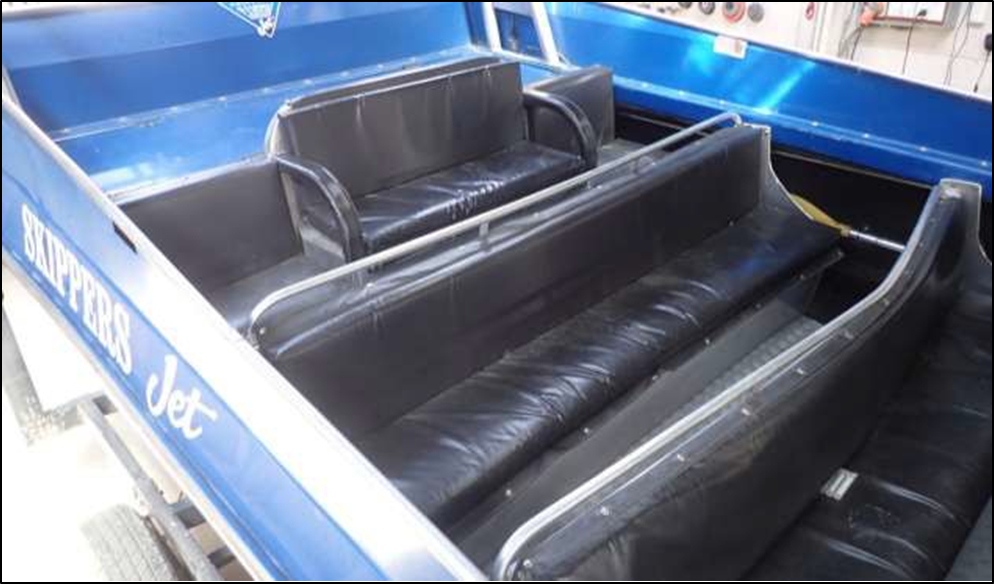
- Physical injuries were sustained by the passengers when their forward momentum forced them into the structure or seating in front of them (see Figure 11) when the boat came to a sudden stop.
-
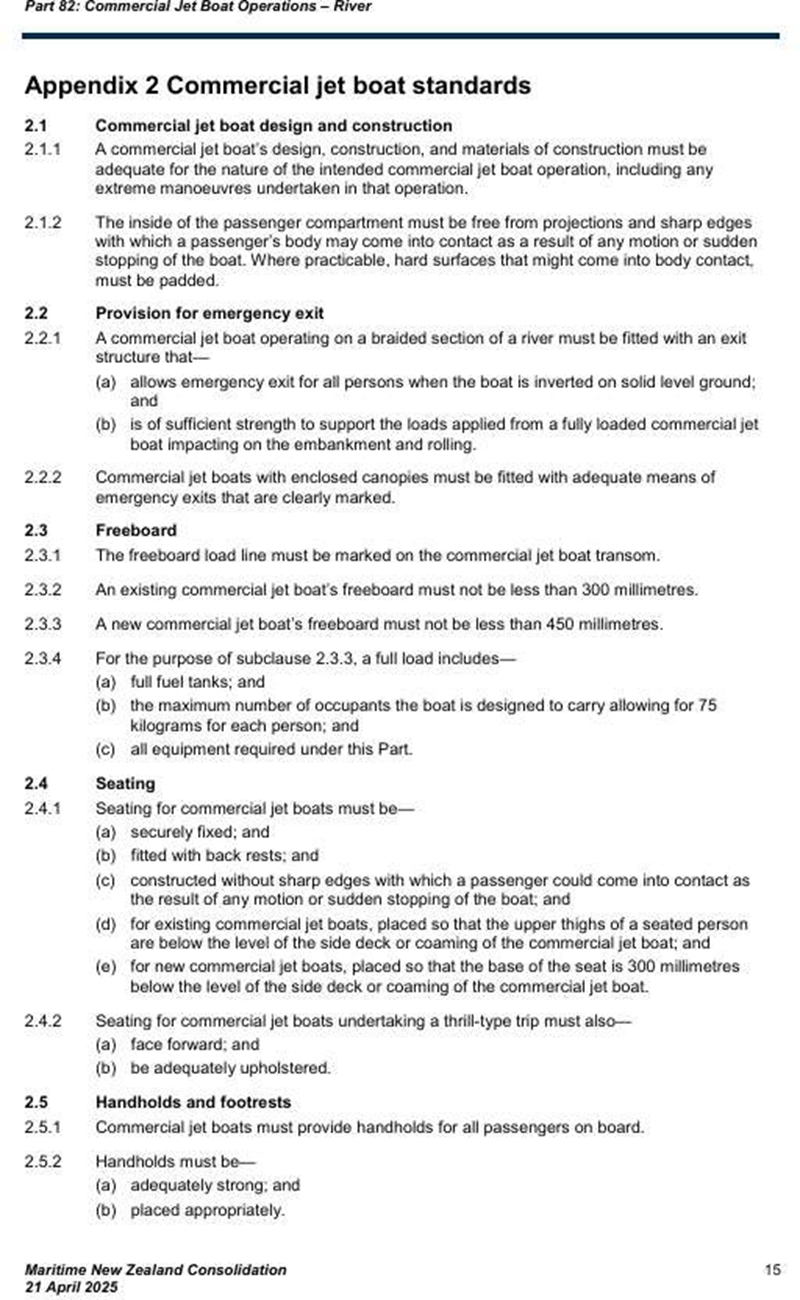
MR Part 82 Appendix 2 outlines the commercial jet boat standards (see Appendix 1). It requires operators to mitigate the risk of momentum-induced injuries, but the rule does not provide sufficient detail to guide operators in ensuring that padding of seats and surrounds is adequate to protect passengers from injury. A jet boat’s construction (2.1.2) and its seating (2.4.2) are addressed separately in the appendix. It states:
The inside of the passenger compartment must be free from projections and sharp edges with which a passenger’s body may come into contact as a result of any motion or sudden stopping of the boat. Where practicable, hard surfaces that might come into body contact, must be padded. (2.1.2)
Seating for commercial jet boats undertaking a thrill-type trip must also— (a) face forward; and (b) be adequately upholstered. (2.4.2)
- SCJ held a current Commercial Jet Boat Operator Certificate and operated under a Commercial Jet Boat SOP as required by MR Part 82. The operation was subject to annual compliance audits: a Maritime NZ maritime officer conducted each audit, which incorporated an annual boat inspection carried out by a delegated person (DP), authorised by Maritime NZ to carry out boat inspections under MR Part 82. SCJ had undergone its last audit and inspection in October 2024.
- The DP carried out the annual inspection of Discovery 2 on 14 October 2024. The inspection was aided by a Maritime NZ checklist MSF005 (commercial jet boat operation vessel inspection checklist for Maritime Rules Part 82 (MSF005)), which contained the following prompts about a jet boat’s construction:
- Are the design, construction and material adequate for the intended jet operation (including during extreme manoeuvres)? (2.1.1)
- Is the passenger compartment free from projections and sharp edges? (2.1.2)
- Are hard surfaces padded where required? (2.1.2)
- The DP indicated on the checklist that the design, construction and material were adequate for the intended operation. However, they noted a non-conformity for some cracks on the deck coaming (vertical edging on a vessel, usually designed to prevent water from entering a hatch. For small craft it refers to vertical surfaces at deck level) and an observation that thigh padding should be considered for passenger comfort.
- The checklist contained the following prompts about a boat’s seating:
- Is the seating securely fixed, fitted with back rests and constructed without sharp edges that may come into contact with a passenger when the boat is in motion or makes a sudden stop? (2.4.1)
- Is the seating base low enough for the upper thighs of a seated person to sit below the side deck or coaming for an existing commercial jet boat? (2.4.1)
- Are the seats facing forward and adequately upholstered? Applies to jet boats that undertake thrill-type trips. (2.4.2)
- The DP indicated on the checklist that Discovery 2 met these requirements, and made no further observations about the seating. Comments and observations from the boat inspection checklists were also summarised on the MR Part 82 audit form completed by the maritime officer.
- The Commission asked Maritime NZ what guidance and support they provided to DPs with respect to interpreting MR Part 82 and what the threshold was to determine if seating on a jet boat was adequate or sufficient. The response from Maritime NZ defined “adequate” as “sufficient for a specific need or requirement” and added that Maritime NZ had no specific guidance on the meaning of “adequate” with respect to jet boat seating upholstery. However, Maritime NZ informed the Commission that in relation to seating for commercial jet boating they expected DPs to consider:
- the ability to help absorb impact
- the comfort of passengers
- bolstering for added support without being constricting
- material of sufficient grade to resist water and UV damage
- the ability to resist moisture and mould
- ease of cleaning
- well secured
- the choice of material, including high-density foam and UV-resistant marine-grade vinyl
- the ability to maximise passenger capacity without sacrificing comfort or safety (from a commercial perspective).
- Maritime NZ also referred to the New Zealand Commercial Jet Boating Association and their published guidance for maintenance and critical parts (Commercial Jet Boat Maintenance Guideline, July 2022). This guidance recommended that seating was “secure, safe and functional”.
- Redundancy of controls through duplication of propulsion and steering systems is not always reasonably practicable to mitigate the risk associated with single points of failure. Therefore, it is important to take effective measures to reduce the consequences of an accident. Commercial jet boat operations are performed in a wide range of vessels in varying environments and conditions, so safety solutions are often unique to each operator and standards cannot be overly prescriptive. The range and number of injuries sustained in this accident indicated the limited protection provided by the safety measures on board Discovery 2. Yet annual audits and inspections found that these measures were adequate to meet the requirements of MR Part 82, Appendix 2.
- Internationally, it is difficult to find canyon jet boating experiences comparable with those on offer in New Zealand. In the United Kingdom there is a voluntary code of practice (Mara, 2019) that promotes common safe working practices for commercial high-speed craft and those offering experience rides. This code of practice addresses areas where the United Kingdom’s current guidance and legislation do not fully capture the specific features of small passenger craft and high-speed operations. This code of practice states that vessels fitted with bench seats and no lateral support for passengers should be driven in such a manner to mitigate the risk of injury or ejection. Such driving would be characterised by lower speeds and wider, slower turns. However, thrill-type trips, such as New Zealand canyon jet boating experiences, include high speeds, spins and sharp turns as part of their everyday business.
-
Furthermore, these trips are conducted on rivers, in some places narrow or shallow and bound by rocky canyon walls. Although this code of practice may not fully align with New Zealand canyon jet boating, it provides useful considerations such as:
All seats should have handholds located in front of the passenger allowing them to hold on with both hands. These should be roughly chest height and shoulder width apart. Consideration should be given to the potential loss of firm hand grip during cold conditions. Consideration may need to be given to padding the rear facing back of a seat and associated handholds to avoid risk of facial injury to the passenger behind in the event of rapid deceleration. The boat design should minimise the amount of structure that a passenger could fall into or impact in the event of a slam incident, thus reducing the risk of injury. Consideration should be given to the height of gunwales in relation to the seating to minimise the risk of ejection.
- In July 2025, Maritime NZ announced the introduction of a third-party oversight team (TPOT). The team was set up to ensure that people delivering regulatory functions on behalf of Maritime NZ had clear guidance and instructions to effectively carry out their job, as well as oversight to ensure the quality of their work. Maritime NZ informed the Commission that the commercial jet boat sector is included in the overarching work schedule planned to commence in 2026. Before starting this work, TPOT will conduct an in-depth assessment of the commercial jet boat sector, including how third-party assessors who ensure compliance with MR Part 82 apply the rules and guidance documents in doing so. Along with feedback from DPs and Maritime NZ staff involved in the commercial jet boat sector, the TPOT will identify issues and define areas that need improving. Maritime NZ informed the Commission that they envisage that this assessment will be followed by a process of planning, problem solving and consultation with industry stakeholders to identify what action can be taken to address the issues.
- Maritime NZ is now represented at annual general meetings of the New Zealand Commercial Jet Boating Association. Along with the introduction of the TPOT, the Commission views this as an opportunity for Maritime NZ to collaborate with the commercial jet boating industry to research the risk and identify safety measures that will further protect passengers from the consequences of a high-speed commercial jet boat crash.
Appendix 1. Commercial Jet Boat Standards