Routine maintenance on the fishing vessel Antarctic Discovery became a serious emergency when hydrogen sulphide released from decomposing fish offal hospitalised four workers. This report identifies four systemic safety issues involving machinery isolation, confined-space hazards, coordination between multiple organisations, and oversight of safety-critical modifications. The lessons extend beyond the maritime industry.
Executive summary Tuhinga whakarāpopoto
What happened
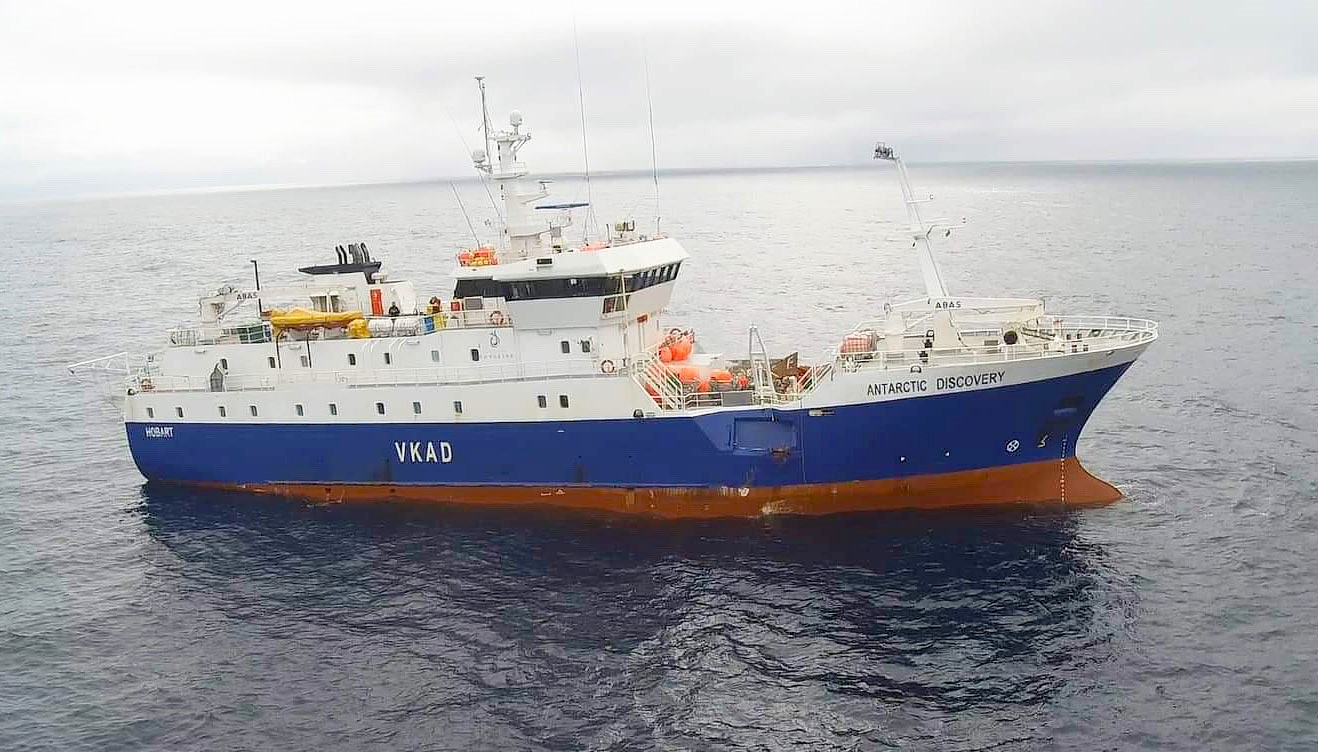
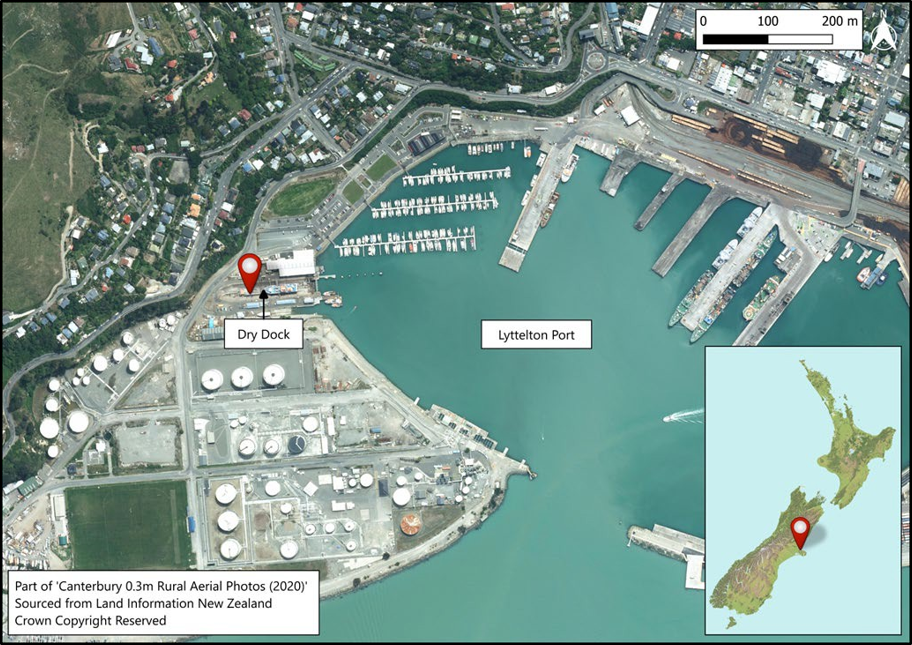
- On 21 February 2025, during maintenance in the Lyttelton dry dock, the longline fishing vessel Antarctic Discovery experienced a serious incident on board, involving hydrogen sulphide (H₂S) poisoning.
- Two apprentice fitters entered the vessel’s bow thruster room to reinstall pipework. While working, contaminated water began discharging from a flexible red hose that was tied at the entrance to the bow thruster room. The hose was temporarily attached to the discharge side of the offal pump. The pump had been accidentally started and was drawing seawater from the forepeak tank (the extreme forward lower tank usually used for trimming or storage in a ship), which had been previously used to store offal. The contaminated water from the red hose was discharging down into the bow thruster room.
- The apprentices escaped and alerted the crew. Responding to the incident, the vessel’s superintendent was briefly overcome by toxic H₂S gas while attempting to enter the forecastle (raised deck at the front of a ship), but managed to retreat. The chief engineer and second engineer entered the forecastle through another entrance to investigate the source of the liquid and simultaneously collapsed. The second engineer regained sufficient consciousness to crawl to safety. The superintendent and second mate donned breathing apparatus and rescued the chief engineer. All affected personnel were hospitalised with symptoms of H₂S exposure and later recovered.
Why it happened
- It is about as likely as not that the offal pump started when one of the apprentice fitters accidentally pressed the unlabelled start button. Their workspace was directly adjacent to the control panel for the offal pump. Without warning, contaminated water containing decomposing offal was pumped into the forecastle, releasing H₂S gas into a confined area with poor ventilation.
- The Commission found that a combination of procedural failures, design shortcomings and inadequate oversight contributed to the accident. The offal pump had not been isolated nor locked and tagged out (lockout/tagout is a safety procedure used to isolate machinery from its energy sources and prevent it from being started accidentally during maintenance or repair), leaving it active during maintenance. The forepeak suction valve remained open and the temporary flexible red hose, installed after a previous valve failure, was not capped.
- The bow thruster room had many of the characteristics associated with an enclosed and confined space (see paragraphs 3.24-3.27 for definitions of an enclosed and confined space) but had not been identified as such, meaning the risk assessment for work permitted in the space was not in line with good industry practice.
What we can learn
- This accident demonstrates how routine maintenance in complex environments can escalate when overlapping responsibilities and weak procedural controls coincide.
- It is important that lockout/tagout procedures cover all work on systems being directly worked on, as well as on other systems in a workspace that could create a hazard for workers.
- Working in enclosed or confined spaces is a hazardous activity. Some spaces may not clearly meet the definition of an enclosed or confined space, yet they can host the same potential hazards. It is critical for operators and personnel to assess whether the features of a space meet any characteristics of an enclosed or confined space and implement appropriate risk controls prior to entry.
- The situation in a workspace can change from day to day. A job safety analysis (JSA) should not cover multiple tasks over an extended period, just because they are all being performed in the same space. A JSA should be conducted for each task on each new day.
- When multiple parties are working on one site, their responsibilities can overlap, requiring careful coordination to ensure worker safety.
- Classification societies provide essential standards for the design, maintenance and repair of hull and machinery. The responsibility for ensuring Class standards are maintained lies with both the vessel owner and the Class provider: the vessel owner must be aware of when to seek advice on matters from their Class provider, and the Class provider should identify and raise with the vessel owner any matters that require its approval.
- By addressing these issues, vessel operators, dry dock managers, contractors and regulators can prevent similar occurrences and strengthen maritime safety standards.
Who may benefit
- The people and entities that may benefit from the findings and recommendations in this report include: vessel owners, masters, chief engineers, Class surveyors and contractors working on board vessels, vessel insurers, maritime training institutes, providers of dry dock services, operators and workers in other industries that require confined space entry and/or utilise lockout/tagout systems.
Factual information Pārongo pono
Background
- The Antarctic Discovery was a longline fishing vessel that commonly operated in the Southern Ocean, fishing for toothfish in the Patagonian and Antarctic toothfish fishery. The fishery is managed by the Commission for the Conservation of Antarctic Marine Living Resources (CCAMLR). CCAMLR is an international body responsible for the conservation and rational use of marine ecosystems in the Southern Ocean.
-
CCAMLR adopted Conservation Measure 26-01 (2022) (Conservation Measure), which prohibits fishing vessels from discharging fish offal (the waste by-product after fish processing) south of latitude 60 degrees South (see Figure 3).
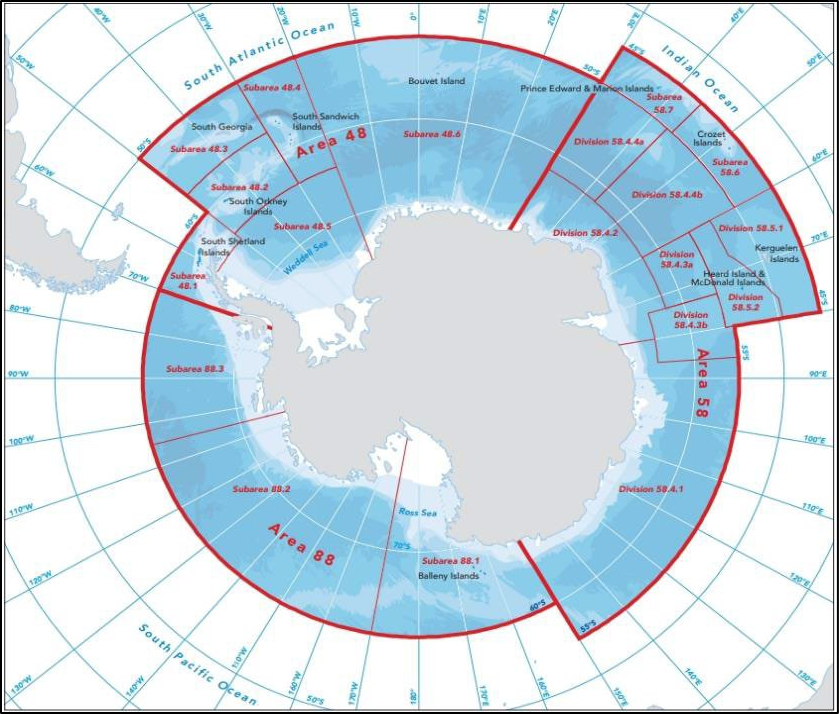
Figure 3: CCAMLR Convention areas - Australian Longline Fishing PTY LTD (Australian Longline) purchased the Antarctic Discovery in 2015 while the vessel was being modified to meet the requirements of the Conservation Measure. The modification allowed the forepeak and moonpool (a moon pool is a vertical shaft in the hull that provides access to the water below. It allows for the deployment and retrieval of equipment. Antarctic Discovery’s moon pool was sealed at the bottom of the hull and converted into two tanks for fuel and offal storage) tanks to be used to store offal while the vessel was fishing south of 60 degrees latitude.
- The modification included installing an offal chute in the factory deck where the fish were processed. From there, the offal was minced and then pumped forward along the factory deck and up into the forecastle space through a flexible offal line. In the forecastle space, the offal line transitioned to a rigid steel pipe that entered the top of the forepeak tank through the manhole cover (the steel plate that seals off the entrance to a tank space).
- A void space (the bow thruster room) was located immediately aft of the forepeak tank (see Figure 4). The bow thruster room was accessed through a doorway in the forecastle, then down a vertical ladder (see Figure 5).
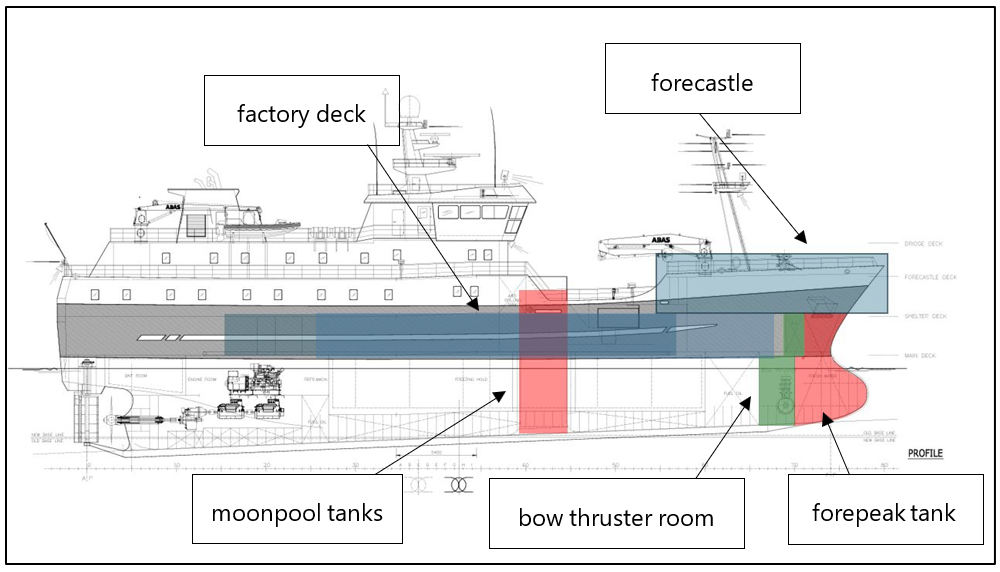
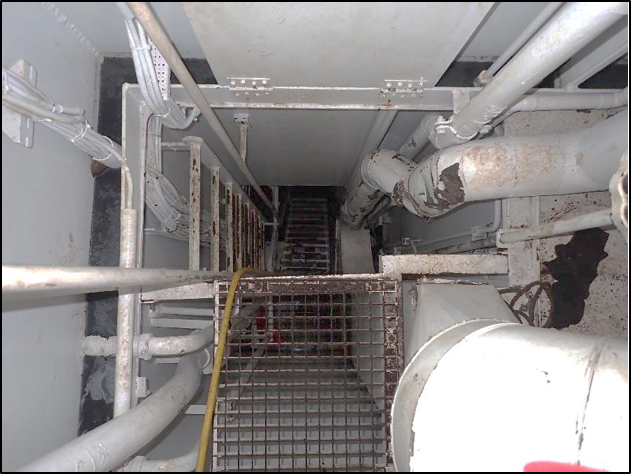
-
The bow thruster room initially housed only the bow thruster motor, the emergency fire pump (powered by an internal combustion engine), the pipework arrangement for draining the anchor chain lockers and the suction valve for discharging ballast water from the forepeak tank. When the forepeak tank was modified to store offal, a screw pump (a type of positive displacement pump that uses a helical screw to move fluids, typically high-viscosity fluids or fluids that contain solid matter) was installed in the bow thruster room. This new pump could be started and stopped from either of two control panels: one at the top of the ladder into the bow thruster room, or one next to the pump in the bow thruster room (see Figure 6).
- The suction side of this offal pump was connected to the existing forepeak tank suction valve. The discharge side of the pump was connected to an overboard non-return valve that penetrated the hull of the vessel below the waterline, through which the offal could be discharged directly to the sea. The offal pump’s suction and discharge piping were made from flexible reinforced plastic.
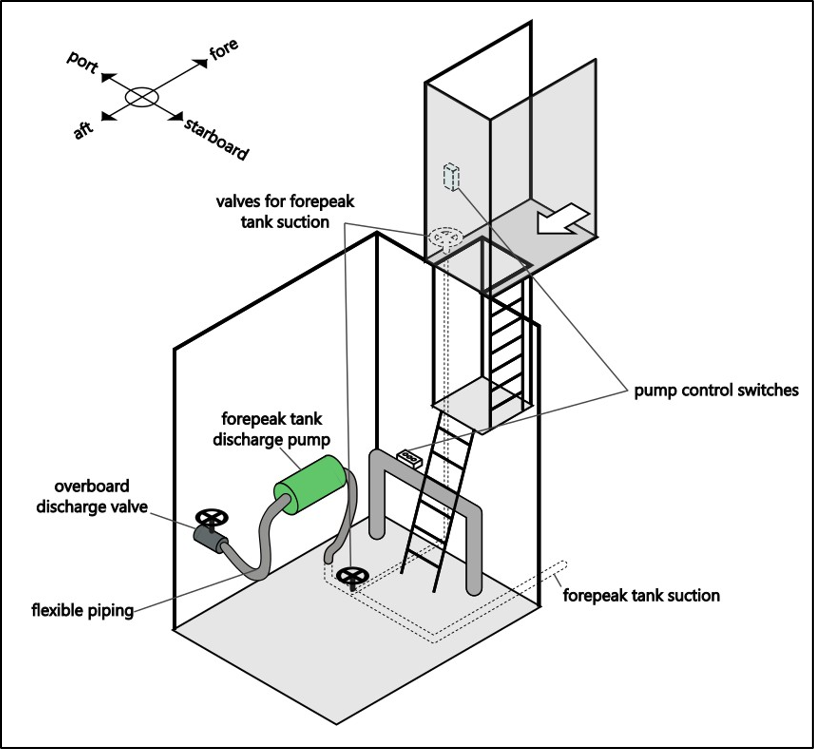
- Once the vessel was north of 60 degrees latitude, the crew would use this arrangement to discharge the offal overboard, then rinse the tank with seawater and discharge the seawater overboard. This rinsing process was typically repeated several times to minimise any residual offal remaining in the tank.
Narrative
- In early January 2025, the Antarctic Discovery had completed a fishing voyage in the Southern Ocean and was returning to Nelson, New Zealand, to discharge its catch and undergo maintenance. On 3 January 2025, the crew discovered that the overboard discharge valve for the offal pump was blocked or seized, preventing them from pumping the offal directly overboard.
- As a temporary fix, the chief engineer disconnected the reinforced flexible hose from the seized overboard discharge valve and placed a cap on the valve to prevent seawater from inadvertently entering the bow thruster room. They then connected the discharge side of the offal pump to a flexible red hose, which was run up the bow thruster access trunking and secured at the top of the ladder (see Figure 7). Additional red hoses were connected to the hose at the top of the ladder and led through the forecastle and down the deck to the moonpool tank. In this way, the offal was pumped from the forepeak tank into the moonpool tank, from where it could be discharged into the sea.
- After the offal had been pumped from the forepeak tank, the tank was rinsed several times and left empty. The additional red hoses used to reach the moonpool tank were disconnected, leaving one red hose connected to the discharge side of the offal pump with one end tied to the top of the ladder.
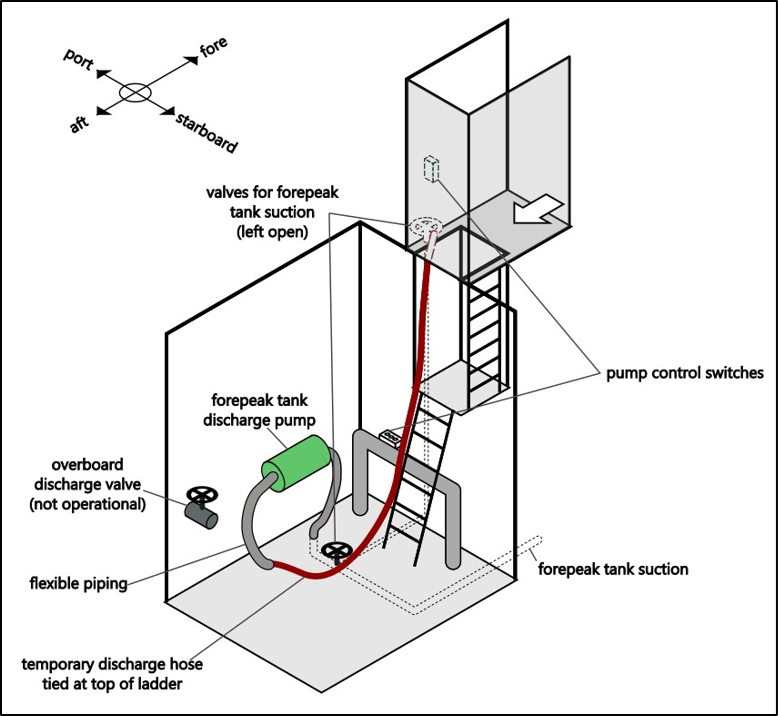
- After the catch had been unloaded and some repairs made in Nelson, the vessel sailed to Lyttelton to undergo maintenance in the dry dock. To enter the dry dock, the vessel needed to be at a level trim (even keel). To achieve this, the forepeak tank was filled with seawater the night before entering the dry dock, on 9 February 2025. The tank was to remain full throughout the dry dock period.
- The Antarctic Discovery entered the dry dock on 10 February 2025. Another fishing vessel, the Nordic Prince, was also scheduled to enter the dry dock for maintenance.
- The Nordic Prince followed the Antarctic Discovery into the dry dock, before the dry dock was pumped out, and both vessels settled onto their respective sets of blocks (the dry dock was a graving dock, which is an enclosed basin that can be flooded, allowing a vessel to be floated in, then drained to allow it to rest on blocks for maintenance or repair). The crew size was reduced, and they were provided accommodation ashore over the dry dock period. The crew conducted shift work on board while the vessel was in the dry dock.
- Over the ensuing days, various repair and maintenance tasks were carried out on the Antarctic Discovery under the supervision of a superintendent from Australian Longline. Two engineering firms serviced the dry dock: Lyttelton Engineering Limited and DGI Morgan Marine Limited (DGI Morgan). Each was assigned various tasks in accordance with the Australian Longline repair and maintenance schedule.
- Several repair and maintenance tasks were carried out in the bow thruster room, including overhaul of the bow thruster motor, removal and cleaning of the pipework associated with the anchor chain lockers, and removal and repair of the blocked/seized offal overboard discharge valve. The first section of the red hose that had been used to discharge the offal into the moonpool tank was still attached to the discharge side of the offal pump and led to the top of the access ladder in the forecastle, where a rope had been used to secure it.
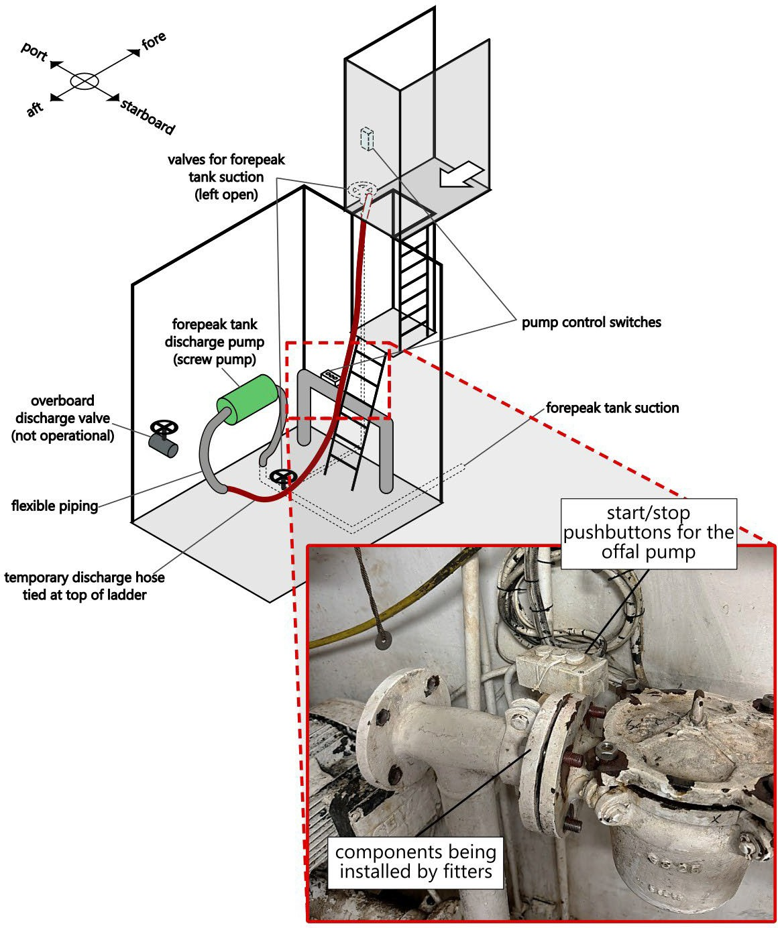
- At about 0900 (times in this report are in New Zealand Daylight Time (Universal Coordinated Time +13 hours) and expressed in a 24-hour format) on 21 February 2025 (day 11 of the dry dock), two apprentice fitters employed by DGI Morgan entered the bow thruster room to reinstall the pipework for the anchor chain lockers. They were installing a component immediately adjacent to the offal pump’s start/stop buttons (see Figure 8).
- At about 0930, the fitters noticed water raining down from the access ladder, which quickly increased to a significant flow and began to take on a foul odour. They decided to vacate the space and climbed the ladder against the flow of water to exit into the forecastle, then out onto the open deck (see Figure 9). Upon reaching the deck, they quickly made their way to the bridge to inform the vessel’s second engineer of the problem.
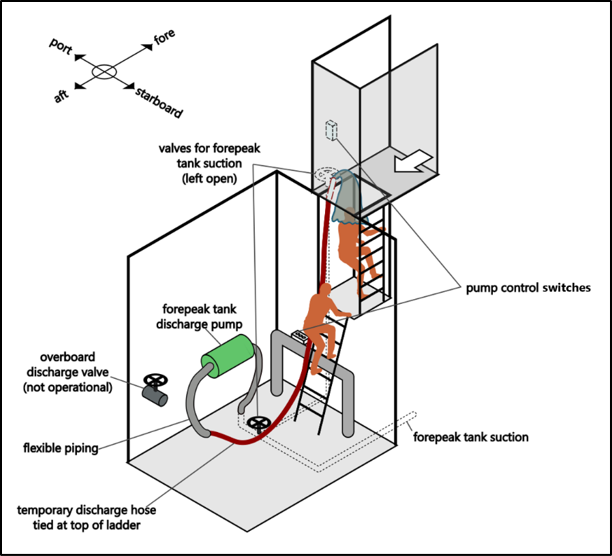
- The second engineer went quickly to the forecastle, followed by the two fitters. The second engineer instructed the fitters to go ashore to decontaminate. At the same time, the second engineer entered the forecastle and observed a significant flow of liquid from the red hose tied at the top of the ladder. The second engineer ran back out of the forecastle, made a signal to the vessel’s superintendent, who was watching from the bridge, and then ran down to the factory deck to alert the chief engineer.
- Meanwhile, the superintendent made their way down from the bridge across the open deck and entered the forecastle. After going only a few steps, the superintendent suddenly felt dizzy and retreated to the open deck, collapsing into a semiconscious state for approximately 45 seconds.
-
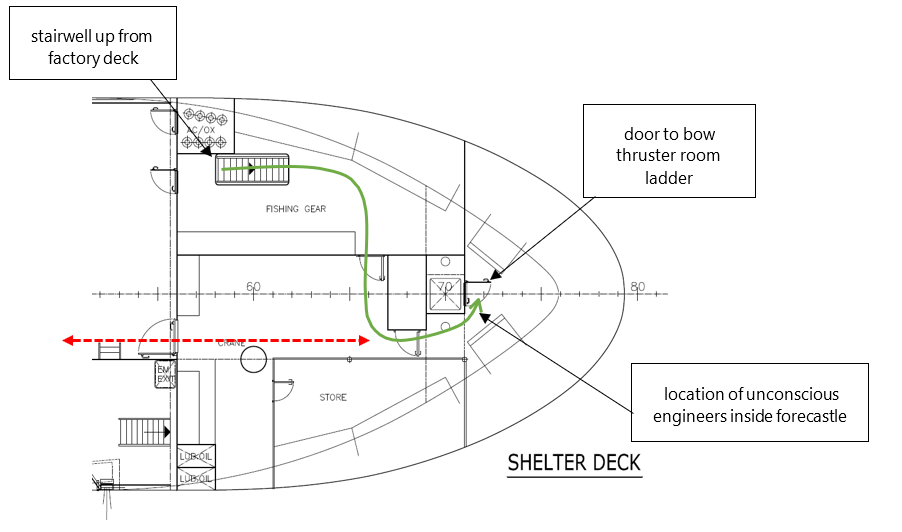
There were three entry points into the forecastle: one each on the port and starboard sides from the open deck, and a third via stairs leading directly from the factory deck on the port side (see Figure 10). The superintendent had entered and exited from the starboard side entry point.
- While the superintendent was sitting on the open deck on the starboard side, the second engineer and chief engineer entered the forecastle from the factory deck on the port side, heading for where the liquid was discharging from the red hose.
- At about 0939 (approximate times taken from dry dock security camera), the superintendent heard the two engineers entering the forecastle space and approached them to warn them to get out. Before they could do so, both engineers collapsed, the chief engineer furthest inside and the second engineer closer to the door.
- Realising the atmosphere in the forecastle was toxic, the superintendent ran aft to the bridge to put on a self-contained breathing apparatus (SCBA) and seek assistance from the second mate. While running aft, the superintendent instructed a worker on the dry dock to call 111 for emergency services.
- By 0943, the superintendent and second mate entered the forecastle wearing SCBAs. At about the same time, the second engineer had regained sufficient consciousness to exit the forecastle themself.
- Shortly after, the superintendent and second mate carried the unresponsive chief engineer to the watertight door and a shoreside contractor helped them carry the chief engineer out onto the main deck.
- The superintendent then went to the vessel’s hospital, brought an oxygen set back to the main deck and administered oxygen to the chief engineer.
- At 0948, emergency services began to arrive on site and took control of treating the engineers and fitters.
- The superintendent then raised the general alarm and arranged to have the vessel's shoreside power supply turned off to stop the offal pump.
- By 0956, the dry dock was being evacuated, and people began gathering at an assembly point outside the premises.
Post-incident
- Since the liquid discharging from the red hose was known to be coming from the offal tank, the unpleasant odour and the effect it was having on people, the presence of hydrogen sulphide (H₂S) was suspected. The chief and second engineers and the two fitters were admitted to Christchurch Hospital for monitoring and treatment for H₂S poisoning. All four were recorded as suffering from local irritation to the upper airways, and the chief engineer displayed a persistently elevated level of lactate (mild hypoxia) (a condition where the body tissues do not receive enough oxygen). All were discharged from the hospital the same day.
-
The Commission obtained a sample of the liquid that had accumulated in the bilges of the bow thruster room, and had it tested. The results confirmed that the samples contained 410 grams per cubic metre (g/m3) of sulphide.
- The Commission conducted an initial examination of the scene, including checking the status of the valves, hoses and pipework associated with the offal pump. The suction valve leading from the forepeak tank to the offal pump was found in the open position.
- The liquid in the bow thruster room and what remained in the forepeak tank were then removed from the vessel under controlled conditions before repair and maintenance work could resume.
Hydrogen sulphide (H2S)
- H2S is a chemical compound made up of hydrogen and sulphur. It is a colourless, flammable and highly toxic gas known for its characteristic rotten egg smell at lower concentrations. It occurs both naturally, such as in volcanic gases and hot springs, and through various biological processes, such as when fish or other organic matter decay in the absence of oxygen (an anaerobic environment). Anaerobic bacteria feed on (in this case) fish offal. These bacteria use sulphur-containing compounds in their metabolism, which results in hydrogen and sulphur combining to form the gas (H2S Production in Nature, Industry, and the Body - Biology Insights). When the gas is released, it gives off the rotten egg smell.
- H2S is heavier than air, soluble in water and highly toxic, even at low concentrations. Its effect on people is shown in the following table (WorkSafe NZ guidance: Preventing harm from hydrogen sulphide).
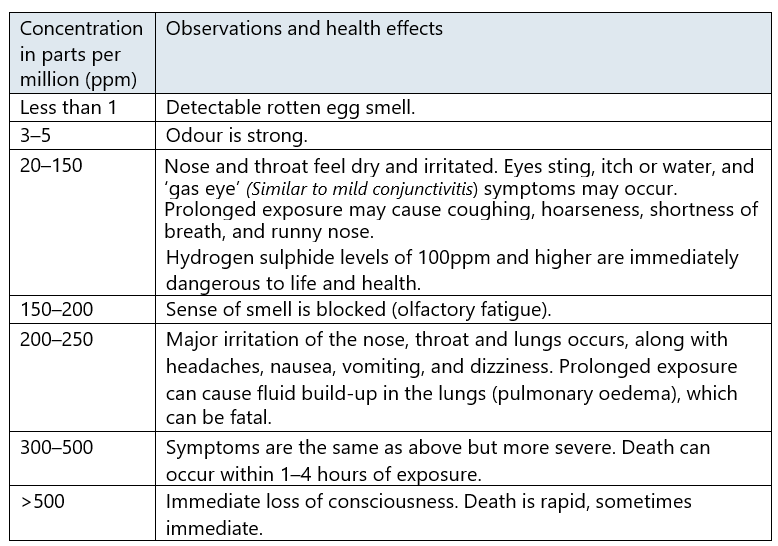
- At high levels, people experience loss of smell, hindering detection, and exposure can be fatal in minutes owing to respiratory failure. WorkSafe New Zealand’s guide Preventing harm from hydrogen sulphide states that H2S levels of 100 ppm and higher are considered immediately dangerous to life and health, and that it is important to escape the contaminated environment urgently.
Personnel information
- The chief engineer started at sea in 1992 as a trainee engineer and worked on a variety of fishing trawlers and in shore-based workshops over the ensuing years. They obtained their Marine Engineer Class 4 Certificate (1DTE) (First Class Diesel Trawler Engineer) in 2000 and had worked on board the Antarctic Discovery for about one year, comprising two trips to the Southern Ocean.
- The second engineer started at sea in 2007, working as a deckhand on inshore trawlers for four years. They then moved ashore to obtain an automotive engineering qualification but returned to sea to earn a Marine Engineer Class 5 (2DTE) (Second Class Diesel Trawler Engineer). They had worked for Australian Longline for three years and had served on board the Antarctic Discovery for about one year, comprising two trips to the Southern Ocean.
- The two apprentice fitters employed by DGI Morgan, who were fitting the components in the bow thruster room, were apprentice mechanical engineers: one with about three years’ experience and the other with about six months.
- The Australian Longline superintendent had nine years as an automotive mechanic before switching to marine engineering in 2012. They had seven years’ experience as chief engineer, four of which were with Australian Longline before moving ashore into the superintendent role early in 2025.
Vessel information
- Antarctic Discovery was a 55.3-metre Australian-flagged longline fishing vessel. The vessel was built in 1995 under classification society Det Norske Veritas (DNV). In 2015, the vessel was purchased by Australian Longline while undergoing an extensive refit. The vessel began operating out of New Zealand in 2016.
Organisational information
- The vessel’s owner and operator was Australian Longline PTY Limited, based in Hobart, Tasmania, Australia. The company operated a fleet of two longline fishing vessels that primarily fished for toothfish in the Patagonian and Antarctic toothfish fishery.
Lyttelton dry dock
- Lyttelton’s dry dock was opened in 1883 and is a nationally significant category 1 heritage site and one of New Zealand’s key maritime assets. The dock measures 137 metres long and 14 metres wide at the floor, allowing it to service vessels with beams up to 18.8 metres and draughts of up to 6.1 metres. The dry dock can accept one large vessel or multiple smaller vessels at a time, maximising the dock’s available space.
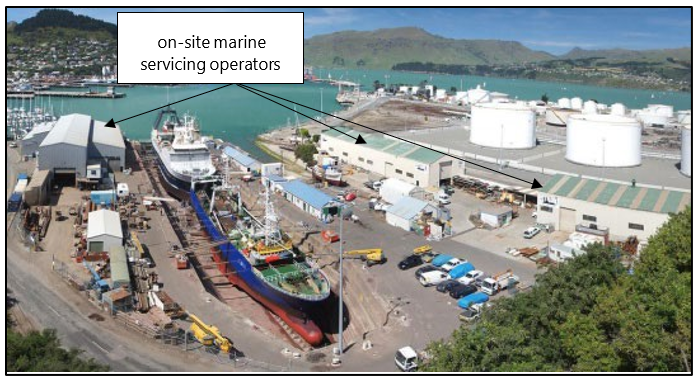
- The dry dock is owned and operated by Lyttelton Port Company Limited (LPC). The facility is supported by several on-site marine service companies that occupy surrounding buildings and provide engineering and repair capabilities (see Figure 11). Lyttelton dry dock is one of two dry docks in New Zealand. It is the only dry dock in the South Island, making it an important part of the country’s maritime infrastructure.
Health and Safety at Work Act 2015
- Persons conducting a business or undertaking (PCBUs) have legal duties under the Health and Safety at Work Act 2015 (HSWA) including to ensure worker safety through risk identification, safe systems of work, supervision and training. An Australian-flagged vessel is not subject to HSWA but has similar health and safety obligations through Australian legislation. These are implemented through the vessel’s safety management system (SMS). All significant risks in port operations must be systematically identified and not merely managed with paper-based or administrative controls. This requires leadership, assurance and staff engagement.
- Further, the HSWA requires New Zealand PCBUs that have overlapping duties to consult, cooperate and coordinate so far as is reasonably practicable (Section 34(1) Health and Safety at Work Act 2015 – PCBU must consult with other PCBUs with same duty. Each PCBU with the duty must, so far as is reasonably practicable, consult, cooperate with and coordinate activities with all other PCBUs who have a duty in relation to the same matter). This duty recognises the increasing complexity of worksites where multiple duty holders and overlapping obligations are common features.
- This meant that LPC, DGI Morgan and other PCBUs working in the dry dock, had an obligation to work with each other to discharge their health and safety duties within the dry dock.
Previous occurrences
-
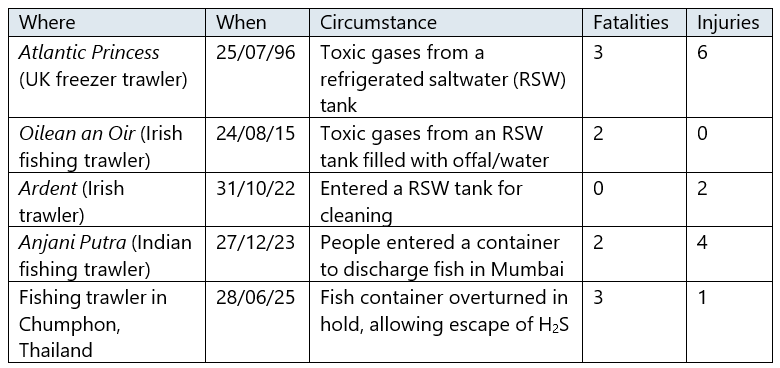
Global research conducted by the Commission identified that over the last 30 years there have been several cases involving fishing vessels where H2S was considered a cause of, or a factor contributing to, 23 deaths and 37 injuries.
-
A study in China, Characteristics Analysis and Control Measures of Acute Hydrogen Sulphide Poisoning in Fishing Boats in a City (2009-2018) found that in 14 incidents on board fishing vessels, 34 people were poisoned, resulting in 12 deaths. The circumstances involved people entering a fish hold to rescue someone, move fresh catch or clean the hold.
- Multiple maritime safety agencies (Marine Accident Investigation Branch (United Kingdom), Marine Casualty Investigation Board (Ireland), United States Coast Guard, Australia Maritime Safety Authority) have issued warnings that decaying fish and seawater in refrigerated seawater (RSW) tanks or fish holds can rapidly generate dangerous levels of H2S, especially at warmer temperatures, and that fatalities often occur during rescue attempts.
- The United Kingdom Maritime and Coastguard Agency published Marine Guidance Note MGN 309 (F) Fishing Vessels – The Dangers of Enclosed Spaces. The note warns of unforeseen risks posed by the build-up of gases in enclosed spaces, such as RSW tanks and fish holds. The key points in the guidance are to be aware of:
- avoiding enclosed spaces while at sea, unless absolutely necessary
- what constitutes an enclosed space
- the procedures for the prevention of risk
- how to test the atmosphere
- the preparations required before entering
- how to work while in an enclosed space
- how to rescue others.
- The Marine Accident Investigation Branch (MAIB) UK Report 19/2020 describes an incident where a second engineer working on board the trawler Sunbeam collapsed inside an RSW tank while sweeping away residual water. Three crew members attempted a rescue, but they all suffered breathing difficulties and one collapsed. The two affected crew members were recovered using breathing apparatus, but only one survived. The investigation identified that a freon gas leak within the RSW tank created a toxic atmosphere. The second engineer entered the tank without taking any of the safety precautions normally associated with enclosed space entry.
- During its inquiry, the MAIB published (MAIB SAFETY BULLETIN 4/2018 published October 2018) an urgent safety bulletin, Working in refrigerated saltwater tanks. The bulletin highlighted the following safety lesson:
- The RSW tanks on board Sunbeam were, by design, enclosed spaces that did not have a fixed means of positive ventilation. Such spaces can become dangerously hazardous to life. The atmosphere in the tanks can become oxygen-deficient through the effects of corrosion, or toxic through the decomposition of sludge or fish, or, as in this case, the accidental release of gas. Other hazards, such as flooding and heat exhaustion can also be a threat to life.
- It is the responsibility of vessel owners/operators to ensure that suitable measures are taken to safeguard the crew. All work activities should be subject to risk assessment and safe systems of work should be put in place. Working in enclosed spaces is particularly hazardous, and procedures for entering and working in them should be robust and understood. Similarly, rescue plans need to be put in place and fully understood and should be practised.
- Widely recognized safety controls for working in enclosed spaces include:
- Atmosphere testing.
- Provision of positive ventilation.
- Safety sentry at entry point.
- Breathing apparatus available for rescue team.
- Safety harness and means of recovering an unconscious person.
- It is also the responsibility of crew members to behave in a safe manner. This is particularly important when working alone.
- Examples of similar occurrences are described in the following table.
Previous occurrence involving Australian Longline: fatal accident on board F/V Antarctic Chieftain
- On 23 September 2012, a crew member on board the Australian Longline vessel Antarctic Chieftain was found floating face down, deceased, in the forepeak tank, which was full of water but had previously contained fish offal.
- Subsequent investigations by the Australian Maritime Safety Authority (AMSA) (AMSA Investigation into death of [crew member] – Antarctic Chieftain 27–28 September 2012) and the coroner (File Ref: CSU-2012-CCH-000708 2016-NZCorC 53 15/07/2016 Summary of Recommendations) indicated the cause of death was by drowning, with inhalation of noxious gases of decomposition (H2S) a contributing factor. There were no witnesses to the accident.
- The crew member had been tasked with pumping out the forepeak tank. It was considered that the crew member may have become overwhelmed by H2S and fallen into the open manhole of the tank and drowned.
- Australian Longline informed the Commission that in response to that accident it had taken the following safety actions to prevent reoccurrence:
-
reviewed the SMS and improved the procedures for tank cleaning
-
installed cameras above the tank-top to ensure people working in the area were adhering to procedures and wearing appropriate personal protective equipment
- supplied a grating to be fitted over the manhole to prevent people from falling in
- installed a railing around the entrance to the tank
- introduced additional training in confined spaces for the crew.
-
Analysis Tātaritanga
Introduction
- The following section analyses the circumstances surrounding the event to identify those factors that increased the likelihood of the event occurring or increased the severity of its outcome. It also examines any safety issues that could adversely affect future operations.
- The hazard posed by H2S is well known and well documented, particularly onboard fishing vessels. However, most documented accidents in which H2S has been a factor involve people entering or opening enclosed or confined spaces to perform routine tasks. This incident was different. There was no intention for anyone to enter or open the forepeak tank on the Antarctic Discovery, which contained residual offal.
- In this incident, workers were exposed to high levels of H2S and rendered unconscious when water contaminated with fish offal was inadvertently pumped into the enclosed forecastle space on the vessel, releasing toxic gas.
- The primary issue was the lack of procedures to prevent the accidental release of liquid from the offal tank. Further, the bow thruster room could and should have been considered an enclosed or confined space that posed significant hazards. These issues are discussed in the following section.
What happened
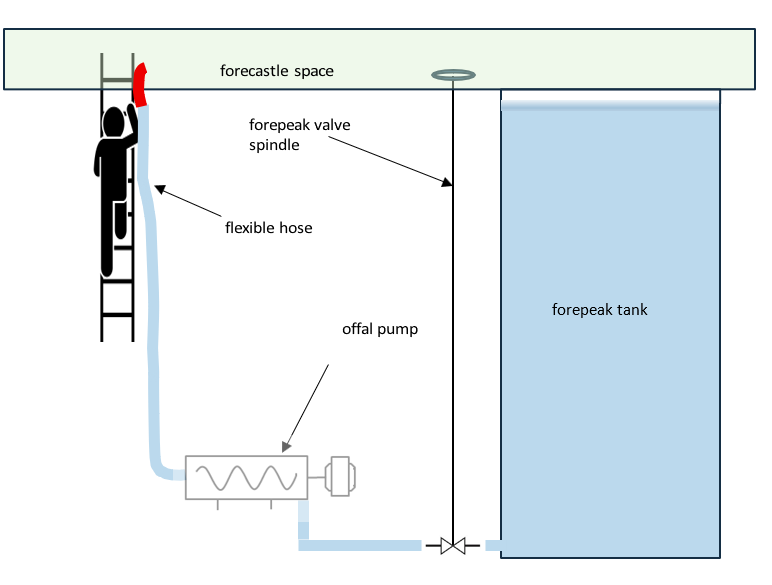
- The two apprentice fitters were working in the bow thruster room, installing pipe components in the vicinity of the offal pump and its start/stop buttons. The offal pump had not been isolated nor locked and tagged out (lockout/tagout is a safety procedure used to isolate machinery from its energy sources and prevent it from being started accidentally during maintenance or repair) so there was nothing to stop it from being activated. The forepeak tank suction valve had been left open (the suction valve is typically closed when not in use) presumably after the last time the tank had been pumped out. The flexible red hose was still attached to the discharge side of the offal pump and tied at the top of the ladder in the forecastle, so any liquid in the hose would have been in equilibrium with the level in the forepeak tank (see Figure 12).
- With the forepeak tank suction valve left open, had the red hose dislodged and fallen to the bottom of the bow thruster room, liquid from the forepeak tank would have flowed through the pump and into the bow thruster room at a rate dependent on the condition of the seals in the offal pump.
- Further, starting the offal pump would cause liquid to flow from the open end of the flexible red hose into the bow thruster room. It is virtually certain that this is what happened on the Antarctic Discovery.
- The Commission considered alternative scenarios for why the offal pump started pumping:
- It could have been started by someone using the start/stop buttons in the forecastle space, but no reason was found for anyone to have done so, and it would be difficult to do unintentionally.
- An electrical fault could have developed that caused the pump to start. This scenario could neither be proven nor disproven as the bow thruster room was flooded to a depth that submerged most electrical components.
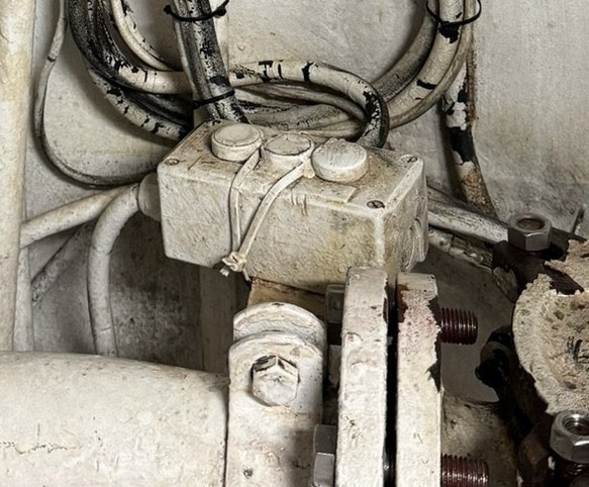
- The fitters could have unintentionally pressed the start button on the local pump control. The Commission found this to be the most likely cause. They were working directly adjacent to the local pump control, and, when interviewed, one fitter stated it was possible they either leaned or placed a tool on the start button.
-
There were two buttons on the local pump control (one for start and one for stop) and a green indicator light that would illuminate when the pump was running. The entire control panel for the offal pump had been painted white. This meant that the labels indicating the buttons’ functions, and the indicator light showing that the pump was running, would not have been visible (see Figure 13).
- The Commission found it was about as likely as not that the pumping of foul water was caused by one of the fitters unintentionally pressing the pump’s start button.
- The offal pump was a screw pump, which produced an audible hum when pumping viscous liquid, particularly when drawing from a significant head (the vertical height of a column, of liquid, representing potential energy or pressure) of water, as was the case with the forepeak being full.
- The fitters were listening to a portable stereo unit at low volume while working in the bow thruster room. It is about as likely as not that the background noise and the absence of a visible pump-running indicator light limited their ability to detect that the pump was active. The first indication that something was amiss was when a foul liquid started raining down from the top of the access ladder.
- The flow of foul liquid from the forepeak tank was possible because the system had not been locked and tagged out as it should have been.
- It is virtually certain that the liquid being drawn from the forepeak contained offal residue and sludge, which had most likely settled to the bottom of the tank where the suction for the offal pump was located. Normally, the Antarctic Discovery operates in cold sea areas, which helps inhibit the formation of H2S in the forepeak tank. However, the vessel had been to Nelson to discharge its catch, then sailed to Lyttelton where it spent 11 days in the dry dock in hot summer conditions. These conditions were conducive to the formation of H2S, which was then released as a gas when the offal pump started to discharge into the atmosphere within the forecastle.
-
In 2016, the United States Department of Health and Human Services published a document (Toxicological Profile for Hydrogen Sulfide and Carbonyl Sulfide, US Department of Health and Human Services, Public Health Services, Agency for Toxic Substances and Disease Registry, November 2016) that summarised the effects of H2S on humans as follows:
The human data suggest that the respiratory tract and nervous system are the most sensitive targets of [H2S] toxicity. The most commonly reported nonlethal effect found in individuals acutely exposed to high concentrations of [H2S] is unconsciousness followed by apparent recovery, colloquially referred to as “knockdown”. In most cases, actual exposure concentrations and durations are not known. Estimates suggest that the concentrations exceed 500 ppm and the durations are short, typically <1 hour. Although there is an apparent recovery, many individuals report permanent or persistent neurological effects, including headaches, poor concentration ability and attention span, impaired short-term memory, and impaired motor function. Respiratory distress or arrest and pulmonary [oedema] are also associated with exposure to very high concentrations of [H2S]. It is believed that these respiratory effects are secondary to central nervous system depression or due to tissue hypoxia.
- This description closely resembles what occurred aboard Antarctic Discovery. The chief engineer and second engineer were seen to collapse simultaneously. They were rendered unconscious almost immediately on entering the area where the liquid was discharging into the forecastle, indicating the concentration of H2S in the air by the bow thruster room door had reached about or above 500 ppm (see table in paragraph 2.35). The second engineer regained sufficient consciousness to crawl out of the space unaided, possibly because they were closer to the open door, where gas concentrations varied.
- The vessel superintendent and second mate removed the chief engineer from the space within about five minutes and they regained consciousness soon after. The superintendent’s knowledge and experience were evident in them resisting the initial temptation to enter the space unaided to rescue their colleagues and are commendable.
- The quick and decisive action taken by the vessel superintendent and second mate likely saved the lives of the workers who were overcome by the H2S.
Lockout/tagout procedures
Safety issue 1: The lockout/tagout procedures in Australian Longline’s SMS focused only on isolating systems under active work. The SMS procedures did not identify the need for isolating nearby systems that could be accidentally activated.
- There were several conditions on the Antarctic Discovery that indicated the implementation of the lockout/tagout system was not in accordance with good industry practice.
- The offal pump was left live throughout the time the vessel was in dry dock, and the suction valve for the forepeak tank was not closed. As well as these two omissions, the discharge side of the pump was effectively open. The only measure that prevented the gravitational flow of contaminated water from the forepeak tank into the bow thruster room was the pump’s flexible discharge hose being lashed by rope to the access ladder above the level of the liquid in the forepeak tank. The control of on-board liquids during dry dock should be strictly enforced, particularly for liquids that pose a hazard to workers in the dry dock.
- Earlier in the dry dock period, the fitters who were involved in the incident had conducted work on the bow thruster motor. The heater for the bow thruster had been left on from when the vessel had been in colder waters. The fitters noticed the heat emitting from the bow thruster motor and requested that it be turned off. This is another example of a system that should have been locked out and was not.
- While Australian Longline had lockout/tagout procedures, these were not well followed, nor were they robust enough to protect workers. The procedures were solely focused on isolating systems actively being worked on. The SMS did not take a risk-based approach to identifying equipment or systems that should be locked and tagged out to prevent downstream damage or harm to people working in the vicinity or other areas.
- Following the accident, Australian Longline has taken safety action to improve their lockout/tagout procedures and ensure their implementation (see Section 5).
Hazards associated with enclosed and confined spaces
Safety issue 2: The bow thruster room was susceptible to the build-up of toxic gases and flooding, and had a single point of entry and exit, limiting the ability to escape. The space had many of the characteristics associated with an enclosed or confined space, but these were not identified, increasing the risk of people being incapacitated in a space from which extraction would be difficult.
-
The terms ‘enclosed space’ and ‘confined space’ are often used interchangeably, but they can have distinct meanings in regulatory and risk management terms. However, the treatment of the associated hazards is essentially the same.
-
The International Maritime Organization (IMO) (IMO Resolution A.1050(27), paragraph 2.1) defines an enclosed space as a space that has any of the following characteristics:
- limited openings for entry and exit
- inadequate ventilation
- is not designed for continuous worker occupancy.
- The IMO Resolution lists typical examples of enclosed spaces on ships as:
- cargo spaces and ballast tanks
- fuel oil, lubricating oil, sewage and water tanks
- pump rooms
- void spaces
- cofferdams
- duct keels
- trunks.
-
The Australian (in New Zealand, Maritime New Zealand published guidance – The Working Safey in Confined Spaces (October 2022) Guidelines – which provided a similar definition for confined space and an overview of the requirements and procedures in the Australian Standard AS/NZS 2865 Confined spaces) Occupational Health and Safety (Maritime Industry) (National Standards) Regulations 2003 defined a confined space as:
an enclosed space or partially enclosed space:
- that is, or is intended to be, at normal atmospheric pressure while a person is in the space; and
- that is not intended or designed primarily for human occupancy; and
- within which there is a risk of 1 or more of the following:
- an oxygen concentration outside the safe oxygen range;
- an airborne contaminant that could cause impairment, loss of consciousness or asphyxiation;
- a flammable airborne contaminant that could cause injury from fire or explosion;
- engulfment in a stored free flowing solid or a rising level of liquid that could cause suffocation or drowning;
whether or not the space has a restricted means of entry or exit.
- The bow thruster room had many of the characteristics of an enclosed space and a confined space. It was both a void space and, after the addition of the offal pumping arrangement, a pump room that conveyed a known, potentially hazardous liquid. The bow thruster room also housed the emergency fire pump, powered by an internal combustion engine, which is a potential source of fire or harmful emissions.
- The space was perceived by Australian Longline and DGI Morgan as being intended or designed primarily for human occupancy as it was equipped with mechanical ventilation, lighting and deck plating. However, it may have been better managed as an enclosed or confined space due to the single point of entry and exit and its intent and design to be periodically occupied only for inspections and maintenance.
- While it may not have been intended or designed primarily for human occupancy, people were required to occupy the space to carry out routine tasks, such as pumping out the forepeak tank, tending the emergency fire pump or conducting periodic maintenance on the equipment in there.
- The typical hazards associated with the bow thruster room included fire, accumulation of harmful air mixtures and engulfment by flooding when the vessel was at sea.
- The space did not have fixed gas detection nor was it a requirement for personal monitors to be worn by crew working in the space. Additionally, it was not equipped with an emergency escape breathing device (EEBD) to aid evacuation.
- The vessel’s SMS required the implementation of additional safety controls29 prior to entering spaces that were listed on the vessel’s enclosed and confined space registers. As an example, a machinery space listed on the vessel’s enclosed space register required the application of safety controls that were proportionate to the potential hazards of the space, such as:
- Atmospheric testing
- Isolation of systems
- Ongoing entry approval
- Visual inspection
- Personal Protective Equipment
- The SMS required additional controls for confined space entry. This included the completion and approval of a documented permit to work and risk assessment, prior to entering a confined space. This ensured sufficient protocols were in place for safe entry, such as:
- entry only permitted by personnel trained in confined space entry
- atmospheric testing prior to entry
- oversight by a safety observer
- being equipped for rescue and preparing a detailed rescue plan.
- The bow thruster room had characteristics of enclosed and confined spaces, but these were not identified. There were insufficient controls to mitigate the risks associated with the space. This increased risk to personnel who occupied the space at any time.
- Following the accident, Australian Longline has taken safety action to mitigate the risks posed to personnel entering and working in the bow thruster room (see Section 5).
Dry dock operations
Safety issue 3: The accidental discharge of hazardous liquids and the resulting gases create a hazard to dry dock workers. Lyttelton Port Company’s safety standards and management of dry dock workers did not provide adequate protection from this hazard.
- The LPC owns and operates the dry dock and, as such, has responsibilities for maintaining health and safety standards in and around the dock. When a vessel enters the dry dock, responsibility for its safe entry and exit, securing arrangements and stability pass to the dockmaster, who safely positions and rests the vessel on the blocks. The dockmaster is an employee of LPC.
- Vessels entering a dry dock often contain hazards. If those hazards are not identified and controlled the safety of the dry dock and its occupants can be put at risk.
- It is common for many contractors to be involved in the repair and maintenance of vessels in a dry dock. In the Lyttelton dry dock, a vessel owner representative (the superintendent) is responsible for coordinating repairs and maintenance on their own vessel. In this incident, the vessel owner contracted the bulk of the work to be carried out to two engineering services, Lyttelton Engineering and DGI Morgan. The worksite was complicated by the fact that there was a second vessel in the dry dock, working under a similar arrangement.
- The HSWA requires multiple parties at a worksite to work collaboratively to manage overlapping duties, ensuring safety ‘so far as is reasonably practicable’. Responsibilities cannot be contracted out, nor can risks be pushed down the chain. Each party retains ultimate responsibility for managing risks they can control and identifying hazards that may be encountered on each task.
- LPC informed the Commission that because a vessel is considered its own worksite, the vessel operator was responsible for ensuring safe operation on board while in the dry dock, including the actions of any contractors working on the vessel. LPC considered it was only responsible for actions taken on the working perimeter of the dry dock and for dry dock operations, including flooding or discharging the dry dock and securing the vessel in place.
- However, a party that controls or manages a workplace (including entry/exit, site layout, and access) has additional duties to ensure, so far as reasonably practicable, that the workplace itself and anything arising from it are without health and safety risks to any person.30 LPC owns and manages the movement of vessels in and out of the dry dock and controls the entry/exit and layout of the dock. LPC has an overlapping responsibility for managing hazards in the dry dock.
- When two or more vessels are in the dry dock at the same time, the vessel operators maintain responsibilities for the work on their own vessels. Unsafe acts on one vessel can have consequences for the other vessel and its contractors and crew. This accident involved the release of H2S leading to the evacuation of both vessels and the entire dry dock area.
- While in dry dock, vessel crews have limited options for responding to emergencies and are more reliant on shoreside assistance. Critical on-board systems, such as propulsion, lifesaving and firefighting systems, are inoperable while the vessel is in dry dock. Additionally, the vessel is unable to depart for safety if another vessel in the dry dock has an emergency that poses a risk. This differs to when maintenance is carried out alongside a wharf as another vessel can get underway under its own power, or by tow (if disabled), to safety and still has its own functioning emergency response systems.
- On such a worksite, where there are many simultaneous work activities, it is accepted practice for all parties to enter a common user safety protocol (CUSP) agreement. LPC provided the Commission with a CUSP that was a high-level document covering all common operating areas in the port, including the dry dock. In addition to the CUSP, LPC had a document that outlined dry dock-specific health and safety requirements, known as Dry dock and slipway minimum health and safety expectations (minimum expectations). The scope of these minimum expectations excluded vessel activities as it was expected they would be undertaken in accordance with the vessel’s own SMS. With this arrangement, LPC was reliant on the quality and effective implementation of a third party’s SMS to ensure that risks on board did not impact the dry dock.
- The CUSP broadly defined the responsibilities of the various parties, but both documents offered little guidance on how those responsibilities would be managed. The CUSP stated that the vessel owners were the lead PCBU.
- The way the parties managed the health and safety of all workers in the dock, all the time, was not effective. There were no joint meetings between the two vessel operators and the dockmaster. Separate daily meetings were held between the dockmaster, contractors and the respective vessel operator’s management team. Each vessel operator had limited awareness of the work being undertaken on the other vessel. This lack of visibility reduced their ability to recognise activities that could introduce risks to their own vessel and crew.
- The common party when vessel operators share a dry dock is the dry dock operator. Vessel operators have varying safety standards. Allowing multiple vessels in the dry dock simultaneously increases the risks. As such, the Commission considers that LPC is a party with holistic influence on safety in the dry dock across all the parties.
- LPC relied on a declaration form signed by the master to ensure the vessel was safe to enter the dry dock. The document outlined the rules to be followed while in the dry dock, such as ensuring all propulsion is secure and notifying the dry dock master before any transfer of fluids.
- The declaration did not include a requirement to check and confirm that systems containing liquids were secure against accidental discharge by way of lockout/tagout. The Antarctic Discovery was able to enter the dry dock with an unsecure system without detection.
- The Commission has made recommendations in Section 6 to address this safety issue.
DGI Morgan safety management system
- As a PCBU, DGI Morgan had general health and safety duties to ensure its workers’ safety. DGI Morgan’s risk assessment process required its foreman to do an initial walk-through with the vessel’s staff. During this process the foreman should go through the proposed work and, together with the vessel’s crew, identify any potential hazards using a toolbox meeting form.
- The foreman then assigns staff to various roles based on their competency and has them review and sign off on the form.
- Toolbox meetings are used to identify potential hazards for a specific task so that individuals can either eliminate or mitigate the risk of harm.
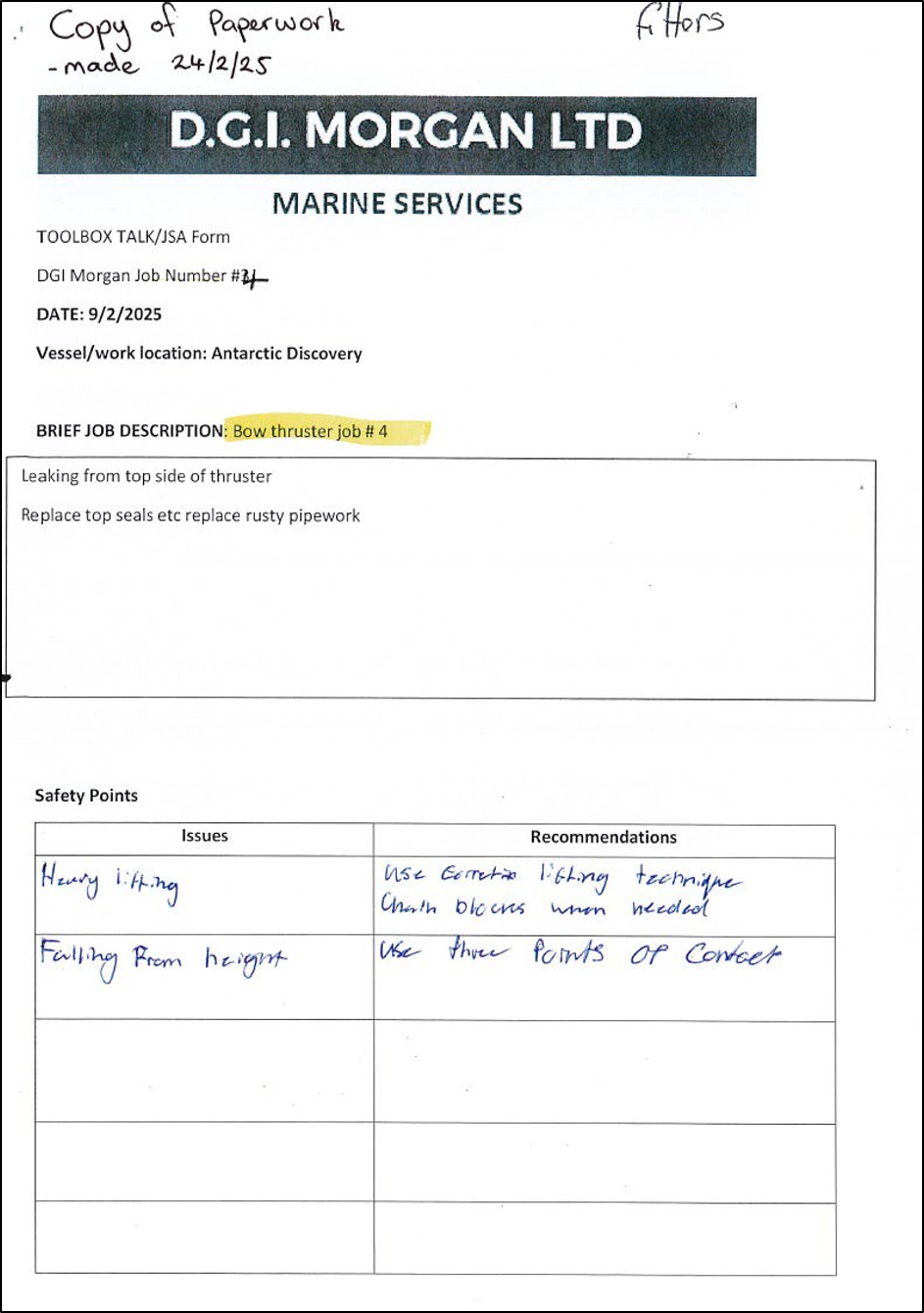
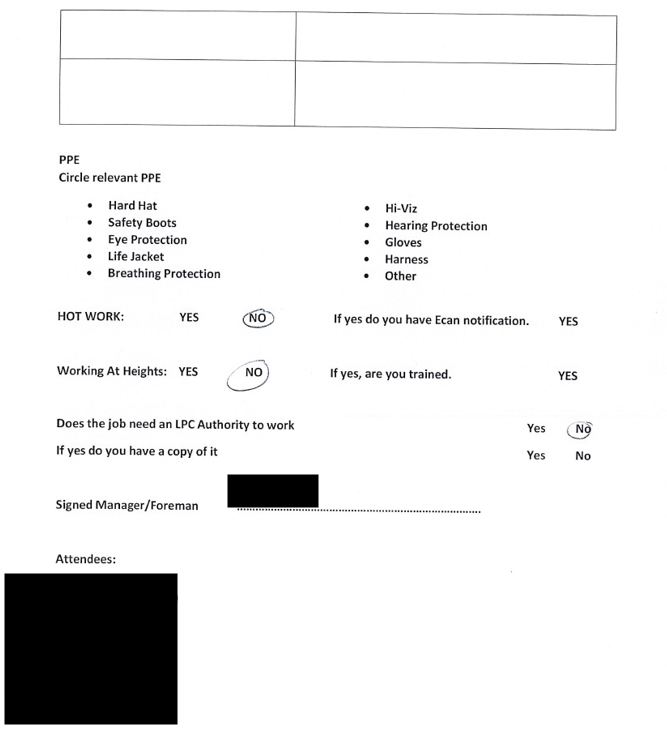
- The toolbox meeting form prepared by DGI Morgan covered all its assigned projects in the bow thruster room that were taking place during the 11 days in dry dock (see Appendix 1). It was never revisited before beginning each new task. This limited the opportunity to consider changes in context, identify new hazards, embed risk management into daily practice or support information sharing.
- For each of the tasks, only the generic hazards of ‘heavy lifting’ and ‘falling from height’ were listed.
- The process, as applied, lacked the rigour expected in good industry practice (as outlined in WorkSafe guidance: Confined spaces: planning entry and working safely in a confined space. WorkSafe guidance: Identifying, assessing and managing work risks, July 2017) for an enclosed or confined space with multiple systems and their associated hazards. Requiring workers to consult and reassess hazards for each new task provides more opportunities to identify hazards. The process had been established but the implementation lacked the rigour required under HSWA. Following the accident, DGI Morgan has issued a new, more detailed toolbox meeting form, which gives its workers greater opportunity to identify hazards commonly found on vessels.
Modification of safety-critical systems
Safety issue 4: The modifications to the forepeak tank were not approved by Class and the materials used compromised the vessel’s watertight integrity and the safety of its crew. Despite Class surveyors undertaking multiple surveys of the vessel over the following 10 years, the original modification was not identified. Additionally, Australian Longline’s SMS did not include a formal process to ensure modifications to safety-critical systems were approved by shoreside management and Class.
- If a vessel is entered into Class with a classification society, it must be designed and built to specified standards, particularly for matters of the hull and machinery. Vessel owners are required to notify Class prior to repairing or modifying any Class item. Modifications to class items also require prior design approval from Class.
-
Class DNV has been the vessel’s classification society since the keel was laid. The forepeak and moonpool tank offal pumping arrangements were modified by the previous owner in 2015, at a shipyard in Spain. Australian Longline purchased the vessel while it was being modified.
- A Class surveyor was present at the shipyard during the modifications, and they approved the moonpool modification. However, the installation of the offal pumping arrangement in the bow thruster room was not approved by Class. The pipework from the forepeak suction valve to the offal pump and the pipework from the offal pump to the overboard discharge valve were both made from flexible reinforced plastic hoses. According to Class, this was a breach of its Class rules. A failure of the hoses would result in flooding the bow thruster room.
- The vessel began operating out of New Zealand in 2016 and had been regularly surveyed by DNV surveyors based in Auckland. The original modification was never identified during these surveys.
- DNV informed the Commission that it was not aware the forepeak tank was being used for offal. However, its 2019 ‘damage repair’ survey report included a note from the master reporting significant damage to the bulbous bow. The note detailed the pumping arrangement for the forepeak tank, and that it was used for storing offal.
- In addition to Class approval for the forepeak offal arrangement, there should also be a formal company approval process to ensure that planned repairs or alterations to safety-critical systems are appropriate and conducted safely.
- Australian Longline had an informal process for the chief engineer to provide the superintendent with a weekly report to keep shoreside management informed of the vessel’s status, and to raise any issues. Australian Longline informed the Commission that for urgent events, chief engineers are advised to contact management for support as and when required. However, this was not formally documented.
- Australian Longline’s SMS required a risk assessment to be completed and sent to management. However, this did not happen. The parameters for jobs requiring a risk assessment were vague, leaving the need to complete one loosely open to interpretation.
- The temporary modification involved removing the flexible pipe from a valve that penetrated the hull and installing an open-ended hose on the forepeak tank discharge line. The only defences preventing the bow thruster room from flooding were to ensure that the forepeak tank suction valve was closed, the discharge pump was isolated and the valve penetrating the hull was blanked off correctly. None of these actions were completed. The valve that penetrated the hull was blanked off with a quick-release cap. The potential failure of this cap introduced a risk of flooding into the bow thruster room space. The reliance on a quick-release cap for this purpose threatened the vessel’s seaworthiness. The potential flooding of the bow thruster room and accumulation of H2S were not identified as hazards.
- Australian Longline was not aware of the temporary modification until the vessel arrived in Nelson. This modification put the vessel in further breach of classification society rules.
- Following the accident, Australian Longline and DNV classification society took safety action to bring the offal pumping arrangement and the vessel into compliance with Class rules. Australian Longline informed the Commission of ongoing work to identify the scope of the definition for ‘critical systems’ (see section 5).
Appendix 1. DGI Morgan Toolbox/JSA for work done in the bow thruster room