A factory trawler worker died on becoming trapped in machinery. Safety for machinery operators depends on everyone understanding how a piece of machinery works; how people work with it; and thinking about the hazards. In this case: not enough understanding; too much reliance on crew following all instructions; and training likely confused workers about which emergency stops serviced which system.
Executive summary Tuhinga whakarāpopoto
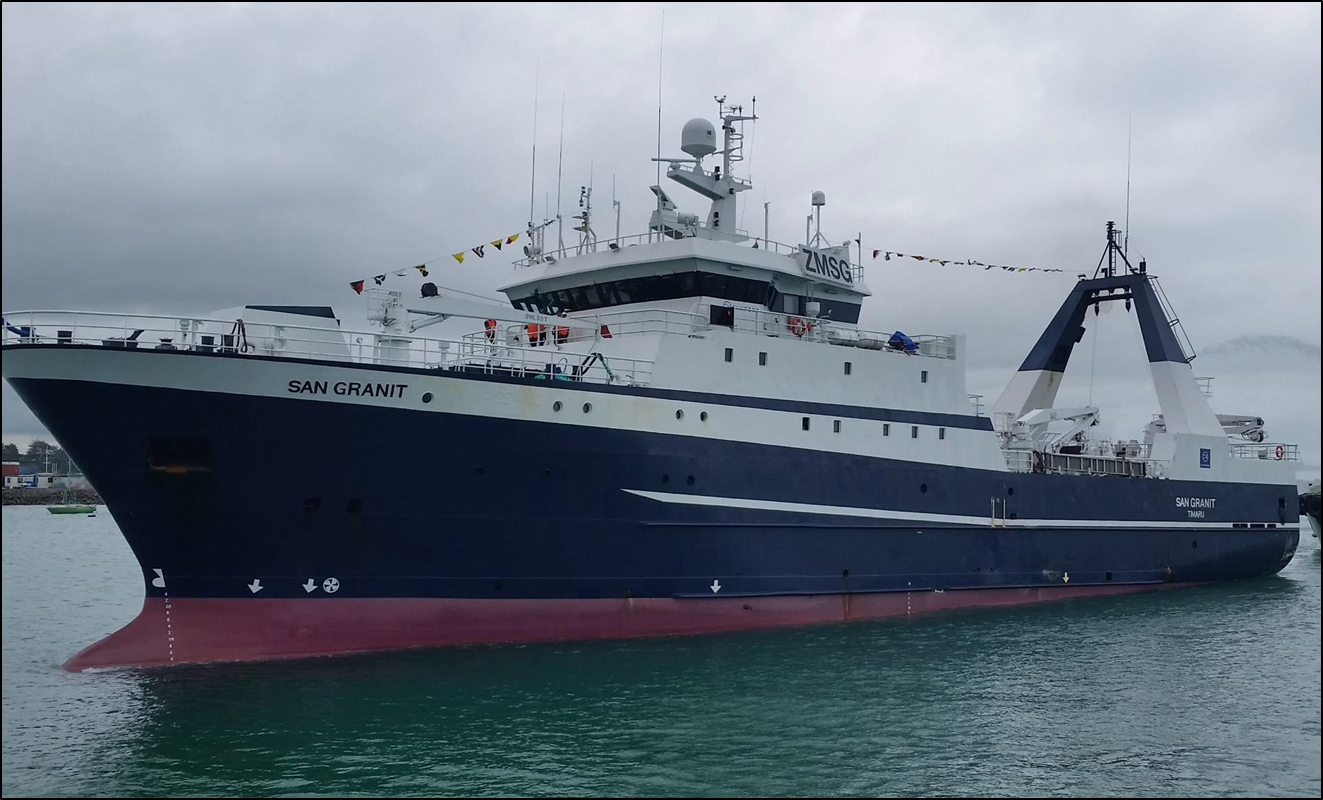
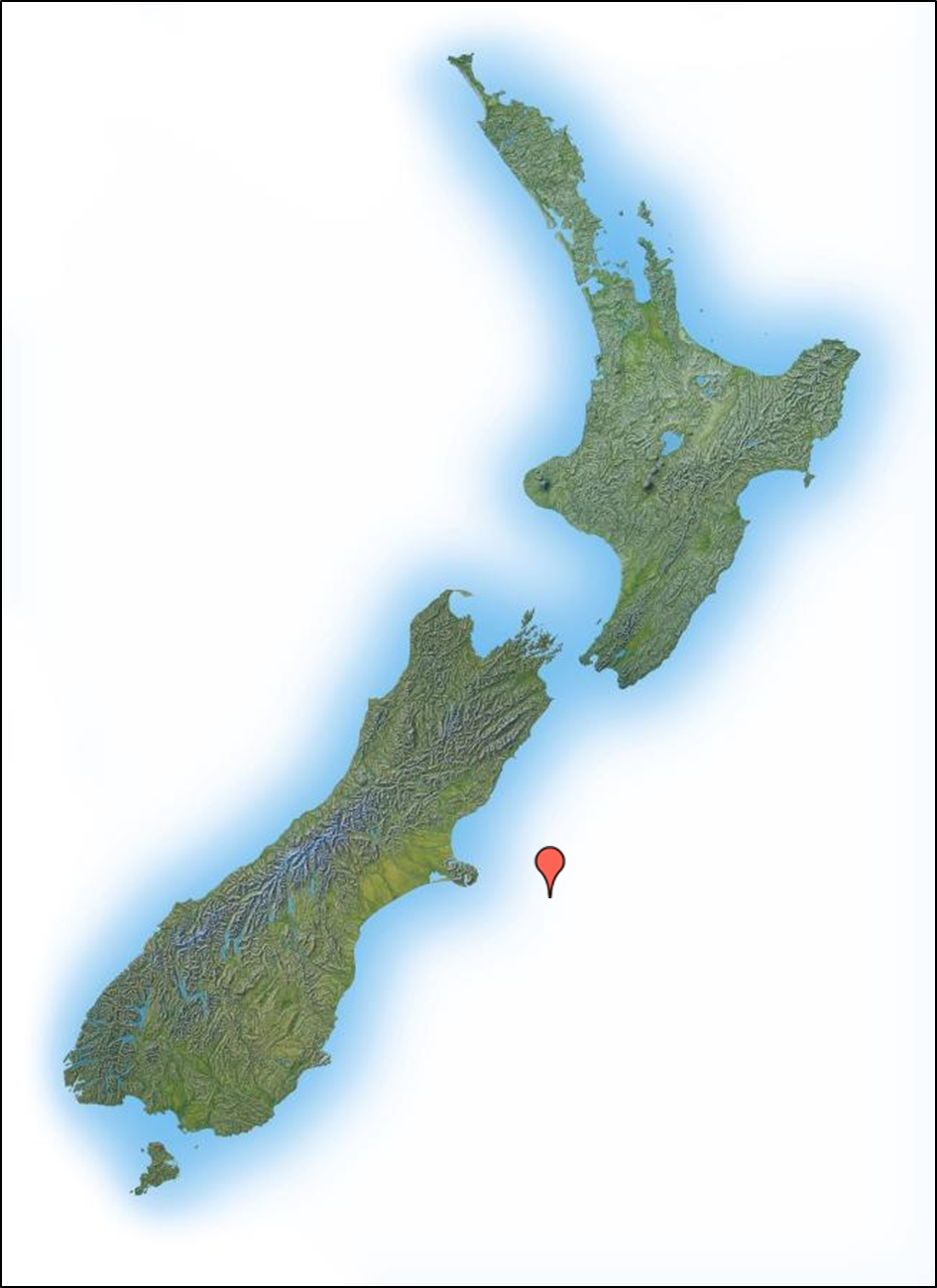
- During the early morning of 14 November 2018, the New Zealand-registered deep-sea factory trawler San Granit was engaged in trawling about 55 nautical miles (102 kilometres) east of Banks Peninsula.
- At approximately 0350 a deckhand who was working on the factory deck went to talk to the freezerman. The deckhand approached the working area forward of the freezers and noticed that the freezerman was trapped in a piece of machinery known as an accumulator. The deckhand immediately notified the factory supervisor, who in turn notified the bridge and then the master.
- The ship’s medic arrived at the scene and with assistance from another crew member removed the freezerman from the accumulator. The medic conducted a primary assessment of the freezerman and determined there were no signs of life.
- The vessel immediately returned to port and arrived in Timaru at approximately 1600 the same day.
- The Transport Accident Investigation Commission (Commission) found that the freezerman became trapped in the accumulator and received fatal injuries. The Commission was unable to determine why the freezerman entered the guarded area, but it may have been to clear a jammed box of fish.
- The Commission also found that the freezerman’s blood methamphetamine level indicated that it was virtually certain that methampthetamine had been consumed whilst at sea. Due to the varying effects this substance has on an individual, it was not possible to determine whether it contributed to the accident.
- The Commission identified two safety issues:
- the risks associated with operating the accumulator were not fully understood and the safety controls relied heavily on the machine operator following generic instructions and procedures
- the training in place for the crew around the configuration of the emergency stops likely resulted in confusion on which emergency stops serviced which system.
- Sanford Limited (the owner/operator) has since addressed the risks of operating the accumulator by conducting a full safety assessment of the automatic plate freezer area on board the San Granit. It has also implemented engineering controls to mitigate a person’s risk of becoming trapped within the accumulator. The Commission believes that this safety action addresses the first safety issue and therefore has not issued a recommendation.
- However, the Commission is concerned that crew members of the San Granit may not have received appropriate training in identifying which emergency stop to use for which system. Therefore, the Commission has made a new recommendation that Sanford implement training for the crew on the configuration of the emergency stops to avoid confusion on which emergency stop services which system. This will reduce the likelihood of crew accessing running machinery after pressing an incorrect emergency stop.
- The Commission repeats one key lesson made in a previous report:
- it is not acceptable under any circumstances for workers to be affected by performance-impairing substances, regardless of what roles they are performing.
- The Commission identified one new key lesson:
- carrying out a task analysis on any piece of machinery is an important safety function that helps to identify foreseeable hazards associated with its use and identify best practicable control measures that can be introduced to reduce the risk to operators. When it is not possible to eliminate an identified hazard, a task analysis will help to ensure robust operating procedures are in place, which in turn will assist in the development of future user training requirements.
Factual information Pārongo pono
Narrative
- The San Granit was a New Zealand-registered deep-water factory trawler, owned and operated by Sanford Limited. In November 2016, after relocating from Norway to New Zealand, the vessel had undergone an extensive refit and entered the Marine Operators’ Safety System administered by Maritime New Zealand. Following a shakedown voyage in December 2016, the San Granit had become operational.
- During the early morning of 14 November 2018, the San Granit was engaged in trawling approximately 55 nautical miles (102 kilometres) east of Banks Peninsula. The sea was slight and there was little wind.
- Shortly before 0100, the crew on the 0100-0700 shift made their way to the factory to take over from the 1900-0100 shift. In the forward part of the factory deck, known as the freezer area, the freezerman whose shift was finishing handed over to the incoming freezerman at approximately 0045.
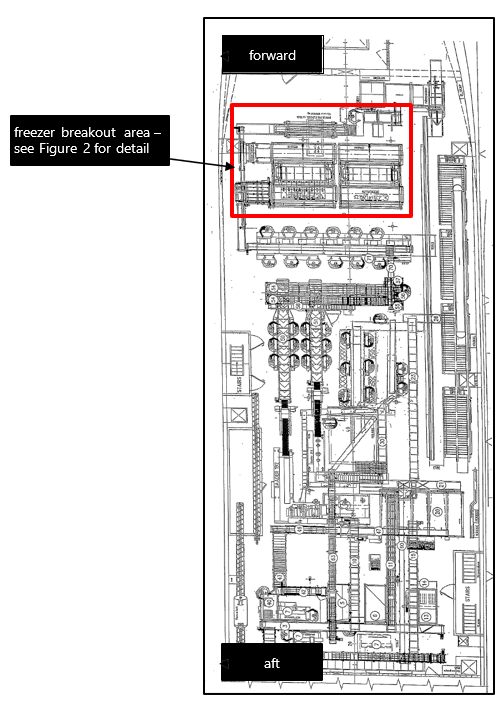
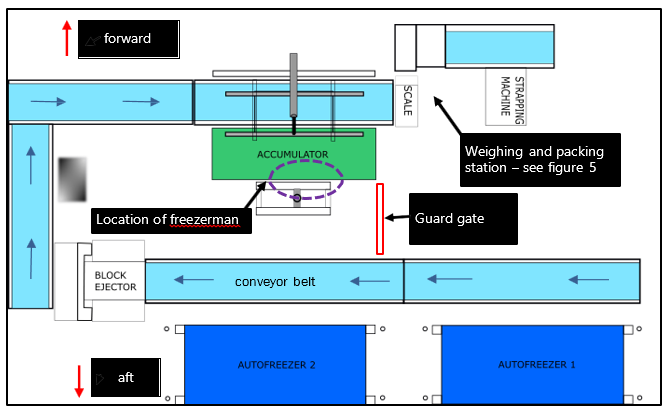
- At approximately 0350 a deckhand who had been working on the factory deck went to the freezer area (see Figure 3) to talk to the freezerman. When the working area forward of the freezers came into view, the deckhand saw that the freezerman was trapped in a piece of the machinery called the accumulator. The deckhand believed that the freezerman was deceased and immediately left to inform the factory supervisor. In turn, the factory supervisor sent for the factory manager and the medic and told the remaining factory hands to leave the factory. The first officer, who was the officer of the watch, was informed of the situation and promptly called the master.
- The second officer, who was the ship’s medic, arrived at the scene and carried out an initial first aid assessment of the freezerman. The initial assessment was that there were no signs of life; however, the position of the accumulator made the medical assessment difficult. The second officer and the factory technician removed the freezerman from the accumulator and carried out a more thorough assessment before confirming that the freezerman was showing no signs of life.
- The net was hauled in, the catch was discarded, and the San Granit headed for Timaru, arriving at around 1600 the same day.
The San Granit
- The San Granit was one of 12 freezer factory vessels operated by Sanford from its Timaru-based deep-sea fishing fleet. Originally built as the Juvel and later named the Granit IV, the vessel had been purchased from a Norwegian fishing company in 2015. Following a survey in 2016, the vessel had been transferred to the New Zealand flag and renamed the San Granit.
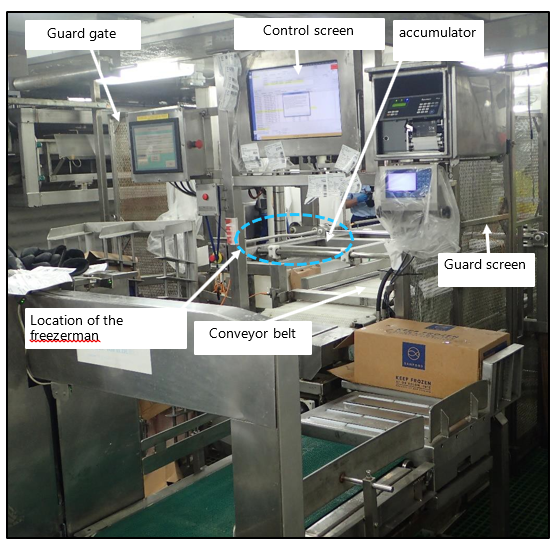
- The San Granit had arrived in Timaru in the middle of November 2016. An extensive refurbishment of the factory had been undertaken, which included the installation of fish-processing machinery more suited to the species of fish being targeted by the Sanford fleet. The conveying, packing, weighing and labelling equipment forward of the automatic plate freezers, which included the accumulator, had not been significantly changed (see Figures 4 and 5).
Factory safety assessments before entering service
- In preparation for entering service, an initial safety inspection had been carried out by an independent safety company in November 2016. At that time the factory had not been in an operational state, and therefore the inspection was unable to determine the risks associated with running machinery. The safety company had subsequently made a number of recommendations in a safety assessment report provided to Sanford.
- One month later, the same safety company had returned to assess the status of these recommendations and assess the risks associated with running machinery. However, the factory equipment had still not been operational. As a result, a safety advisor had sailed on board the San Granit for its shakedown trip to assess the machinery being used in its operational state.
- Two further safety assessment reports had been provided to Sanford as a result of these assessments. Generic risk assessments and safe operating procedures had also been supplied to Sanford to help develop vessel-specific risk assessments and safe operating procedures. The San Granit had become fully operational in January 2017.
In-service factory safety assessments
- During 2017 factory operations had been refined; however, safety measures for the automatic plate freezers had been proving difficult to establish. On 1 December 2017 the skipper had submitted a system improvement notice through the company’s electronic quality, health, safety and environment management database. The notice had requested that the company “review [the] guarding and lockout mechanism on [the] Automatic Plate Freezers to determine [the] best workable solution”.
-
In December 2017 the safety advisor who had sailed on the shakedown trip had attended the vessel to help the company establish the best workable solution for fitting protective guarding around factory machinery. As a result, the company had planned to fit interlocks on the ring-fence guarding around the automatic plate freezer, but due to operational issues, such as freezer trays jamming, it had been decided that further consideration was required before they could be fitted. A subsequent report produced by the safety advisor had stated that:
Fitting interlocks to the AS:NZ standard on the safety cage should be the goal once operational issues are resolved but only if deemed reasonably practicable considering the final operational reality of the equipment.
- Eventually the automatic plate freezer controls had been moved outside the guarded area so that the equipment could be adjusted without the need for personnel to enter.
- Minutes from the ship’s onboard environmental, health and safety (EH&S) meeting held in April 2018 showed that there had been ongoing, trip-by-trip improvements made with regard to the automatic plate freezer guarding. By June 2018 the references to outstanding guarding had been removed. The system improvement notice had been closed in the database and annotated “it is not deemed reasonably practicable to fit interlocks”.
The accumulator
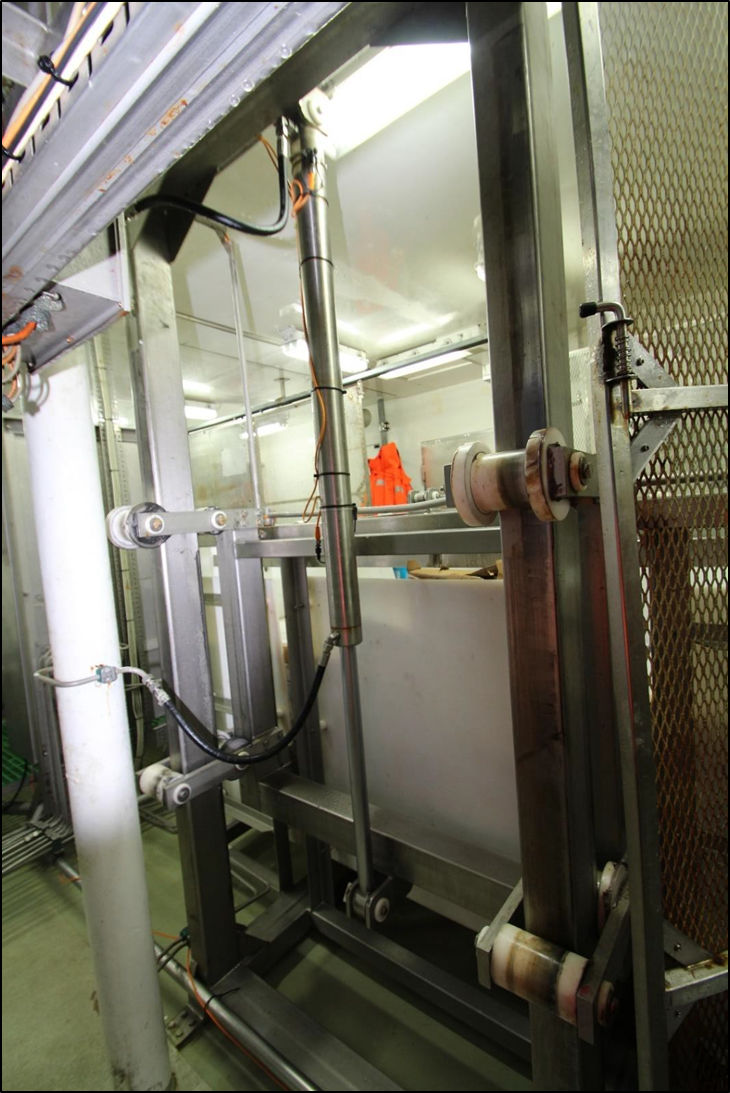
- The accumulator was a large tub that sat to the side of the conveyor line running from the freezers (see Figure 4). It was effectively a storage area that could be automatically loaded with up to 80 boxes when boxes were being conveyed more quickly than they could be processed.
- Sensors detected when the adjacent conveyor belt was full before the boxes were pushed into the accumulator. Another sensor detected the presence of boxes inside the accumulator and activated a hydraulic ram, which moved the floor down to make room for the next row (see Figure 7).
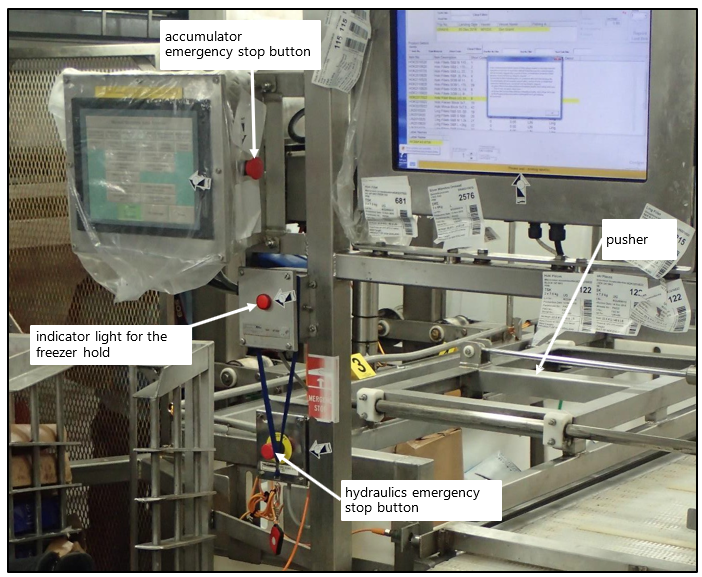
- When an operator was ready to resume packing, weighing and labelling the stored boxes, they could select the ‘unload accumulator’ function on a control screen. The reverse process was used for unloading: the pusher moved over the accumulator, the floor was raised up one row and the pusher moved the row of boxes back onto the conveyor belt for delivery to the weighing and packing station
- The accumulator was considered more a part of the conveying system than an independent piece of equipment. It was not allocated an asset identification number in the operator’s maintenance system, there was no manufacturer’s identification plate on it, and there were no manufacturer’s operating instructions available.
Training
- All the crew had been provided with a set of safety induction handbooks as part of their company and shipboard familiarisation. The Introduction to Safety On-board handbook included a section on the safe use of machinery. This section included instructions to “never put your hands in the machines while they are running” and “never try unblocking a machine while running”. Additionally, the safe operating procedures for the factory equipment, which were either machine specific or area specific, provided further information about the risks in, hazards in and safe operation of the factory.
- Training in the safe use of the accumulator was provided through a demonstration and supervision by an experienced operator. It was backed up by the generic safety instructions and safe operating procedures. The accumulator was only to be operated by a factory technician or a person appropriately trained as a freezerman, and who demonstrated a thorough knowledge of the safe operating procedures.
- The freezerman involved in this accident had been signed off as competent in all aspects in May 2018. This had been the freezerman’s third trip on board the San Granit.
Relevant health and safety requirements
The Health and Safety at Work Act 2015
- The Health and Safety at Work Act 2015 was the underpinning legislation for workplace health and safety in New Zealand and applied to New Zealand-registered vessels wherever they were operating. The Act imposed a duty on each person conducting a business or undertaking (PCBU) to ensure, as far as was reasonably practicable, the health and safety of workers who worked for the PCBU and workers whose work activities were influenced or directed by the PCBU. In respect of the San Granit, Sanford as a maritime operator was the PCBU.
- The Act also imposed a duty upon all workers to:
- take reasonable care for their own health and safety
- comply with any reasonable instruction that is given by the PCBU as far as they are reasonably able
- co-operate with any reasonable policy or procedure that the PCBU has notified to them.
The Health and Safety at Work (General Risk and Workplace Management) Regulations
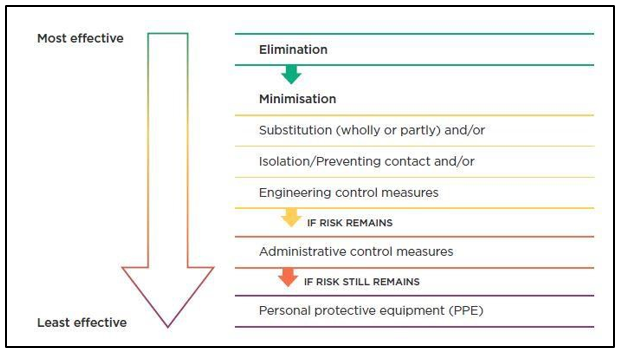
- The Health and Safety at Work (General Risk and Workplace Management) Regulations 2016 required a PCBU to identify hazards and protect against those hazards using a hierarchy of control measures (see Figure 8), to maintain and review the control measures, and to provide information, supervision, training and instruction to workers.
Maritime Rules
- Maritime Rules Part 31: Crewing and Watchkeeping required owners and masters to establish and implement procedures to ensure that each seafarer was fit for duty. Additionally, each crew member was required to ensure their own fitness for duty and take into account the nature of their duties and the impacts of impairment factors on their ability to undertake those duties.
- Maritime Rules Part 19: Maritime Transport Operator – Certification and Responsibilities required maritime transport operators “to develop, and operate in accordance with, safety systems that are specific and appropriate to their maritime transport operation”. Harm-prevention measures and safe operating procedures that address all reasonably foreseeable hazards are fundamental to any such safety system. Where applicable, the system must include procedures for the safe operation of all machinery and equipment and policies to reduce the hazards presented by drug and alcohol use and fatigue.
- Maritime Rules Part 40D: Design, Construction and Equipment – Fishing Ships contained the requirements for fish processing equipment on board New Zealand fishing vessels. Part 40D.82(h) stated that “moving parts of machinery and other installations, as well as gears that may present a hazard, must be adequately guarded”.
Industry guidelines
- In October 2017 Maritime New Zealand published guidelines on machinery hazards, risks, safe operation and maintenance in the Safe Use of Machines on Ships. It provided general advice on how a maritime operator could meet its obligations under the Health and Safety at Work Act:
- identify machinery hazards in their operation
- assess the risks posed by machine hazards (i.e. how severe the harm could be and how likely an accident is to occur)
- manage those risks by applying the best practicable control measures to eliminate the risks, or (if this is not practicable) minimise the risks
- give workers information about machines and their hazards
- train workers to safely use and maintain machinery
- supervise workers when they are using and maintaining machines.
- The guidelines also presented the concept of the ‘safe machine triangle’, through which marine operators could make machinery safer by: eliminating or minimising identified hazards; developing appropriate safe operating procedures when risks could not be minimised in other ways; and practising good machine maintenance.
- Maritime New Zealand had also published guidance on shipborne machine guarding.
Impairment
- A New Zealand-registered fishing vessel more than 24 metres in length, which proceeded beyond the inshore limits, was subject to the requirements of Maritime Rules Part 31.29: Fitness for Duty. This part explained the responsibilities placed on operators and masters to establish and implement procedures to ensure seafarers were fit for duty. The procedures had to take into account work cycles, the nature of work, reasonably foreseeable perils that may arise during a voyage and the nature and causes of impairments such as fatigue, stress, and alcohol or drug consumption. Notwithstanding the operators’ procedures, it was the responsibility of every seafarer to remain fit for duty and free of impairment from alcohol or drug consumption.
- Impairment factors share common signs and symptoms, such as:
- moodiness
- forgetfulness
- inability to concentrate
- poor decision-making
- slower reaction times
- reduced hand-eye co-ordination
- drowsiness
- dizziness
- impaired visual perception.
- Sanford had a Fatigue Management Procedure that instructed masters to consider a crew member to be fatigued and at risk of falling asleep or having a high risk of being injured if two or more of the following risk factors existed:
- has been awake for more than 16 hours
- is short of sleep
- has had poor quality of sleep
- is working alone in the early hours of the morning
- reports being fatigued.
- The company also had a drug and alcohol policy, which “strictly prohibits the making, sale, purchase, transfer, distribution, consumption, or possession of illicit drugs on Company property”. Additionally, there were drug and alcohol management procedures, which included the following provisions for drug and alcohol testing of the crew:
- pre-engagement testing
- post-incident testing
- testing with reasonable cause
- 25% of the crew randomly tested prior to the vessel departing on a fishing trip
- 25% of the crew randomly tested when the vessel arrives back in port
- testing after indication from a detector dog at the port gate and on board
- testing during rehabilitation measures that are offered to crew members who admit drug and/or alcohol use and seek help prior to being caught by the testing regime.
- The post-mortem carried out on the freezerman included a toxicology test, which found that there was a quantity of methamphetamine present in their blood.
Analysis Tātaritanga
Introduction
- Since taking delivery of the San Granit the operator had carried out a series of safety assessments to try to identify any safety measures or guarding solutions required to reduce the risks associated with factory operations. Difficulties in fitting interlocked guarding meant that safety measures focused largely on administrative controls, which relied on operators following procedures and instructions.
- The freezerman was working alone in the early hours of the morning. There were no witnesses to the accident and there was no closed-circuit-television monitoring in the area. Therefore, the reason for the freezerman entering the guarded area could not be determined, but it may have been to clear a jammed box of fish.
- The following analysis considers the actions and preconditions that likely led to this accident occurring and the safety measures in place at the time of the accident. It also discusses the following two safety issues:
- the risks associated with operating the accumulator were not fully understood and the safety controls relied heavily on the machine operator following generic instructions and procedures
- the training in place for the crew around the configuration of the emergency stops likely resulted in confusion on which emergency stops serviced which system.
What happened
- The freezerman had been trained and signed off to work in the freezer area; this included being permitted to enter the guarded area when required.
- The freezerman was found trapped in a position that showed it was very likely they were reaching into the accumulator when the accident occurred. It is about as likely as not that the freezerman reached into the accumulator attempting to clear a box of frozen product that had become misaligned.
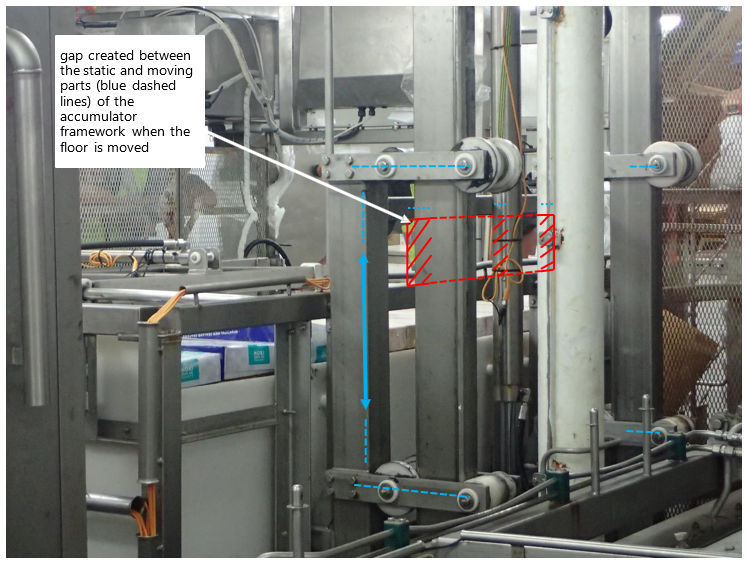
- The accumulator was found to have been operating in automatic mode at the time of the accident. In this mode, when the hydraulic ram that raised and lowered the floor of the accumulator was activated, the attached framework (see Figure 9) would lower. It was therefore likely that the hydraulic ram was activated by the freezerman triggering a sensor. This then lowered the attached framework and trapped the freezerman between the static and moveable sections of the framework.
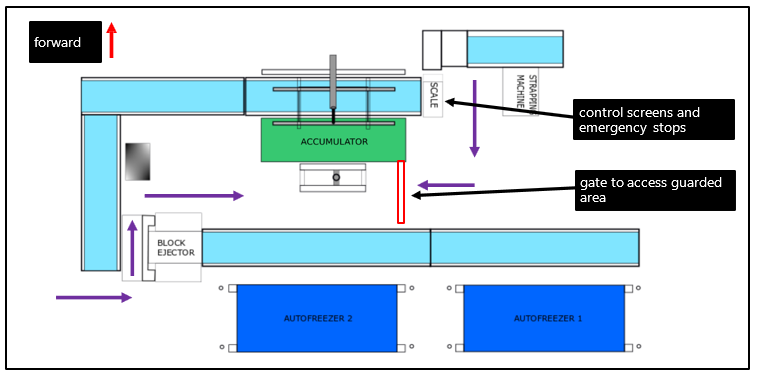
- It is not known which route the freezerman took when approaching the accumulator. The safest route was from the weighing and packing station (see Figure 10), entering through the gate after switching off the power to the accumulator located on the touch screen at the weighing and packing station. However, depending on the freezerman’s location at the time of the box jam, there were faster but less safe alternative routes to enter the guarded area. These routes would not have taken the freezerman past the controls that isolated the machinery.
- The investigation was unable to determine why the freezerman did not follow the basic safety rules before reaching into the accumulator, but it is about as likely as not that the freezerman’s decision-making abilities were adversely affected by some form of impairment.
Factory safety measures
- Prior to the San Granit becoming fully operational, three safety assessments had been undertaken to assist the risk assessment process in respect of machinery, guarding and safe operating procedures for the equipment fitted in the factory.
-
The accumulator had been identified as posing an injury risk at a nip point between two conveyor belts. It had been decided to include the accumulator within the automatic plate freezer guarded area rather than install a separate guard cover over the top of it. Guarding around the automatic plate freezers, including the accumulator, had been installed at the end of the shakedown trip, but other safety measures for the area had not been finalised. The subsequent report had stated:
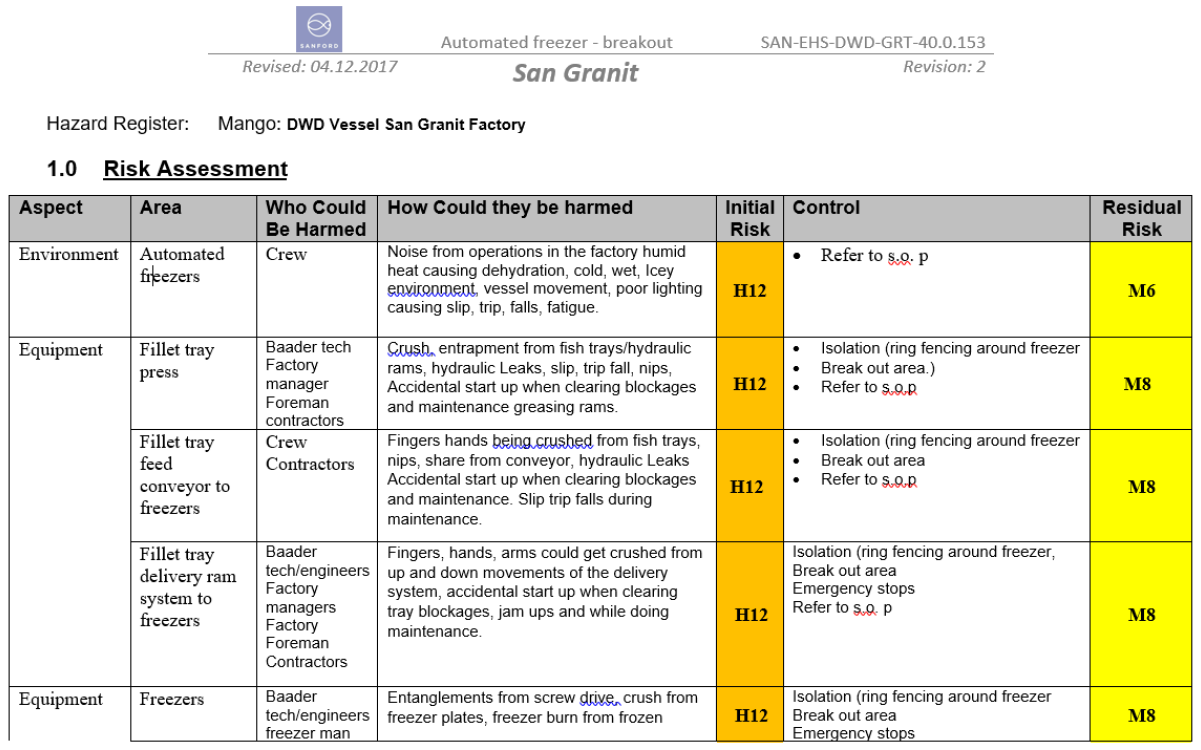
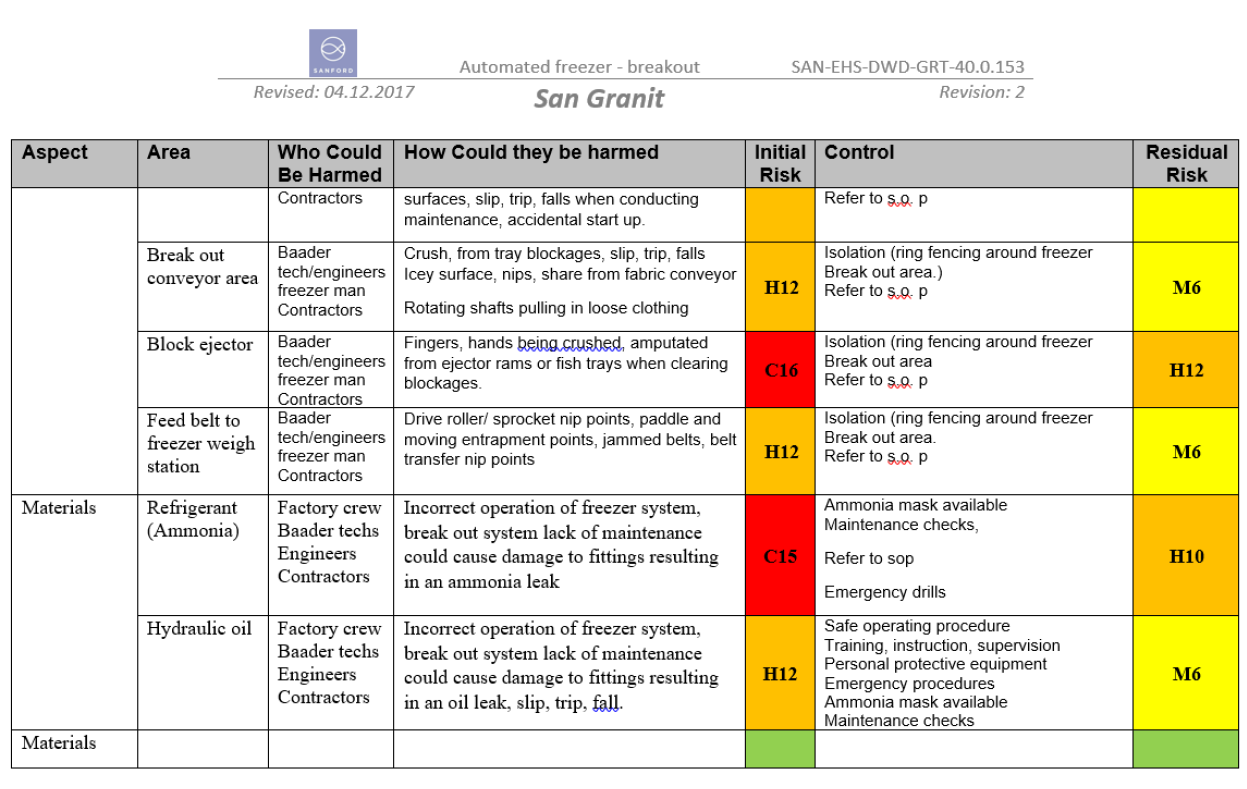
The stacker sliding door guarding system that encompasses the automated freezer operation has been completed, there are a dozen locks fitted to doors to prevent any unauthorised entry, two keys can open the completed set. A SOP [safe operating procedure] is currently being developed, the responsibilities of the keys will be clearly outlined, eg: on who has access. A new risk assessment has been completed there are multiple hazards with in this operation [sic]. In regard to the exposure of entanglement, crush and shearing type injuries with the gates locked the risk has been lowered to a M8 [moderate 8], the installation of an interlock system would reduce the likelihood to low.
- When the San Granit had become operational in January 2017, there were several safety operations that could only be reviewed and developed by observing the performance of the crew and the factory machinery at sea. Throughout 2017 the safety measures already taken had been monitored and various issues had been discussed at the on-board EH&S meetings. An examination of the minutes from these meetings showed that there had been ongoing discussions about balancing safety measures with operational practicality and efficiency. A fourth safety assessment, carried out in December 2017, had been aimed at determining the effectiveness of the new guarding and resolving ongoing issues with its functionality. The safety assessment report had stated that the operator may wish to have interlocks fitted to the automatic plate freezers’ guarding system as recommended the previous year. However, there had been operational issues that made fitting interlocks impractical (see 2.13).
- It was in June 2018 that a solution had been found, the automatic plate freezer guarding issues had been removed from the EH&S meetings and the system improvement notice had been closed. The solution had been to move the automatic plate freezer controls outside the guarded area, thereby eliminating the need for a person to enter the area to operate the controls. This in effect had reduced the likelihood of an incident occurring. However, if an authorised person had decided to enter the area without making the machinery safe before entering, the same hazards would have been still present.
- At the time of the accident, the gate between the weighing and packing station and the back of the accumulator was not fitted with an interlock. Therefore it was possible for the freezerman to pass through the gate and enter the ring-fenced area without the machinery shutting down automatically.
- The hazards posed by the vertical movement of the accumulator floor and associated framework had not been identified and assessed. Several crew members who were interviewed recognised that the accumulator had always to be switched off by using the emergency stop and switching to manual mode before attempting to clear a jammed box.
- It had been noted in EH&S meetings that there was confusion surrounding the emergency stops in the factory, particularly on which emergency stops serviced which system, due to their not being properly labelled. The investigation found that only the emergency stop on the operator’s touch screen and the emergency stop button on the side of the touch screen (see Figure 6) cut the power to the accumulator.
- Post-accident recovery actions required the operation of the accumulator, and as a result the status of the emergency stops at the time of the accident could not be determined. Attempts to recreate the accident scenario showed it was very likely that the freezerman did not operate the accumulator emergency stop. This recreation, together with interviews conducted in the course of the investigation, identified some confusion among crew on which emergency stop serviced which system. The investigation found, through interviews with the crew and the recreation of the accident, that the confusion identified in the EH&S meetings was likely the result of poor awareness of the emergency stop configuration that had been passed on through training. While it was unlikely that this issue contributed to the accident, crew could potentially access running machinery after pressing an incorrect emergency stop.
- From the time that the San Granit had become operational to the time of the accident, the hazards presented by the automatic plate freezer system had been a focus of attention. The risks associated with the accumulator had been overlooked, and as a result there had been no machine-specific instructions for its safe use.
- Had a separate risk assessment and task analysis been carried out specifically for the accumulator, it may have provided the operator with a more thorough understanding of the risks and hazards likely to be encountered. It would also have provided an opportunity to identify practicable engineering controls to reduce the risks (see Figure 8). Once inside the guarded area, the only safety controls available to the operator of the accumulator were basic training in machine safety and an area-specific safe operating procedure.
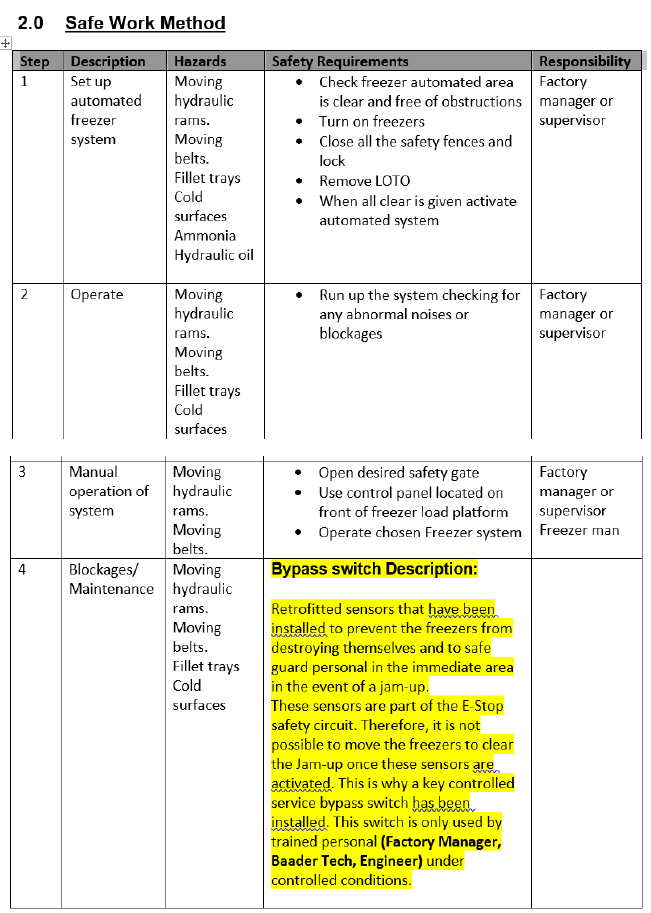
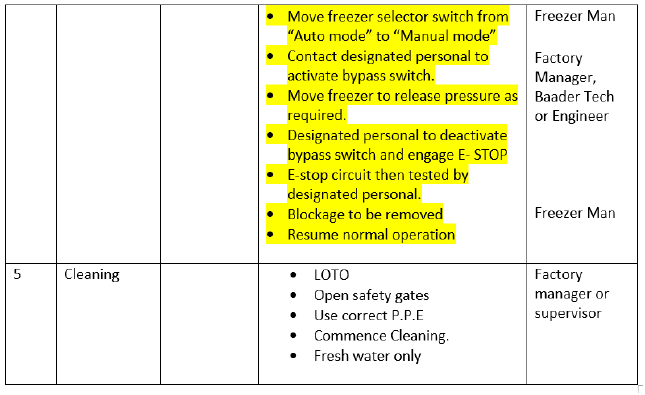
- On this occasion, had the freezerman followed the procedure for clearing a blockage in the automatic plate freezer area (see Appendix 1) that incorporated the accumulator, it is very likely that the accident would not have occurred.
- Similarly, had the advice from the earlier safety assessments been heeded and interlocks fitted at access points to the guarded area, the risk could have been minimised and not been reliant on administrative controls alone. All the machinery would have been shut down when the freezerman entered the guarded area and the accident would not have occurred.
- Since the accident the operator has taken action to address the safety issues associated with the automatic plate freezer and accumulator area (see section 5.6). As a result, the Commission does not intend to make a recommendation.
Fitness for duty
- The Health and Safety at Work Act includes a person’s behaviour as a hazard “where that behaviour has the potential to cause death, injury, or illness to a person (whether or not that behaviour results from physical or mental fatigue, drugs, alcohol, traumatic shock or another temporary condition that affects a person’s behaviour)” (Health and Safety at Work Act 2015, section 16).
- The use of performance-impairing substances by an individual operating complex machinery is a risk to that individual and anyone reliant on the correct functioning of that machinery.
- There are several factors that can lead to impairment. In the case of this accident, the positive result of the freezerman’s toxicology test for the presence of methamphetamine was a source of potential impairment. The Commission sought an expert’s opinion on the possible role of methamphetamine consumption and its contribution to the accident (Professor Johan DuFlou, Consulting Forensic Pathologist, Forensic Medical Associates, New South Wales). Parts of the resulting report are summarised in paragraphs 3.25 to 3.27.
- Methamphetamine can be eliminated from the body within one to three days, which is a relatively short space of time. It is exceptionally unlikely that the methamphetamine was consumed before the commencement of the voyage two weeks before the accident.
- Methamphetamine consumption has a non-linear and inconsistent effect on the body in relation to intoxication and impairment. A dose that may enhance performance in one person can be an overdose for another person. The effects in general are complex and wide ranging; many remain open to legitimate scientific inquiry and debate. Many of the effects seen in a person who has consumed methamphetamine will also be seen in a person who is undergoing severe psychological stress and anxiety. Research into methamphetamine use amongst drivers has shown that in some cases the drug can be a performance enhancer, but there remains an increase in risky behaviour such as speeding and departure from the lane of travel (Logan B, Fligner C, Haddix, T. Cause and manner of death in fatalities involving methamphetamine. Journal of Forensic Sciences 1998;43:28-34. As referenced by Professor Johan DuFlou).
- The blood methamphetamine level indicated that it was virtually certain the drug had been consumed whilst at sea. The psychoactive effects of the drug can last from six to twelve hours, but because it is not known when or how it was administered it is about as likely as not that the psychoactive effects had dissipated, yet it remained readily detectable in blood. The expert was unable to conclude with certainty whether the methamphetamine use contributed to the circumstances leading up to the accident. However, the combined effects of drug use, shift work and possible fatigue on an essentially unsupervised factory operator very likely increased the risk of an accident occurring.
- The operator’s drug and alcohol policy testing regime (see paragraph 2.35) was over and above that described by industry guidelines; nevertheless, it was still possible for crew members to elude detection. Substances such as methamphetamine, which are cleared from the body in a matter of days, could be taken by crew members while the vessel was at sea without the risk of detection by random testing.
- As part of the operator’s safety induction training, crew were required to watch a video about the dangers of alcohol and drug use in the workplace. The video was informative and confronting. However, this accident shows that education and a testing regime are still not deterring some crew members from taking illicit drugs at sea.
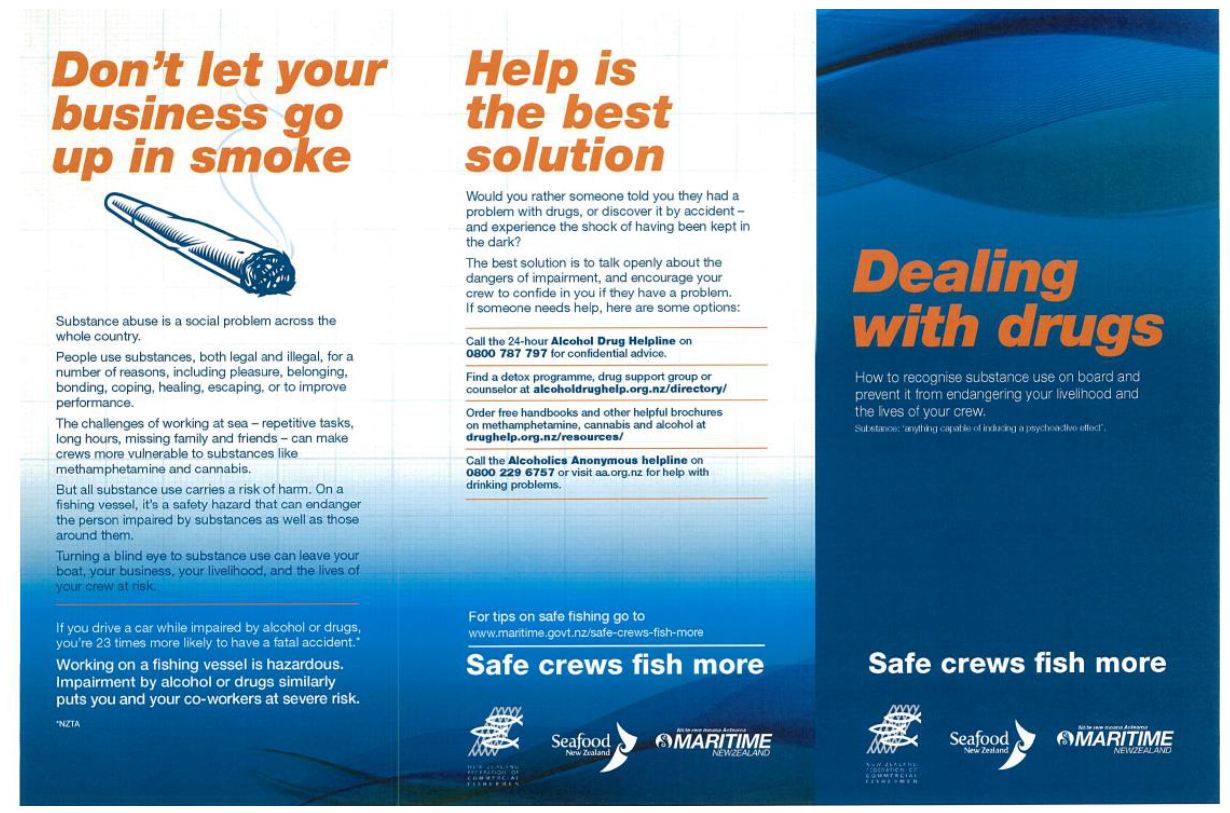
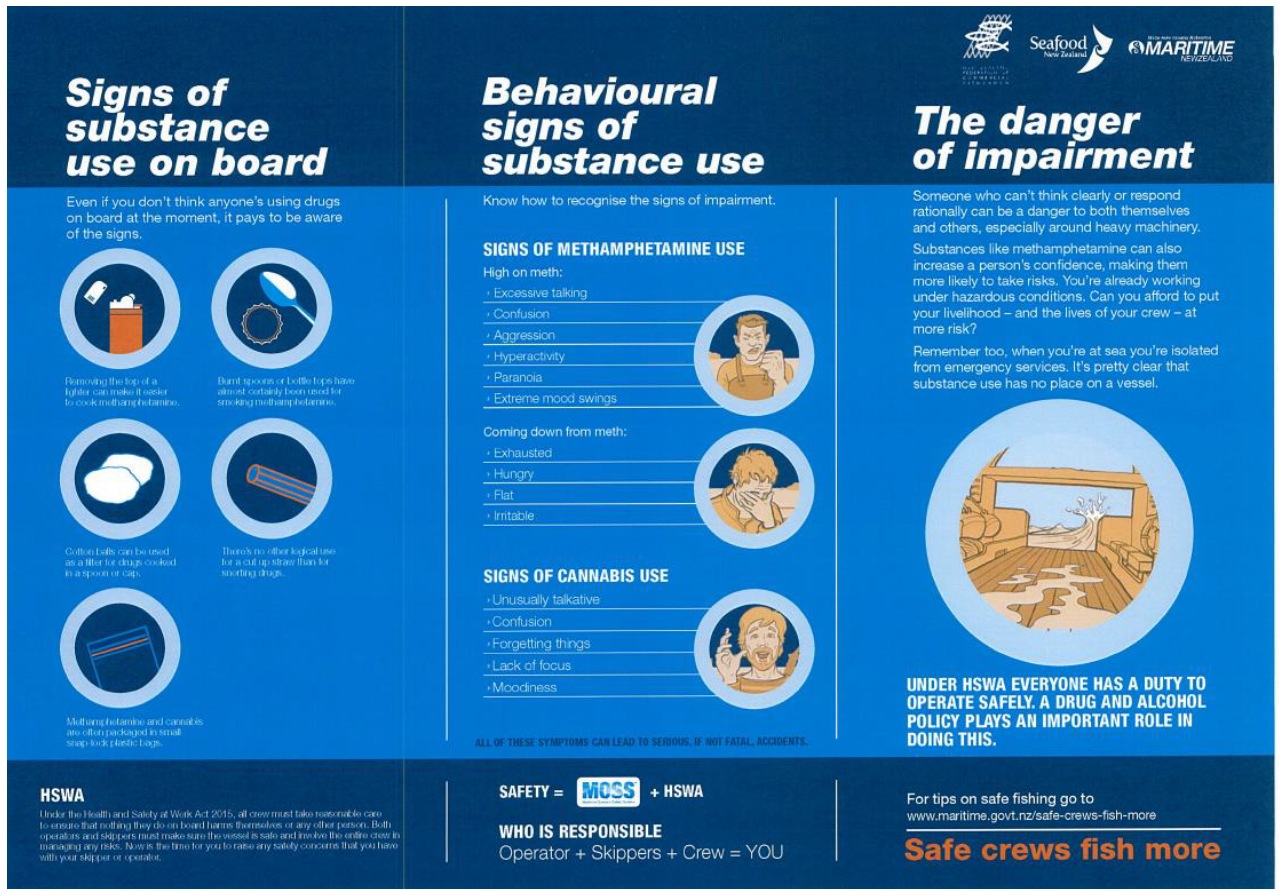
- Maritime New Zealand has taken a joint approach with fishing industry leaders to increase awareness of the adverse effects of stress, fatigue and drug and alcohol use at sea. Recent and continuing educational campaigns have focused on these issues and provided operators with guidance on which to base their policies and training programmes (Maritime New Zealand Safety Bulletin, issue number 30, November 2014). Appendix 3 has a copy of a collaborative information brochure called ’Dealing with drugs‘. A survey on the subject of drug and alcohol use has shown that the self-reported use of alcohol and other drugs in the fishing industry is consistent with use in the general population of New Zealand. These figures are also consistent with non-negative test results in the New Zealand fishing industry.
- The consumption of alcohol and the use of other performance-impairing substances have been a recurring contributory factor in injuries and deaths in all transport modes and have been on the Commission’s Watchlist for a number of years. Although the risk of this type of accident recurring is considered to be low, the ongoing work being carried out by Maritime New Zealand and the industry on drug awareness issues within the fishing industry supports the health and safety legislation, which aims to keep risk as low as reasonably practicable.
Fatigue and stress
- The operator recognised that shift work is known to contribute to fatigue and that in turn fatigue and stress are risks to the health and safety of sea-going crews. The Introduction to Safety On-board handbook encouraged crew to take as much rest as possible, eat well and try to stay warm and dry. It stated, “Fatigue affects your strength, your coordination and your judgement and makes you more likely to have an accident.” The handbook encouraged crew members to try to get as much sleep as possible during their off-duty hours and to take breaks and stay well hydrated to minimise the effects of fatigue.
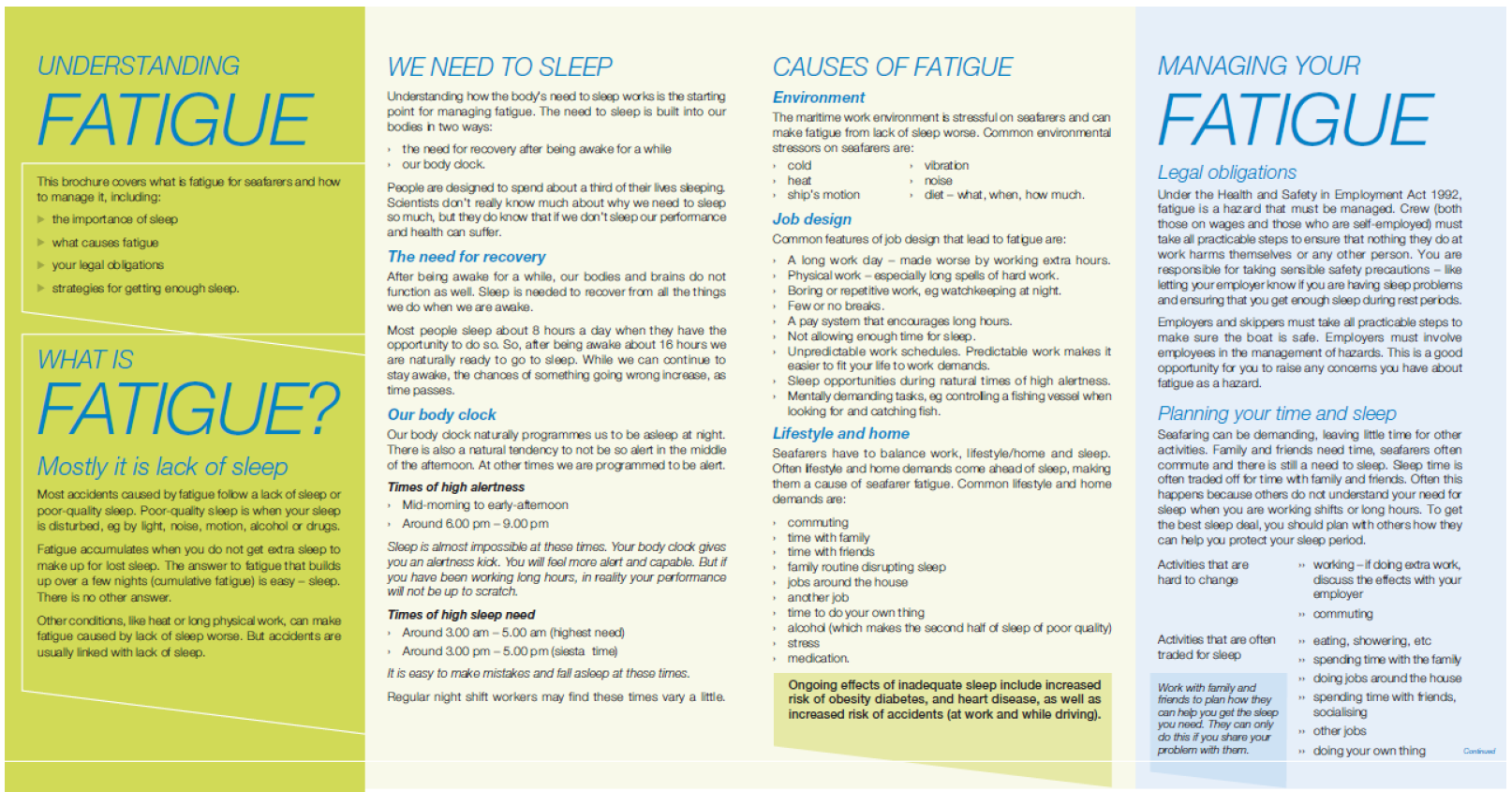
- Sanford also had a Fatigue Management Procedure, which placed the responsibility on the master to identify fatigue in members of the crew. The information provided in the Fatigue Management Procedure followed the advice outlined in Maritime New Zealand’s guidance (see Appendix 2) on how to develop a fatigue management plan and how to detect the effects of fatigue on a seafarer. Although tiredness was an accepted risk associated with working in the factory, the factory manager was known to ask the crew on each shift if there were any fatigue or tiredness issues.
- The factory crew worked in shifts of six hours on and six hours off. The shift pattern was chosen by the operator to enable the factory to operate 24 hours a day while minimising the effects of fatigue. Although the activities of the freezerman during off-duty hours are unknown, the consumption of illicit drugs in a shipboard environment with a shift pattern in place raises the risk of a fatigue-related accident. The use of a stimulant drug such as methamphetamine may have provided a short-term reprieve from tiredness, but as the stimulant effects wore off, tiredness and fatigue would have been exacerbated.
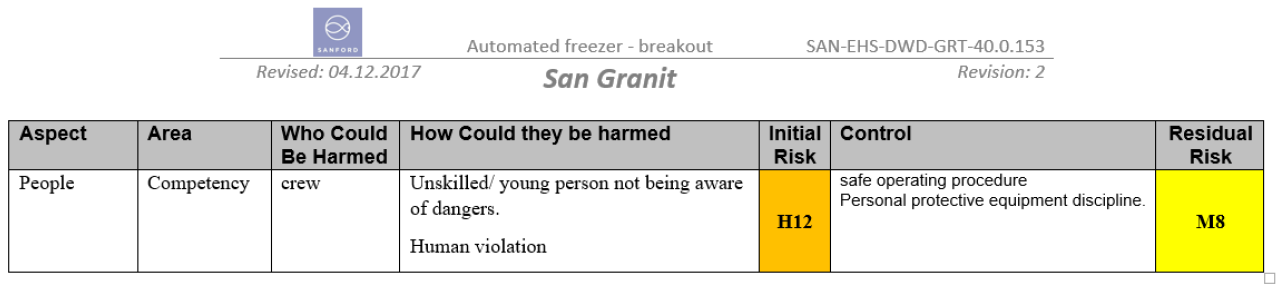
Appendix 1. Risk assessment and safe operating procedure for the freezer breakout area
Appendix 2. Understanding Fatigue brochure
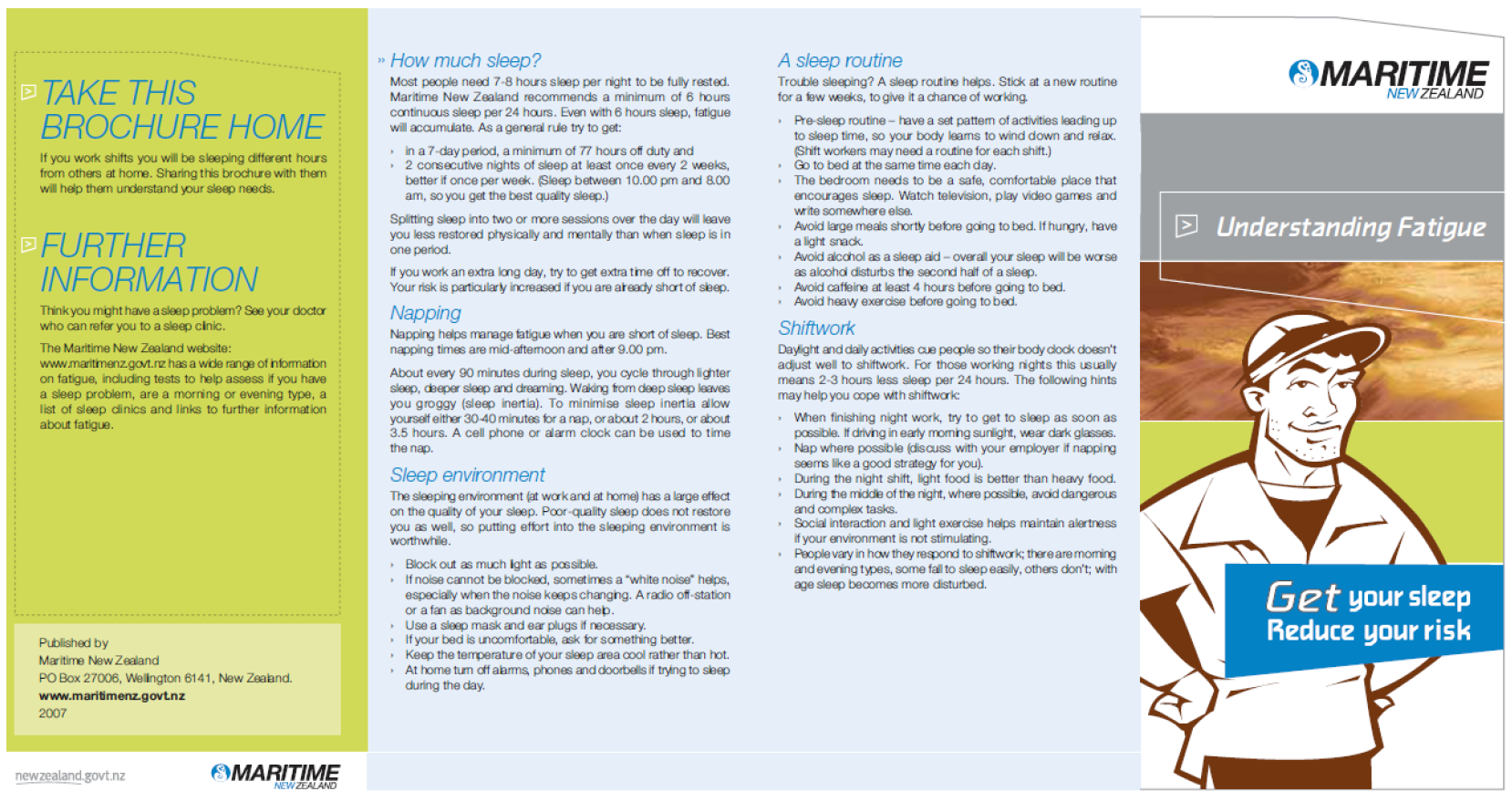
Appendix 3. Dealing with drugs brochure